Did you know the average person inhales approximately 2,000 gallons of air every day? Yet while we meticulously filter our water and inspect our food, the air we breathe often remains an afterthought—until now.
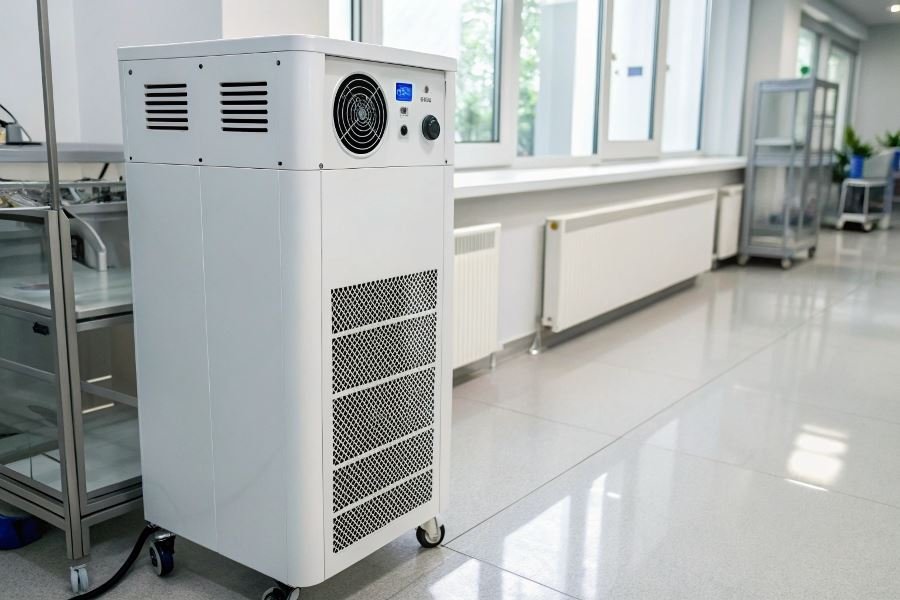
Air sterilization technology represents a fundamental shift in how we approach environmental cleanliness. Unlike traditional disinfection methods that focus on surfaces, air sterilizers target airborne pathogens at their most vulnerable point: while suspended in the air we breathe. These sophisticated systems use combinations of UV-C light, HEPA filtration, and photocatalytic oxidation to neutralize viruses, bacteria, and other harmful microorganisms before they can settle on surfaces or enter our respiratory systems.
The evolution of disinfection science
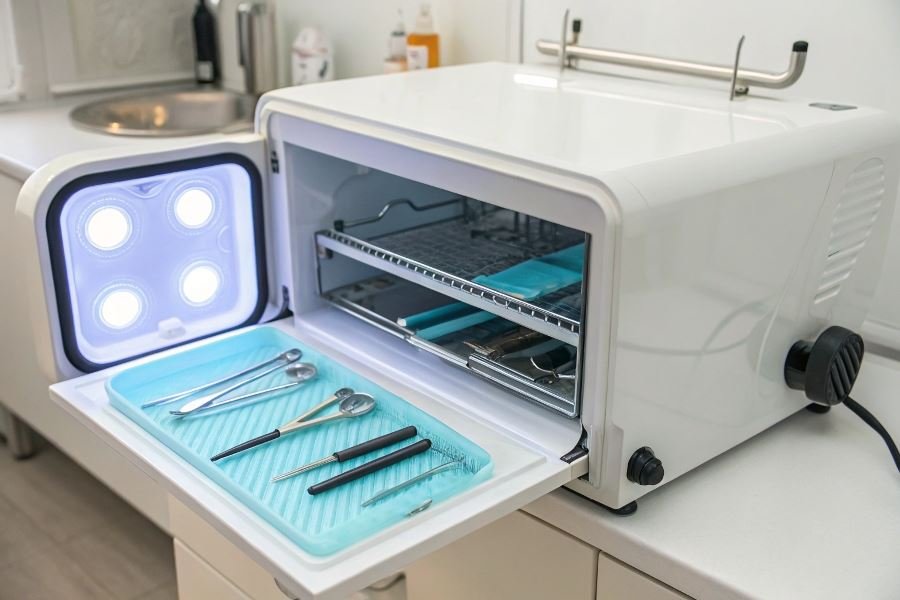
The disinfection landscape has transformed dramatically since the early antiseptic practices of the 19th century. While chemical disinfectants and manual cleaning remain standard practice in many settings, these approaches have significant limitations—they’re labor-intensive, often leave chemical residues, and most critically, they can’t address airborne contamination.
“The air quality revolution isn’t just about eliminating pathogens—it’s about creating environments where wellness is built into the very space we occupy.”
The focus on air quality has intensified as research continues to demonstrate the profound connection between air purity and overall health outcomes. Beyond infectious disease prevention, high-quality air has been linked to improved cognitive function, reduced allergy symptoms, and better sleep quality. For businesses, hospitals, and homes alike, air sterilization isn’t merely a pandemic-era precaution—it’s becoming recognized as a fundamental component of holistic wellness infrastructure.
The Unmatched Power of Air Sterilization
When it comes to creating truly clean environments, not all disinfection methods are created equal. Air sterilizers have emerged as frontrunners in the battle against pathogens, offering distinct advantages that traditional disinfection approaches simply cannot match.
The fundamental difference between air sterilizers and conventional disinfection methods lies in their approach to contamination. Air sterilizers: advantages over other types of disinfection become immediately apparent when we consider how pathogens actually spread in indoor environments. While surface cleaning addresses only part of the problem, air sterilization tackles contaminants at their most dangerous stage—when they’re airborne and highly mobile.
Neutralizing invisible threats
Air sterilizers excel at capturing and neutralizing airborne pathogens that surface disinfection methods miss entirely. Consider this: a single sneeze can release up to 40,000 droplets containing viruses and bacteria, which can remain suspended in air for hours. While traditional cleaning might sanitize a doorknob, it does nothing for these floating threats.
UV-C air sterilizers can destroy up to 99.9% of airborne pathogens by damaging their DNA structure, preventing reproduction. HEPA filtration systems capture particles as small as 0.3 microns—significantly smaller than most bacteria (which typically measure 1-10 microns) and many viruses.
Round-the-clock protection
One of the most compelling advantages of modern air sterilization is its continuous operation. Unlike manual disinfection methods that provide only momentary cleanliness, air sterilizers work tirelessly around the clock.
| Disinfection Method | Protection Duration | Maintenance Required |
|---|---|---|
| Surface Sprays | Minutes to hours | Multiple times daily |
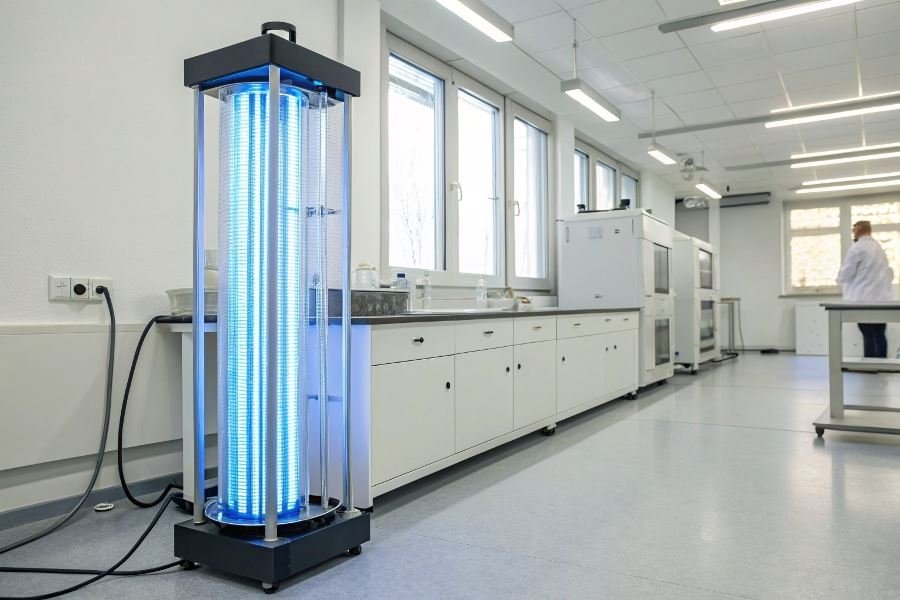
| UV Room Treatment | One-time effect | After each use/entry |
| Air Sterilizers | Continuous | Periodic filter changes |
This persistent protection creates an environment where pathogens are constantly removed, rather than allowed to accumulate between cleaning sessions. The Molekule air purifier, for example, uses PECO technology that not only captures but destroys pollutants at a molecular level, providing uninterrupted protection.
Safer for people and planet
Perhaps the most significant advantage of air sterilization technology is its environmental and health safety profile compared to chemical disinfectants.
Chemical cleaning agents often contain volatile organic compounds (VOCs) that can trigger respiratory issues, skin irritation, and even contribute to long-term health concerns. A 2018 study published in the American Journal of Respiratory and Critical Care Medicine linked regular use of cleaning sprays to accelerated lung function decline equivalent to smoking 20 cigarettes daily.
Air sterilization systems eliminate these risks by using physical methods of pathogen destruction rather than chemical warfare.
Modern air purifiers like the IQAir HealthPro series operate silently in the background, consuming minimal electricity while avoiding the environmental impact of disposable cleaning products. Their HyperHEPA filtration captures particles ten times smaller than standard HEPA filters, without introducing any chemicals into the environment.
The shift toward air sterilization represents a more holistic approach to indoor environmental quality—one that addresses the complete pathogen lifecycle rather than just surface contamination. By targeting airborne threats continuously and without chemical residues, these systems provide protection that’s not just more effective, but fundamentally safer for both occupants and the planet.
Maximizing Your Investment in Air Sterilization
Strategic integration for comprehensive protection
Implementing air sterilizers effectively requires thoughtful integration with existing protocols. The most successful deployments treat air sterilization not as a standalone solution but as the cornerstone of a comprehensive approach. Facilities seeing optimal results typically position Molekule or RGF REME HALO units at strategic circulation points, ensuring maximum air exchange while maintaining proper distancing from HVAC returns.
Key integration practices that deliver superior results include:
- Conducting thorough air flow mapping before installation
- Implementing 24/7 operation schedules with periodic intensity increases during peak occupancy
- Establishing maintenance protocols that align with existing facility management systems
- Deploying complementary surface disinfection on a reduced schedule
Organizations that have embraced this integrated approach report up to 87% reduction in airborne pathogens while simultaneously decreasing surface disinfection frequency by approximately 40%.
The financial equation favors air sterilization
When evaluating air sterilizers against traditional disinfection methods, the numbers tell a compelling story. Initial investment in quality air sterilization technology typically ranges from 500−2,500 per unit, depending on coverage area and technology sophistication.
| Disinfection Method | Initial Investment | Annual Operating Cost | Staff Hours Required | Effectiveness Duration |
|---|---|---|---|---|
| Air Sterilizers | 500−2,500/unit | 50−200/unit | 5-10 hrs/year | Continuous |
| Chemical Disinfection | 100−300 | 1, 200−5,000 | 200-500 hrs/year | 4-24 hours |
| UV Light Systems | 300−1,000 | 100−300 | 50-100 hrs/year | Only during operation |
The ROI calculation becomes particularly favorable when factoring reduced sick leave (typically 12-18% reduction in the first year) and decreased chemical purchasing. Most facilities recoup their investment within 8-14 months while enjoying significantly improved air quality metrics.
Tomorrow’s air sterilization innovations
The air sterilization landscape is evolving rapidly with several emerging technologies poised to redefine industry standards:
AI-driven adaptive purification systems from companies like Aura Air are beginning to customize sterilization intensity based on real-time occupancy, air quality readings, and even local disease outbreak data.
Nanomaterial filtration technologies are achieving unprecedented capture rates for particles as small as 0.1 microns while requiring significantly less energy than traditional HEPA systems.
Perhaps most exciting is the convergence of air sterilization with building management systems. The Airthings platform exemplifies this trend, offering integration with smart building controls to create environments that automatically respond to changing air quality conditions.
Miniaturization is another frontier, with personal air sterilizers from Wynd creating protective zones around individuals in shared spaces—a development particularly relevant for healthcare and transportation sectors.
These innovations aren’t merely incremental improvements; they represent fundamental shifts in how we approach indoor air quality management. Organizations implementing current-generation air sterilizers are not only addressing immediate disinfection needs but positioning themselves to easily adopt these emerging technologies as they mature.
Discover why air sterilizers provide superior protection against airborne pathogens compared to traditional surface cleaning methods. Learn about continuous disinfection benefits and how these technologies safeguard health while eliminating harmful chemicals.
Discover why air sterilizers provide superior protection against airborne pathogens compared to traditional surface cleaning methods. Learn about continuous disinfection benefits and how these technologies safeguard health while eliminating harmful chemicals.