
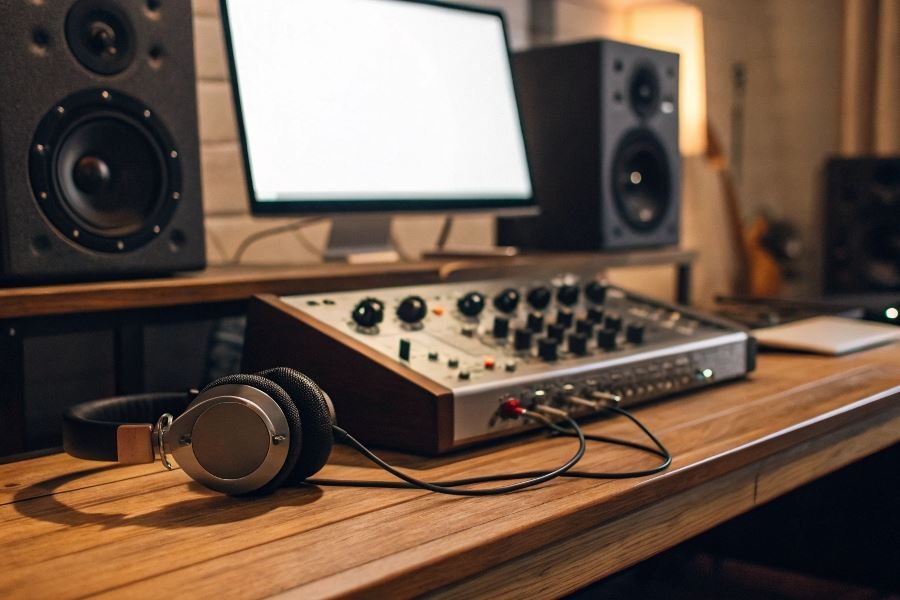
Ever wondered why some home studios sound like professional recording environments while others remain perpetually amateur? The secret often lies not in expensive microphones or acoustics, but in the hidden heroes of signal processing: expansion cards.
Expansion cards are specialized hardware components that plug into your audio interface or computer, dramatically extending your studio’s capabilities. Think of them as superpowers for your recording setup – they add processing muscle, specialized inputs/outputs, and unique sonic characteristics that standard interfaces simply can’t match.
For serious home producers, the ability to expand is non-negotiable. Your recording journey evolves constantly – what starts as simple vocal tracking today might become orchestral recording tomorrow. The right expansion cards grow with you, preventing costly complete system overhauls when your needs change.
When evaluating expansion cards for your studio arsenal, three factors reign supreme: compatibility with your existing gear, the specific functionality you need most (DSP processing, additional I/O, or specialized conversion), and future-proofing potential. The best cards offer headroom for growth while solving immediate bottlenecks.
Compatibility: The foundation of expansion success
Your expansion strategy must begin with a thorough assessment of your current interface’s expansion capabilities. Some systems use proprietary connections while others leverage universal standards like PCIe or Thunderbolt. This single consideration can make the difference between a seamless upgrade and an expensive paperweight.
Processing vs. connectivity: Defining your priorities
Before investing, determine whether your primary need is additional processing power (for running more plugins) or expanded connectivity (for recording more simultaneous sources). The top expansion cards excel at one or the other – rarely both.
Expansion Cards That Transform Home Studios
When building a professional-grade home recording setup, the right expansion cards can dramatically elevate your production capabilities. These powerful hardware additions unlock advanced processing, expanded I/O options, and superior audio quality that standard interfaces simply can’t match.
For serious producers looking to upgrade their home recording studios, selecting the right expansion cards makes all the difference between amateur and professional-sounding results. The top 3 expansion cards for a home recording studio represent significant investments that pay dividends in workflow efficiency and sonic quality. Let’s examine the industry leaders that have become essential tools for producers who refuse to compromise.
Universal Audio UAD-2 Satellite Thunderbolt
The UAD-2 Satellite Thunderbolt stands as a revolutionary solution for producers seeking hardware acceleration without internal installation. This external DSP powerhouse connects via Thunderbolt, delivering:
- Zero-latency monitoring with legendary UAD plugins
- Authentic emulations of classic analog gear
- Processing offloaded from your computer’s CPU
What truly distinguishes the UAD-2 Satellite is its ecosystem of meticulously modeled plugins. Each emulation undergoes rigorous development alongside the original hardware manufacturers, resulting in digital recreations that capture the subtle harmonics and behavior of vintage equipment.
“The UAD platform doesn’t just provide plugins—it delivers an entire studio’s worth of classic gear in a single box.”
Available in QUAD and OCTO configurations (featuring 4 or 8 SHARC processors respectively), the Satellite scales to match your processing needs without requiring you to open your computer case.
Avid HDX PCIe Card
The Avid HDX PCIe Card represents the gold standard for Pro Tools-centered studios. This powerhouse expansion card delivers:
- Up to 256 audio tracks with minimal latency
- Dedicated DSP for AAX DSP plugin processing
- Professional-grade 192kHz sample rate support
| Feature | Specification |
|---|---|
| Max I/O | 64 channels |
| Latency | <1ms |
| DSP Chips | 18 |
| Voice Count | 256 @ 48kHz |
The HDX system fundamentally transforms Pro Tools performance, providing near-zero latency monitoring while handling complex mixes that would cripple native systems. For professionals working on demanding projects with tight deadlines, the HDX card eliminates the frustration of buffer adjustments and playback limitations.
RME HDSPe AIO Pro PCIe Card
The RME HDSPe AIO Pro embodies German engineering excellence in a remarkably versatile package. This professional PCIe card offers:
- Comprehensive connectivity including ADAT, SPDIF, AES/EBU
- TotalMix FX software for flexible routing and mixing
- Industry-leading driver stability across operating systems
What makes the HDSPe AIO Pro exceptional is its remarkable flexibility. The card accommodates virtually any studio configuration with its diverse I/O options, while RME’s legendary driver stability ensures reliable performance even during marathon recording sessions.
The AIO Pro’s converters deliver pristine audio quality with 120dB dynamic range, while its ultra-stable clock ensures jitter-free recording. For studios requiring maximum connectivity options in a single card, the HDSPe AIO Pro represents an investment that will remain relevant through multiple computer upgrades.
Each of these expansion cards represents a significant leap beyond consumer-grade interfaces, delivering professional capabilities that transform home studios into world-class production environments. The choice ultimately depends on your workflow preferences, existing equipment ecosystem, and specific production requirements.
Maximizing Your Studio Investment with Expansion Cards
When you’ve invested thousands in your home recording setup, choosing the right expansion cards isn’t just a technical decision—it’s a financial one. The right cards amplify your capabilities; the wrong ones collect dust while emptying your wallet. Let’s dive into how to make expansion cards pay dividends for your studio.
Ensuring Seamless Compatibility
The most expensive expansion card becomes worthless if it doesn’t play nice with your existing gear. Before purchasing, consider these critical compatibility factors:
Interface connection types matter enormously. PCIe cards require motherboard slots, while Thunderbolt options need specific ports. Universal Audio Apollo interfaces use Thunderbolt 3, making them incompatible with older PCIe DSP accelerators without adapters.
Computer specifications determine performance ceilings. A powerful Avid HDX system requires not just connection compatibility but sufficient CPU headroom and RAM to handle the increased processing capabilities.
The most expensive mistake studio owners make is purchasing expansion cards without confirming bus speeds, driver compatibility, and power requirements.
Operating system compatibility creates hidden limitations. Many Waves DiGiGrid networking solutions work flawlessly with both Mac and Windows, while some specialized cards favor one platform.
| Expansion Card Type | Primary Compatibility Concerns |
|---|---|
| DSP Accelerators | DAW software version, driver updates, bus speed |
| I/O Expanders | Clock synchronization, sample rate matching, buffer settings |
| Networking Cards | Protocol support, latency handling, bandwidth requirements |
Future-proofing Through Strategic Selection
The expansion card market evolves rapidly, but certain principles ensure longevity:
Modular systems offer extended lifespans. RME cards with exchangeable I/O modules allow upgrading individual components rather than entire systems when needs change.
Industry standard protocols outlast proprietary ones. Dante networking cards from Audinate maintain relevance because they’ve become an industry standard, while proprietary solutions often face obsolescence.
Manufacturer support history predicts future viability. Companies like Solid State Logic maintain driver support for legacy products far longer than smaller manufacturers who may abandon older hardware.
Calculating True Return on Investment
Smart expansion card investments deliver measurable returns:
Time savings translate directly to profit. A $1,200 DSP accelerator that saves 3 hours per project across 50 projects annually at $75/hour creates $11,250 in potential additional income—a 937% ROI.
Client retention improves with expanded capabilities. Studios that can handle larger session sizes or offer specialized processing attract repeat business. The Antelope Audio Orion expansion systems enable higher track counts that prevent turning away complex projects.
Rental offset calculations reveal hidden value. If you regularly rent specialized gear, purchasing expansion cards that eliminate that need creates immediate ROI. A $2,000 networking card that replaces $200 monthly rentals pays for itself in under a year.
Consider depreciation advantages. Professional audio equipment typically depreciates over 5-7 years for tax purposes, creating additional financial benefits beyond pure performance improvements.
The expansion cards that deliver the greatest ROI aren’t necessarily the most expensive or technically impressive—they’re the ones that solve your specific workflow bottlenecks while opening new creative and business opportunities.
Discover the top 3 expansion cards that can transform your home recording studio. Learn about UAD-2 Satellite Thunderbolt, Avid HDX, and RME HDSPe AIO Pro cards to enhance audio quality and processing power for professional results.
Discover the top 3 expansion cards that can transform your home recording studio. Learn about UAD-2 Satellite Thunderbolt, Avid HDX, and RME HDSPe AIO Pro cards to enhance audio quality and processing power for professional results.

