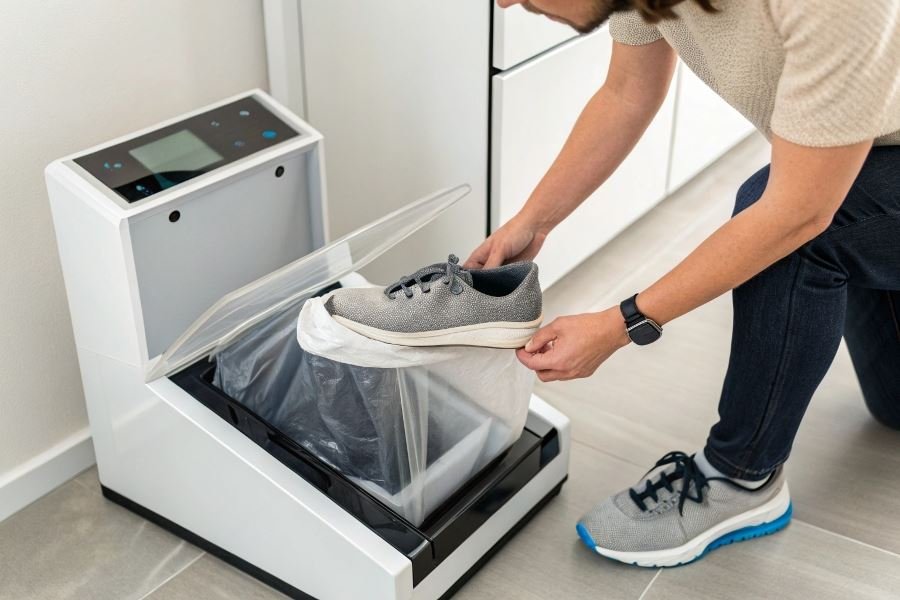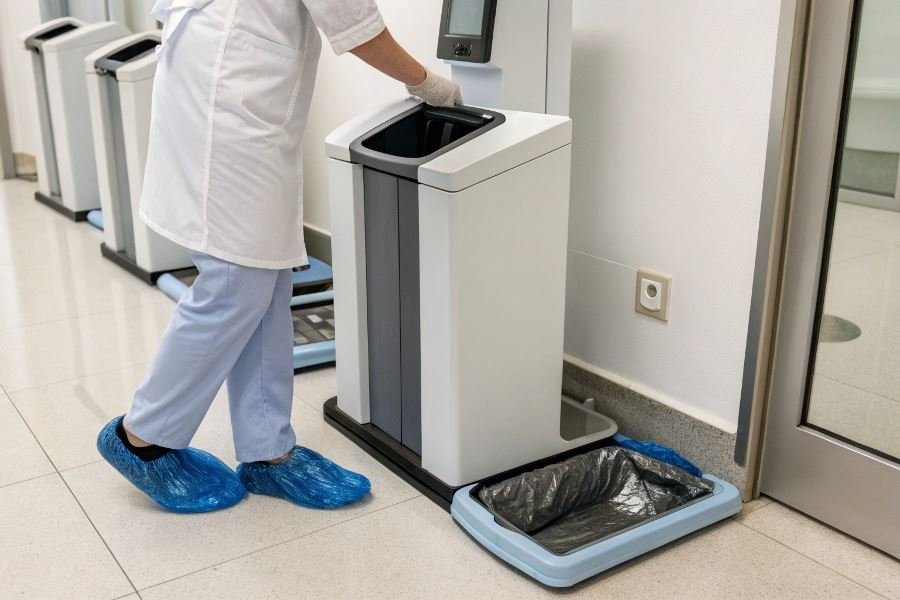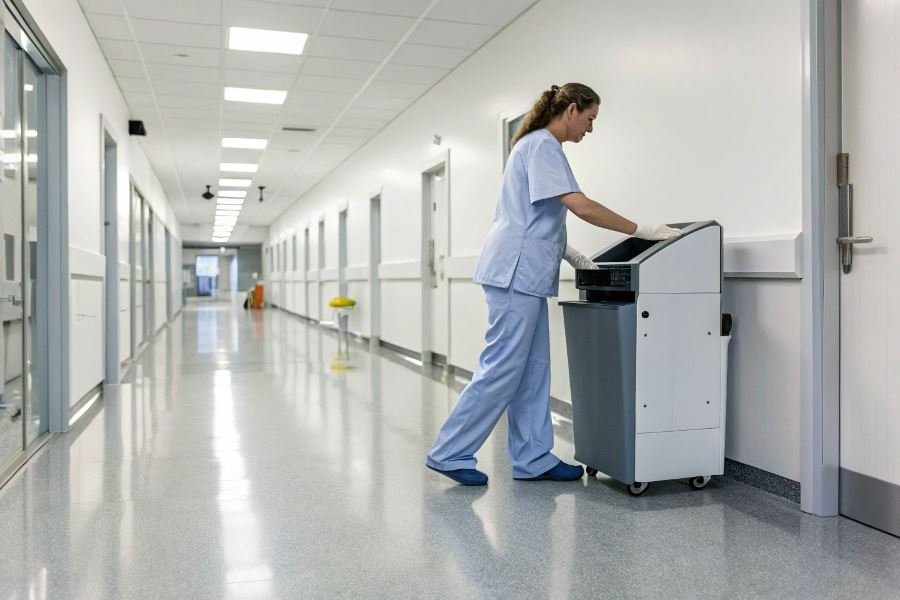
What’s the first line of defense against 99% of pathogens entering a medical facility? It’s right under your feet.
When patients enter a hospital or clinic, they expect pristine conditions that promote healing, not harbor contaminants. Yet research from the American Journal of Infection Control shows that footwear can transport dangerous pathogens throughout medical facilities, creating invisible highways for infection transmission. This is where shoe cover dispensers become not just accessories, but essential guardians of medical safety protocols.
Selecting the right shoe cover dispenser for your medical institution isn’t merely about compliance—it’s about creating an effective barrier against cross-contamination. The Centers for Disease Control established clear guidelines following their 2018 study demonstrating how proper footwear protocols can reduce healthcare-associated infections by up to 30%. These aren’t just recommendations; they’re regulatory requirements that facilities must meet to maintain accreditation and, more importantly, patient safety.
Modern dispensers have evolved dramatically from their manual predecessors. Today’s automated systems not only streamline the application process but also ensure consistent coverage and reduce waste. The right dispenser integrates seamlessly into your facility’s workflow while maintaining the highest hygiene standards.
Beyond basic compliance, these systems play a crucial role in comprehensive infection control strategies. They create a visible commitment to cleanliness that reassures patients while providing real protection against contaminants that could compromise sterile environments. When properly implemented, shoe cover protocols become an essential component of the medical safety ecosystem—protecting everyone from the ground up.
Essential Factors for Selecting the Perfect Shoe Cover Dispenser
When equipping a medical facility with proper hygiene solutions, selecting the right shoe cover dispenser becomes a critical decision that impacts daily operations, infection control protocols, and overall efficiency. The process of how to choose a shoe cover dispenser for a medical institution requires careful consideration of several key factors that will determine whether your investment serves your facility’s unique needs or becomes an underutilized piece of equipment.
Matching Capacity to Facility Traffic
The size and traffic flow of your medical facility directly dictates the dispenser capacity you’ll need. A busy emergency department or surgical center might require a high-capacity dispenser that can accommodate 100+ covers without frequent refilling, while a small private practice might function efficiently with a more modest unit.
Traffic volume assessment should be your first consideration:
- Small clinics (5-15 staff): 50-100 cover capacity
- Medium facilities (15-50 staff): 100-200 cover capacity
- Large hospitals (50+ staff): 200+ cover capacity with rapid dispensing technology
Remember that understocking leads to compliance issues, while overspending on excessive capacity wastes valuable resources. Many facilities find that multiple strategically placed medium-capacity units outperform a single high-capacity dispenser.
Automatic vs. Manual: The Efficiency Equation
| Feature | Automatic Dispensers | Manual Dispensers |
|---|---|---|
| Speed | 1-2 seconds per application | 5-10 seconds per application |
| Hands-free | Yes | No |
| Initial Cost | 300−1,200 | 50−300 |
| Maintenance | Requires power source, occasional servicing | Minimal maintenance |
| Infection Control | Superior (touchless operation) | Good (requires hand contact) |
Automatic dispensers shine in high-traffic areas where efficiency and cross-contamination concerns are paramount. The CleanStep Pro and similar models offer touchless operation that significantly reduces cross-contamination risks.
Manual dispensers remain viable options for lower-traffic areas or facilities with budget constraints, offering simplicity and reliability without power requirements.
Material Durability and Sanitization Protocols
Medical environments demand equipment that can withstand rigorous cleaning protocols without degradation. The materials used in your dispenser construction directly impact its longevity and infection control capabilities.
Premium materials to prioritize:
- Medical-grade stainless steel – Withstands harsh disinfectants and offers natural antimicrobial properties
- High-density polyethylene (HDPE) – Chemical-resistant and easily sanitized
- ABS plastic with antimicrobial additives – Cost-effective with enhanced infection control
Avoid dispensers with difficult-to-clean crevices, fabric components, or materials that degrade with repeated exposure to quaternary ammonium compounds or hydrogen peroxide-based cleaners commonly used in medical settings.
The cleaning protocol compatibility should be verified before purchase—some dispensers feature removable components that can be autoclaved, while others require specific disinfection methods that might not align with your facility’s existing protocols.
For facilities implementing terminal cleaning procedures, dispensers with IP54 or higher ratings offer protection against liquid ingress during room decontamination processes. The SaniDispense Medical series specifically addresses this concern with sealed electronic components that resist damage from disinfection procedures.
By carefully evaluating these essential factors—capacity requirements, automation benefits, and material durability—your medical facility can select a shoe cover dispenser that enhances infection control protocols while optimizing operational efficiency for years to come.
Sealing the Deal: Your Shoe Cover Dispenser Decision
When investing in shoe cover dispensers for your medical facility, the final decision requires balancing immediate costs against long-term value. Let’s dive into the financial considerations, implementation strategies, and maintenance requirements that will ensure your investment pays dividends for years to come.
The true cost equation
The sticker price is just the beginning. A comprehensive cost-benefit analysis reveals that premium automatic dispensers like the CleanPro X5 might command $1,200-1,500 upfront but deliver substantial savings over time:
- Labor efficiency: Automatic dispensers save approximately 5-7 seconds per application compared to manual alternatives
- Reduced cross-contamination: Studies show properly implemented shoe cover systems can reduce floor contamination by up to 68%
- Material optimization: Smart dispensers use precisely the right amount of material, eliminating waste
A medium-sized clinic with 50 staff members might see the following ROI:
| Dispenser Type | Initial Investment | Annual Operating Cost | 5-Year Total Cost | Time Saved Annually |
|---|---|---|---|---|
| Manual | $300-500 | $1,200 | $6,300 | 0 hours |
| Semi-Automatic | $700-900 | $950 | $5,450 | 42 hours |
| Fully Automatic | $1,200-1,500 | $750 | $4,950 | 87 hours |
The premium option often becomes the budget-friendly choice when viewed through a five-year lens.
Seamless implementation strategies
Even the most sophisticated dispenser will fail without proper implementation. Success requires:
Strategic placement – Position dispensers at all critical transition points between “dirty” and “clean” zones. Map your facility’s traffic flow before installation.
Clear visual guidance – Use floor markings and wall signage to create an intuitive system that guides even first-time visitors.
Staff champions – Identify and train key personnel who will model proper usage and troubleshoot minor issues. These champions become your frontline defense against improper use.
The difference between successful and failed implementation often comes down to communication, not technology.
Training that sticks
Effective training transcends the basic “how-to” demonstration:
- Demonstrate the why – Staff compliance increases dramatically when they understand infection control principles
- Practice sessions – Allow hands-on experience during low-traffic periods
- Feedback mechanisms – Create simple ways for staff to report issues or suggest improvements
Maintenance matters
The most overlooked aspect of dispenser selection is maintenance requirements. Consider:
Replacement part availability – Before purchasing, confirm parts will remain available for at least 7-10 years. The MediStep Pro offers a 10-year parts guarantee.
Service intervals – Premium models typically require servicing every 10,000-15,000 uses, while budget options may need attention every 5,000 uses.
Cleaning protocols – Establish weekly cleaning schedules using manufacturer-approved solutions to prevent buildup that can compromise performance.
Documentation – Maintain detailed service records to identify patterns and anticipate replacement needs before failures occur.
By weighing these factors against your facility’s specific needs, you’ll select a shoe cover dispenser system that delivers exceptional value, seamless implementation, and reliable performance for years to come.
Discover how to select the ideal shoe cover dispenser for your medical facility. Learn about capacity requirements, automatic vs. manual options, and infection control benefits to ensure compliance with hygiene standards while maximizing staff efficiency.
Discover how to select the ideal shoe cover dispenser for your medical facility. Learn about capacity requirements, automatic vs. manual options, and infection control benefits to ensure compliance with hygiene standards while maximizing staff efficiency.