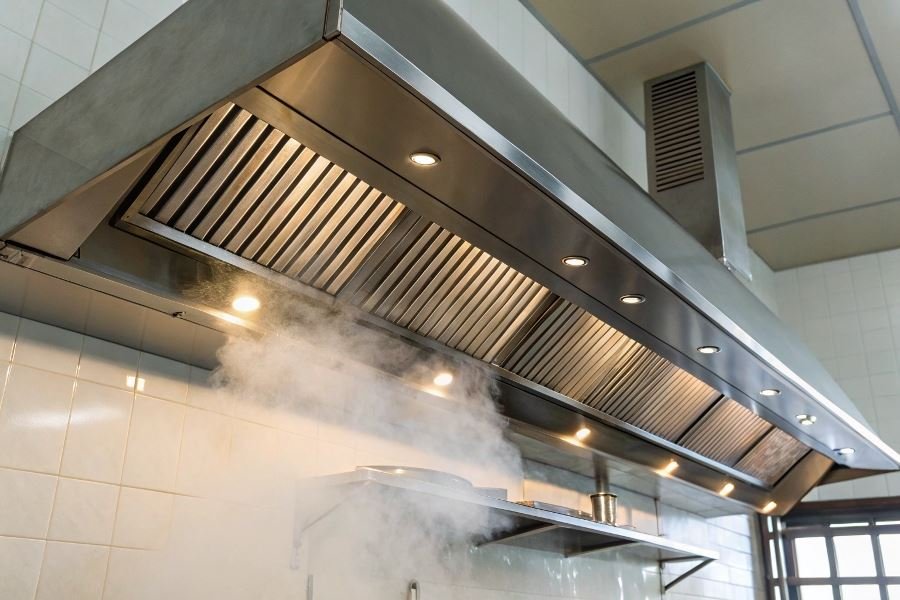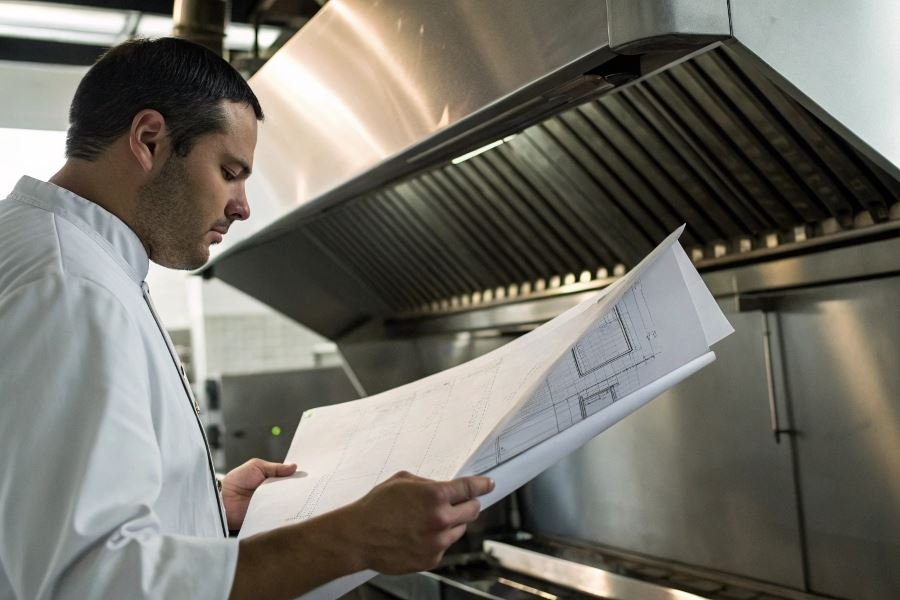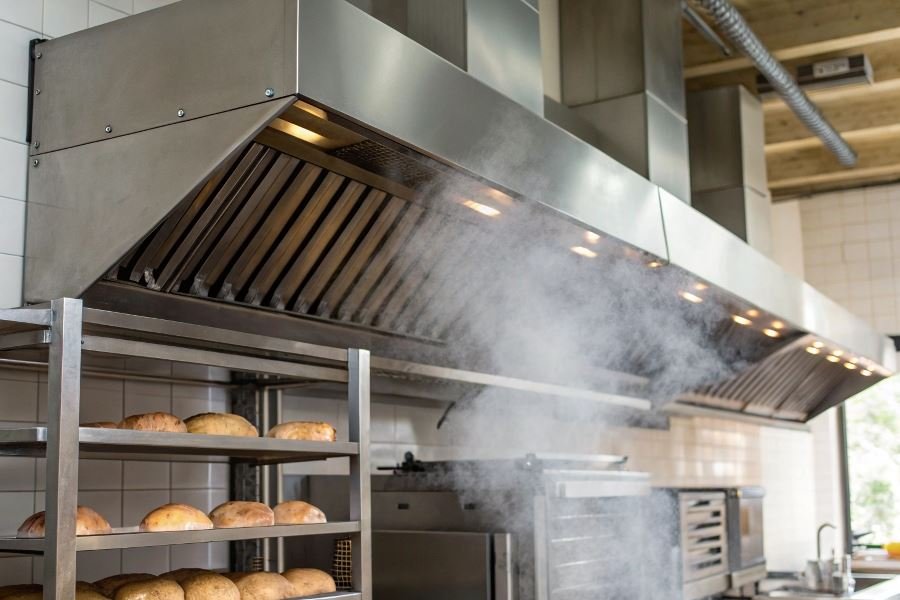
Ever wondered why some bakeries smell heavenly while others battle constant smoke and heat? The answer might be hanging right above the ovens.
Selecting the right ventilation hood for your bakery isn’t just about compliance—it’s the invisible backbone of your entire operation. When properly chosen, a hood system silently protects your equipment, preserves product quality, and creates a comfortable environment for both staff and customers. The wrong choice? That’s a recipe for disaster.
The breathing system of your bakery
Bakery environments generate significant heat, moisture, and airborne particles. Without proper ventilation, these elements quickly transform your workspace into an uncomfortable, potentially hazardous environment. A high-quality hood system removes not just visible smoke, but also captures grease particles, controls humidity, and maintains consistent air quality throughout your production area.
Beyond basic compliance
While meeting local fire codes and health regulations is non-negotiable, truly effective hood selection goes further. The right system dramatically impacts:
- Energy efficiency: Modern systems can reduce HVAC costs by up to 30%
- Staff productivity: Comfortable temperatures mean fewer breaks and higher output
- Equipment longevity: Reduced grease and moisture buildup extends the life of expensive ovens
- Product consistency: Stable environmental conditions ensure reliable baking results
The evaluation framework
When assessing hood options, consider the “ventilation triangle”: capture efficiency, operational requirements, and long-term value. Your hood must effectively manage your specific production volume and equipment type while balancing initial investment against ongoing operational costs.
The difference between adequate and optimal ventilation often determines whether your bakery merely survives or truly thrives.
Technical Essentials for Bakery Hood Selection
When the aroma of fresh bread fills your bakery, so do heat, moisture, and airborne particles. The right ventilation hood isn’t just equipment—it’s the respiratory system of your entire operation. Professional bakers understand that establishing proper criteria for choosing a hood for a bakery directly impacts food quality, energy costs, and staff comfort.
Airflow Capacity: The Breathing Power
The extraction capability of your hood system determines whether smoke and steam disappear efficiently or linger to create problems. For bakeries, this is non-negotiable.
CFM requirements vary dramatically based on your specific operation:
- Small artisanal bakery (1-2 ovens): 1,500-2,500 CFM
- Medium commercial bakery: 3,000-5,000 CFM
- Large production facility: 6,000+ CFM
The calculation isn’t arbitrary—it’s science. Each square foot of hood coverage typically requires 100-300 CFM depending on the intensity of baking operations. Deck ovens producing artisan breads generate different exhaust needs than continuous conveyor ovens for cookies.
“Undersized ventilation is the silent productivity killer in bakeries. When in doubt, engineers recommend sizing up rather than discovering insufficient airflow after installation.”
Consider the makeup air system simultaneously. For every cubic foot of air extracted, replacement air must enter the space to prevent negative pressure that can cause drafts, door-slamming, and reduced hood efficiency.
Construction Materials: Built to Withstand
Bakery environments combine heat, moisture, and flour dust—a trifecta that challenges even the most robust materials.
| Material | Advantages | Best For |
|---|---|---|
| 304 Stainless Steel | Corrosion resistant, easy cleaning | Standard bakery environments |
| 316 Stainless Steel | Superior corrosion resistance | High-humidity or coastal locations |
| Galvanized Steel | Cost-effective for ductwork | Areas not visible to customers |
The gauge of metal matters significantly. Commercial bakery hoods should use minimum 18-gauge stainless steel for the hood body, with heavier 16-gauge for high-stress components. Welded seams outperform mechanical fasteners for durability and sanitation.
Filter selection deserves special attention. Baffle filters capture grease effectively but may clog with flour dust. Mesh filters might be better for operations with minimal grease but high particulate output. The ideal system often combines multiple filtration methods.
Sizing and Installation: The Perfect Fit
A properly sized hood extends beyond your equipment by 6-12 inches on all sides, creating an effective capture area for rising heat and vapors.
Three critical measurements determine proper hood dimensions:
- Overhang requirements: Minimum 6″ beyond equipment footprint
- Mounting height: Typically 6’6″ to 7’ from floor to hood bottom
- Clearances: Minimum 18″ from hood to combustible materials
The layout of your bakery dictates whether you need:
- Wall-mounted hoods: More efficient, using the wall as a natural barrier
- Island hoods: Require greater CFM but allow 360° access to equipment
- Custom configurations: L-shaped or U-shaped for corner installations
Don’t overlook code compliance. The International Mechanical Code and local regulations establish minimum requirements for fire suppression, clearances, and makeup air. Many jurisdictions require Type I hoods with fire suppression for any equipment producing grease-laden vapors—which includes many baking operations.
The investment in proper sizing and professional installation pays dividends through improved air quality, reduced energy costs, and extended equipment life. When your ventilation system works invisibly in the background, you know you’ve made the right choice.
Beyond Basics: Advanced Hood Selection for Bakery Success
Energy Efficiency That Pays You Back
Energy efficiency isn’t just an environmental buzzword—it’s a direct path to higher profits. Modern bakery hood systems have evolved dramatically, with high-efficiency motors and smart controls reducing power consumption by up to 40% compared to systems from just a decade ago.
The variable frequency drive (VFD) technology has revolutionized hood operations by adjusting fan speeds based on actual cooking conditions. Rather than running at full capacity constantly, these systems ramp up during peak baking times and dial back during slower periods. This intelligent operation can translate to savings of $1,200-3,500 annually for a medium-sized bakery.
Look for hoods with the ENERGY STAR certification, which guarantees performance that exceeds standard energy efficiency requirements. These systems typically feature:
- Premium insulation materials that prevent heat loss
- LED lighting systems that consume 75% less electricity
- Smart sensors that detect heat and steam levels
The most expensive hood is rarely the most efficient. Focus on the Coefficient of Performance (COP) rating—the higher this number, the more efficient the system.
Workplace Comfort Through Sound Management
Noise pollution in bakeries doesn’t just create an unpleasant environment—it affects productivity, increases error rates, and contributes to staff turnover. Advanced hood systems now incorporate acoustic engineering that dramatically reduces operational noise.
| Hood Type | Average Noise Level | Impact on Communication |
|---|---|---|
| Standard | 70-80 dB | Requires raised voices |
| Sound-dampened | 55-65 dB | Normal conversation possible |
| Premium acoustic | Below 55 dB | Comfortable working environment |
The difference between a 75 dB system and a 55 dB system is not subtle—it’s the difference between having to shout instructions and being able to speak normally. Sound-dampening technology in modern hoods includes vibration isolation mounts, insulated fan housings, and aerodynamically optimized airflow paths.
When evaluating hood systems, request an on-site demonstration or visit installations at similar bakeries. The ambient noise level will immediately reveal whether a system deserves consideration.
Maintenance Economics and Lifetime Value
The purchase price represents only 15-20% of a hood system’s lifetime cost. The remaining 80-85% comes from operation, maintenance, and eventual replacement of components.
Self-cleaning systems with automated wash cycles have transformed maintenance requirements. These systems use integrated spray nozzles and detergent dispensers to clean filters and interior surfaces, reducing manual cleaning time by up to 90%. While they command a premium of approximately $2,000-4,000, they typically pay for themselves within 18-36 months through reduced labor costs.
Filter design has also evolved significantly. Baffle filters from companies like Halton and CaptiveAire now offer tool-free removal and dishwasher-safe construction, dramatically reducing maintenance time.
The most forward-thinking bakeries are adopting predictive maintenance systems that monitor performance metrics and alert operators before problems occur. These systems track:
- Airflow efficiency
- Motor temperature and performance
- Filter condition
- System pressure differentials
By addressing issues before they cause system failures, these monitoring systems prevent costly emergency repairs and production interruptions. The data they provide also helps establish optimal maintenance schedules based on actual usage rather than arbitrary calendars.
Discover the 7 critical factors for selecting the perfect bakery hood system. Learn how proper ventilation impacts efficiency, compliance, and operational costs while ensuring optimal airflow and durability for your bakery's specific needs.
Discover the 7 critical factors for selecting the perfect bakery hood system. Learn how proper ventilation impacts efficiency, compliance, and operational costs while ensuring optimal airflow and durability for your bakery's specific needs.