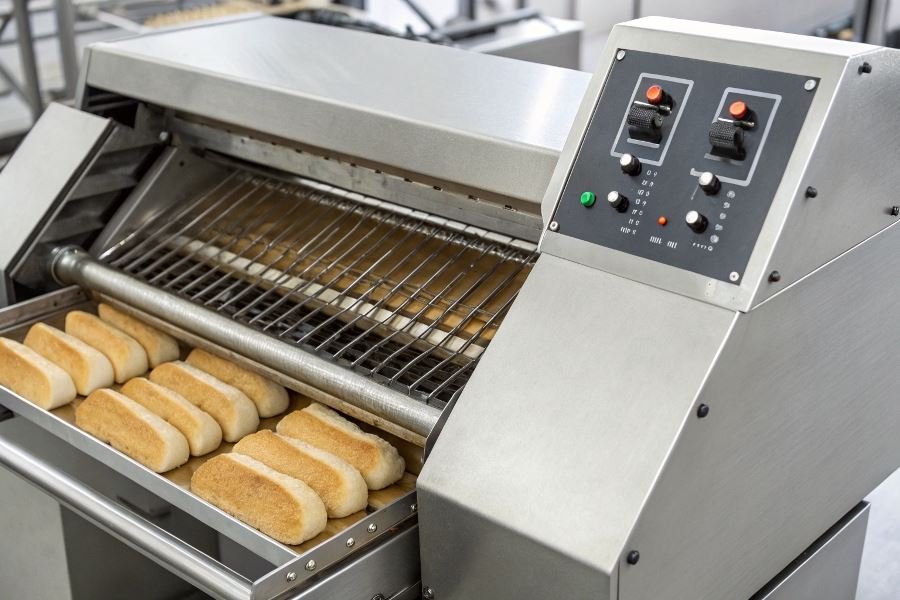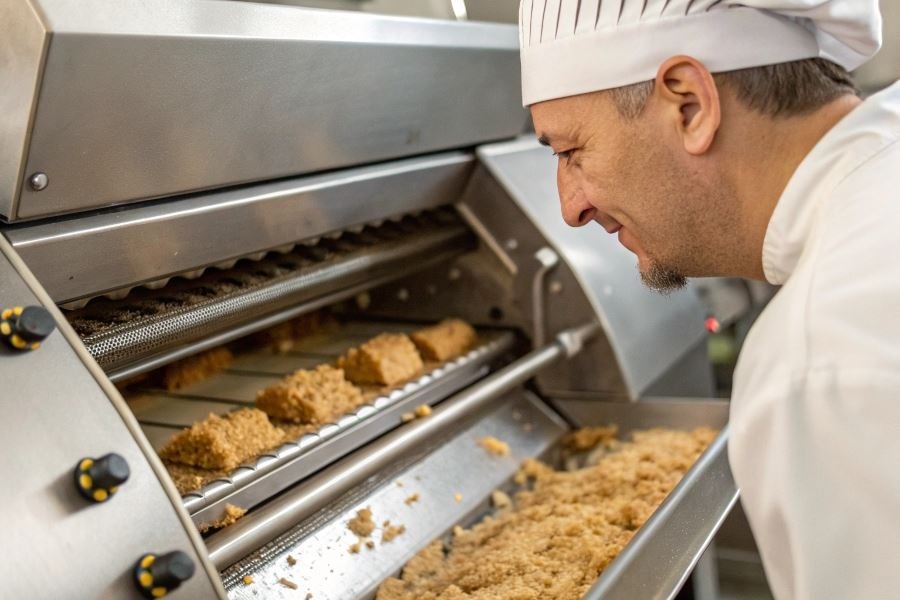
Ever watched a master baker transform day-old bread into a goldmine of opportunity? That’s the magic of a quality bread crumbler at work. While often overlooked, these specialized machines are revolutionizing waste management and product development in bakeries across the country.
A bread crumbler is essentially a mechanical device designed to transform bread products—whether fresh, stale, or even slightly defective—into uniform bread crumbs of varying textures. Think of it as your bakery’s recycling powerhouse, turning potential waste into profitable by-products.
The bottom-line impact
Professional bakeries implementing bread crumblers report up to 40% reduction in waste costs while simultaneously creating new revenue streams. The math is compelling: that day-old artisan loaf that would otherwise be discarded can be transformed into premium bread crumbs selling for $4-6 per pound in specialty markets.
“Our bread crumbler paid for itself within four months. Now it generates roughly $2,300 in monthly revenue from what used to be our waste stream.” — Third-generation bakery owner
Why your bakery needs a dedicated crumbler
The benefits extend beyond simple economics:
- Consistency: Machine-produced crumbs maintain uniform size and texture—critical for commercial food production
- Efficiency: Modern units process up to 200 pounds per hour, freeing staff for higher-value tasks
- Versatility: Adjustable settings allow production of everything from fine panko-style crumbs to coarser breadings
- Food safety: Enclosed systems minimize contamination risks compared to manual processing
Key selection factors
When evaluating bread crumblers, focus on:
- Production capacity: Match to your volume needs and growth projections
- Adjustability: Multiple texture settings maximize product versatility
- Footprint: Consider your available space constraints
- Cleaning ease: Look for tool-free disassembly and dishwasher-safe components
- Energy efficiency: Newer models offer significant power savings over legacy equipment
Essential Factors for Selecting the Perfect Bread Crumbler
When equipping a commercial bakery, the bread crumbler often gets overlooked until production bottlenecks emerge. Yet this specialized equipment can dramatically impact your operation’s efficiency, product quality, and bottom line. Selecting the right bread crumbler requires careful consideration of several critical factors that align with your specific production needs.
The process of how to choose a bread crumbler for a bakery involves balancing technical specifications with practical operational realities. Let’s dive into the key considerations that will guide you toward making an informed investment decision that serves your bakery for years to come.
Production Capacity That Matches Your Output
Your bread crumbler must handle your current production volume with room to grow. Most manufacturers specify throughput in pounds per hour:
| Production Level | Throughput Capacity | Ideal For |
|---|---|---|
| Small Artisan | 100-300 lbs/hr | Specialty bakeries with limited production runs |
| Mid-Size | 300-800 lbs/hr | Regional bakeries with diverse product lines |
| Industrial | 800-2,000+ lbs/hr | Large-scale operations with continuous production |
Don’t just match your current needs – consider your growth trajectory for the next 3-5 years. A machine operating at 85% capacity leaves headroom for seasonal demands without creating a production bottleneck.
Space Efficiency and Installation Requirements
Modern bakeries often operate in spaces where every square foot counts. When evaluating crumblers, consider:
- Footprint dimensions – measure your available space precisely
- Vertical clearance requirements for loading and maintenance
- Utility connections (electrical, compressed air, ventilation)
Some manufacturers like JAC offer compact models specifically designed for space-constrained environments, while others prioritize throughput over footprint optimization.
Bread Variety Compatibility
Different bread types require different crumbling approaches. The texture of your products should directly influence your equipment choice:
- Soft sandwich breads require gentler processing
- Artisan sourdoughs with thick crusts need more aggressive blade configurations
- Multi-grain products may require specialized settings to prevent clogging
The most versatile machines offer adjustable blade configurations and variable speed settings to handle everything from delicate brioche to dense rye loaves. If your bakery produces a wide range, prioritize adaptability over raw speed.
Maintenance Access and Cleaning Protocols
Food safety regulations demand thorough cleaning, making maintenance accessibility a critical factor. Look for:
- Tool-free disassembly of key components
- Smooth surfaces without hard-to-reach crevices
- Clear access panels for routine maintenance
Machines from Urschel feature quick-release systems that allow for complete sanitation in under 15 minutes – a significant advantage when production schedules are tight.
Energy Efficiency and Operational Economics
The initial purchase price represents only part of your investment. Long-term operational costs include:
- Electricity consumption (look for energy-efficient motors)
- Replacement parts frequency and availability
- Labor hours required for operation and maintenance
Modern bread crumblers from manufacturers like Bakon USA incorporate variable frequency drives that can reduce energy consumption by up to 30% compared to older models, delivering substantial savings over the equipment’s lifespan.
By carefully evaluating these essential factors, you’ll select a bread crumbler that not only meets your immediate production needs but also supports your bakery’s long-term growth and profitability objectives.
The Ultimate Bread Crumbler Guide for Every Bakery Scale
When bread becomes crumbs, magic happens in the culinary world. Behind this transformation stands the humble yet mighty bread crumbler—a bakery workhorse that deserves careful consideration. Let’s dive into the three main categories of bread crumblers that can revolutionize your operation, regardless of size.
Industrial Powerhouses for High-Volume Production
Large-scale bakeries processing hundreds of pounds of bread daily need robust solutions that never quit. Industrial bread crumblers like the Champion WC-250 and Hobart BC-1800 deliver exceptional throughput—often processing 500+ pounds per hour with minimal supervision.
These machines typically feature:
- Continuous feed systems allowing non-stop operation during production shifts
- Heavy-duty stainless steel construction built to withstand 24/7 operation
- Precision control over crumb size (from fine powder to coarse chunks)
- Integrated dust collection systems to maintain air quality
The difference between mediocre and exceptional industrial crumblers isn’t just capacity—it’s consistency. The best machines produce uniform crumbs batch after batch, year after year.
Industrial models represent significant investments (15, 000−30,000), but their efficiency makes them cost-effective for operations producing bread crumbs at scale. Many feature programmable settings to switch between different crumb profiles with minimal downtime.
Mid-Range Versatility Champions
Medium-sized bakeries face unique challenges—they need equipment flexible enough to handle varying production demands without breaking the bank. Mid-sized crumblers like the Thunderbird ARM-02 strike this balance perfectly.
These versatile machines typically offer:
| Feature | Benefit |
|---|---|
| Modular design | Easily reconfigured for different bread types |
| 150-300 lb/hr capacity | Sufficient for most medium operations |
| Quick-change screens | Multiple crumb sizes without major downtime |
| Smaller footprint | Valuable in space-constrained facilities |
Mid-range models (7, 000−15,000) represent the sweet spot for growing bakeries. They provide enough capacity to handle substantial production while offering the flexibility to process specialty breads when needed.
The best mid-sized crumblers combine durability with adaptability—they’re workhorses that can pivot when your menu changes.
Compact Solutions for Artisan Operations
Small specialty bakeries require equipment that matches their artisanal approach. Compact crumblers like the Robot Coupe R2N and Waring WCG300 deliver precision in smaller packages.
These specialized machines excel with:
- Gentle processing that preserves the character of artisanal breads
- Quiet operation suitable for customer-facing environments
- Easy disassembly for thorough cleaning between small batches
- Capacity of 30-100 pounds per hour—perfect for boutique production
Compact models (1, 200−5,000) often feature multiple attachments, transforming them into multi-purpose tools that maximize value for smaller operations with limited space and budgets.
For specialty bakeries creating signature bread crumb blends, these machines offer the control needed to maintain distinctive textures and flavors that set artisanal products apart.
The right bread crumbler isn’t just about capacity—it’s about finding equipment that aligns with your production philosophy, space constraints, and quality standards. Whether you’re outfitting a massive production facility or a neighborhood bakery, there’s a perfect crumbling solution waiting to transform your day-old bread into profitable, versatile crumbs.
Discover how to select the ideal bread crumbler for your bakery operations based on production volume, space requirements, and bread types. Learn about different models suited for bakeries of all sizes to maximize efficiency and quality.
Discover how to select the ideal bread crumbler for your bakery operations based on production volume, space requirements, and bread types. Learn about different models suited for bakeries of all sizes to maximize efficiency and quality.