Ever run your hand across a perfectly restored vintage car seat and wondered, “How did they make this look brand new?” Behind every great restoration lies a critical decision that most overlook: the material selection.
The right repair material doesn’t just fix a seat—it transforms it. Whether you’re restoring a cherished family heirloom chair, reviving a classic car’s interior, or salvaging expensive office furniture, understanding seat repair materials separates amateur fixes from professional restorations.
Material landscape: Options that shape comfort and longevity
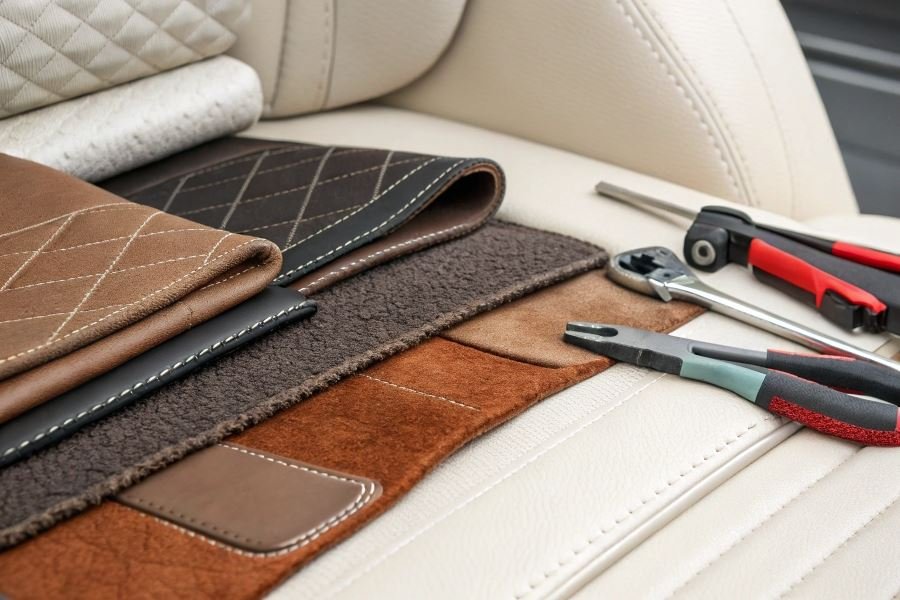
Today’s market offers an impressive array of seat repair materials, each with distinct characteristics. Genuine leather remains the gold standard for luxury and longevity, though at premium prices starting at $20-30 per square foot. Vinyl provides remarkable durability and water resistance at roughly one-third the cost. Fabric upholstery offers breathability and comfort but demands more maintenance.
For structural repairs, high-density foam provides essential support, while memory foam contours to body shapes for enhanced comfort. Synthetic backing materials like jute and burlap create the foundation that many overlook but professionals never ignore.
Material matchmaking: The seat-specific approach
Not all seats deserve the same treatment. A dining chair experiences different stresses than a car seat or recliner. Material compatibility with the original construction isn’t just about aesthetics—it’s about structural integrity.
“The material you choose today determines whether you’ll need another repair next year or next decade.” – Furniture Restoration Guild
Decision drivers: Beyond the price tag
While cost inevitably influences decisions, savvy restorers consider the complete picture:
- Durability factors: UV resistance, tear strength, and abrasion tolerance
- Maintenance requirements: Some materials look great but demand constant care
- Environmental conditions: Will the seat face harsh sunlight, humidity, or temperature fluctuations?
- Aesthetic longevity: Some materials age gracefully; others quickly look dated
The most successful repairs balance immediate appearance with long-term performance—creating restorations that don’t just look good today, but continue to impress for years to come.
The Ultimate Guide to Seat Repair Materials
When your favorite chair or car seat starts showing signs of wear, knowing which repair materials to choose can make the difference between a professional-looking fix and an obvious patch job. Each material presents unique challenges and requires specific repair approaches. Let’s dive into the top three seat repair materials and explore their distinct advantages and disadvantages.
Leather Repair: Luxury Meets Longevity
Leather remains the gold standard for premium seating, but it requires specialized care when damaged. The repair seat materials: advantages and disadvantages vary significantly depending on the type of leather and extent of damage.
Patching compounds offer remarkable versatility for leather repairs. These specialized fillers can be color-matched and textured to blend seamlessly with existing leather. Premium options like Leather Magic provide excellent durability, though they require practice to apply correctly. The key advantage is their ability to repair cuts and tears without replacing entire sections.
Leather dyes and colorants represent another essential repair category. Unlike simple paint, quality leather dyes like those from Furniture Clinic penetrate the material for lasting color restoration. The application process typically involves:
- Cleaning the surface thoroughly
- Applying a leather preparer/deglazer
- Layering the dye in thin coats
- Sealing with a leather finisher
The secret to successful leather repair isn’t just matching color—it’s matching texture and sheen. This is where many DIY attempts fall short.
Leather conditioners complete the repair trinity, restoring suppleness to dried or cracked leather. Products containing natural oils like lanolin or jojoba provide deep nourishment without leaving greasy residues.
Fabric and Upholstery: Versatile Solutions
Fabric seats present different challenges than leather but offer more accessible repair options for the average DIY enthusiast.
Fabric patches come in two primary varieties:
| Patch Type | Best For | Limitations |
|---|---|---|
| Iron-on | Quick, small repairs | May not withstand frequent use |
| Sewn-in | Durable, long-term fixes | Requires basic sewing skills |
High-quality fabric adhesives have revolutionized upholstery repair. Products like Tear Mender create flexible, washable bonds without hardening the fabric. The advantage here is speed—most repairs can be completed in minutes rather than hours.
Upholstery thread deserves special mention for its crucial role in professional-quality repairs. Unlike regular sewing thread, upholstery thread offers superior tensile strength and UV resistance. When paired with the right needle and technique, it creates nearly invisible repairs on even the most challenging fabrics.
Vinyl and Synthetic Materials: Modern Solutions
Vinyl and synthetic materials have become increasingly popular in both automotive and furniture applications due to their durability and lower cost.
Liquid vinyl repair compounds represent the cutting edge of synthetic repairs. These heat-activated polymers can be precisely color-matched and textured to mimic the original material. The advantage is their ability to create seamless repairs that flex naturally with the seat.
Complete vinyl repair kits like those from 3M provide everything needed for professional-quality results. These typically include:
- Color-matching compounds
- Grain papers for texture matching
- Heat application tools
- Finishing agents
Heat-set patches offer the quickest solution for vinyl repairs. Applied with a household iron or specialized heat tool, these patches create a molecular bond with the existing material. While convenient, they sometimes lack the perfect texture match of liquid compounds.
The versatility of synthetic repair materials makes them particularly valuable for commercial settings where quick, durable repairs are essential to maintaining appearance and functionality.
Making Smart Choices for Seat Repair Materials
The Real Cost Equation of Repair Materials
When evaluating seat repair materials, the initial price tag tells only part of the story. Genuine leather commands premium prices—typically $20-35 per square foot—but delivers unmatched durability that can extend a seat’s life by 15+ years with proper care. Vinyl presents a middle-ground option at $10-15 per square foot, offering 7-10 years of service under normal conditions. Fabric materials, while budget-friendly at $5-12 per square foot, may require more frequent replacement cycles.
The true cost-benefit analysis must factor in installation complexity. 3M Adhesive products for vinyl repairs might add $15-25 to your project, while professional leather stitching can increase labor costs by $75-150. Consider this revealing comparison:
| Material | Initial Cost | Lifespan | Maintenance | Total 10-Year Cost |
|---|---|---|---|---|
| Leather | High | 15+ years | Moderate | |
| Vinyl | Medium | 7-10 years | Low | $$$ |
| Fabric | Low | 5-7 years | High | |
| Synthetic | Medium | 8-12 years | Low | $$ |
The most economical choice often isn’t the cheapest upfront option. Synthetic materials like Ultraleather deliver exceptional value when measuring cost-per-year of service.
Beyond Today: Long-term Material Selection
Material selection demands forward thinking. Climate considerations dramatically impact performance—leather cracks in extreme heat without conditioning, while vinyl becomes brittle in cold environments. Usage patterns matter equally: family vehicles with frequent entry/exit benefit from highly abrasion-resistant materials like commercial-grade nylon blends.
Sustainability has entered the equation with manufacturers like Alcantara offering eco-friendly alternatives that reduce environmental impact without sacrificing performance. These materials typically command a 15-20% premium but appeal to environmentally conscious consumers.
Material breathability represents another critical long-term factor. Non-breathable materials like standard vinyl can become uncomfortable during extended use, while perforated leather or moisture-wicking fabrics maintain comfort through temperature regulation.
DIY vs Professional Approaches
The professional-versus-DIY decision hinges on three factors: material complexity, repair scope, and available tools.
Simple vinyl patches and basic fabric repairs fall within most DIY skill sets. With repair kits from Permatex or Tear Mender, minor damage can be addressed for under $30. However, these repairs typically show visible seams and may not match original textures perfectly.
Professional repairs leverage specialized equipment like industrial sewing machines, heat guns, and proprietary adhesives. For leather work particularly, professionals employ techniques like skiving (edge-thinning) that require years of experience to master. The cost differential is substantial:
“The average professional seat repair runs $200-450, while comparable DIY attempts average $50-100 in materials—but professional work typically lasts 3-5 times longer.”
The complexity threshold where professional intervention becomes necessary varies by material. Leather requires professional attention for tears exceeding 3 inches, while vinyl can be DIY-repaired for damages up to 5-6 inches with proper preparation.
For heirloom-quality furniture or collector vehicles, professional restoration represents the only viable path to maintaining value. Conversely, temporary or budget-focused repairs may benefit from DIY approaches using modern repair compounds from Leather Magic or similar suppliers.
The informed choice balances immediate budget constraints against long-term performance requirements, matching material properties to specific usage patterns and environmental conditions.
Discover the top leather, fabric, and vinyl repair materials for restoring worn seats. Compare durability, cost, and appearance factors to make informed choices between DIY solutions and professional repairs for lasting results.
Discover the top leather, fabric, and vinyl repair materials for restoring worn seats. Compare durability, cost, and appearance factors to make informed choices between DIY solutions and professional repairs for lasting results.