Ever watched a master craftsman restore a tire with such precision it’s like witnessing automotive surgery? Behind that seamless repair lies an unsung hero: the repair seat. This critical component determines whether your repair will last 500 miles or 50,000.
When a tire sustains damage, the repair seat creates the foundation for restoration. Think of it as the difference between patching a hole in your wall with duct tape versus properly prepping, filling, and finishing the surface. The quality of your foundation determines everything that follows.
The safety imperative
Repair seats aren’t just about convenience—they’re about survival. A properly prepared repair seat ensures the patch or plug bonds completely with the tire, preventing air leaks that could lead to catastrophic blowouts at highway speeds. According to the National Highway Traffic Safety Administration, tire failures contribute to approximately 11,000 crashes annually, many preventable with proper repair techniques.
Efficiency meets economics
Beyond safety, the right repair seat dramatically impacts operational efficiency. Premium repair seats allow technicians to:
- Complete repairs up to 40% faster
- Reduce material waste by creating optimal bonding surfaces
- Decrease the likelihood of repair failures and customer returns
Selection criteria that matter
When evaluating repair seats for your operation, focus on these critical factors:
- Material compatibility with modern tire compounds
- Durability across temperature extremes
- Ease of application for technicians of varying skill levels
- Surface preparation effectiveness
The difference between mediocre and exceptional repair seats often comes down to how they prepare the damaged area for bonding. The best options create microscopically rough surfaces that maximize adhesion while removing all contaminants that could compromise the repair.
Repair Seat Options for Professional Tire Work
When setting up a tire fitting operation, selecting the right repair seat can make the difference between efficiency and frustration. Professional tire technicians understand that which repair seat to choose for tire fitting depends on factors like workspace constraints, volume of work, and types of vehicles serviced. Let’s explore the range of options available to help you make an informed decision for your operation.
Portable Repair Seats: Flexibility in Motion
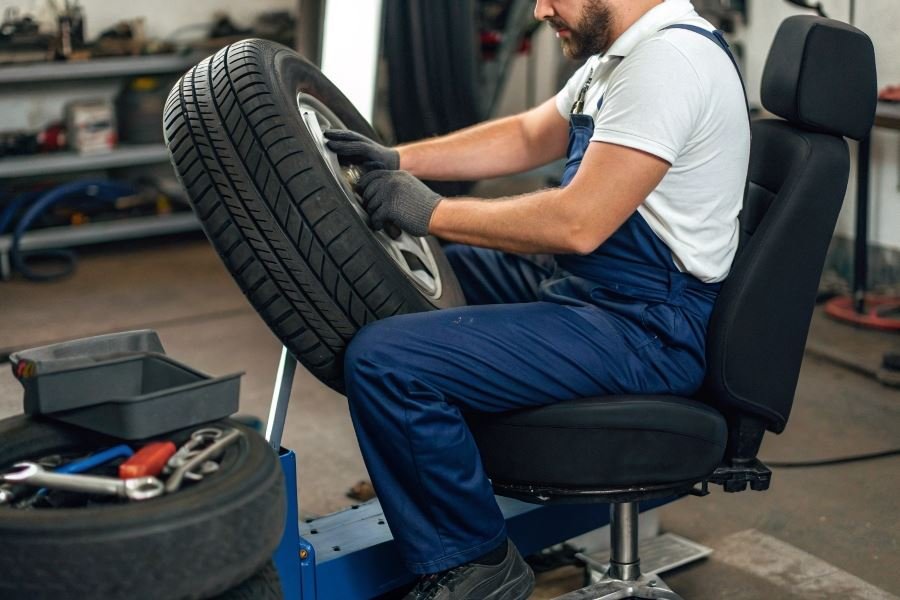
Portable repair seats represent the Swiss Army knife of tire fitting equipment. These lightweight, mobile solutions offer remarkable versatility for technicians who need to work in different locations.
Key advantages include:
- Weight typically between 15-30 pounds
- Setup time under 60 seconds
- Height adjustability from 18-24 inches
- 360-degree swivel capability
Portable models from Sunex Tools and Omega feature padded seats with integrated tool trays, allowing technicians to keep essential items within arm’s reach. These seats excel in mobile tire service operations, pop-up repair shops, and facilities with space limitations.
“I switched to a portable repair seat last year and immediately noticed less back strain during long service days,” reports one veteran tire technician.
Fixed Stationary Repair Seats: Stability Meets Endurance
For high-volume tire shops, fixed stationary repair seats deliver unmatched durability and stability. These workshop mainstays are designed for continuous, heavy-duty use.
| Feature | Standard Model | Premium Model |
|---|---|---|
| Weight capacity | 300-350 lbs | 400-500 lbs |
| Seat material | Vinyl | Memory foam/leather |
| Base construction | Steel | Reinforced steel |
| Tool storage | Basic tray | Multiple compartments |
| Warranty | 1-2 years | 5+ years |
Stationary models from Snap-on integrate seamlessly into professional workshops with features like pneumatic height adjustment and reinforced bases. The initial investment (typically $200-450) pays dividends through longevity and reduced technician fatigue.
These seats become central fixtures in tire fitting operations, often positioned strategically between mounting equipment and balancing machines to optimize workflow efficiency.
Specialized Repair Seats: Precision Tools for Specific Needs
The specialized segment of repair seats addresses niche requirements for particular tire types or repair procedures.
Heavy-duty truck tire specialists benefit from extra-height models with extended weight capacities. OTC Tools offers models with 36-inch maximum heights specifically designed for commercial vehicle work.
Performance and racing tire technicians gravitate toward precision seats with micro-adjustable heights and ergonomic features that facilitate the exacting work required for high-performance applications.
Mobile repair specialists often select hybrid models that combine portability with specialized features like:
- Integrated air compressor connections
- Built-in LED lighting systems
- Reinforced tool compartments for specialized equipment
- All-terrain wheels for outdoor service calls
The specialized category represents the fastest-growing segment in the repair seat market, with innovations addressing specific pain points in different tire fitting contexts.
When evaluating which repair seat will best serve your operation, consider your daily workload, physical space constraints, and the specific types of tires you most frequently service. The right choice becomes an investment in both efficiency and technician well-being.
Making the Smart Investment in Tire Repair Seats
The ROI equation that matters
When selecting a repair seat for your tire fitting operation, the initial price tag tells only part of the story. The true cost calculation must factor in productivity gains, labor savings, and equipment longevity. A premium Hunter Engineering repair seat priced at $3,500 might seem steep compared to a $1,200 generic alternative, but the mathematics of efficiency often favor quality.
The productivity multiplier effect becomes apparent when tracking operations over time. High-end repair seats can reduce tire mounting time by 30-45 seconds per wheel—a seemingly small increment that compounds dramatically across hundreds of weekly operations.
The cheapest repair seat is rarely the most economical when measured against a 5-year operational timeline.
Consider this breakdown of cost factors beyond the initial purchase:
| Cost Factor | Economy Model | Premium Model |
|---|---|---|
| Initial Investment | $1,200 | $3,500 |
| Annual Maintenance | $350 | $200 |
| Labor Efficiency | Standard | 25% Improvement |
| Average Lifespan | 3-5 years | 8-10 years |
| Warranty Coverage | 1 year limited | 5 year comprehensive |
Space optimization strategies
The physical footprint of your repair seat isn’t just about square footage—it’s about workflow choreography. Modern tire shops operate like precision machines where every movement counts.
The ideal repair seat integrates seamlessly with your existing layout while maximizing technician efficiency. Compact models from Ranger Products offer footprints as small as 30×40 inches while maintaining full functionality.
For shops with premium floor space, consider these layout principles:
- Position repair seats to minimize wheel transport distance
- Allow 4-5 feet of clearance for technician movement
- Ensure power and air supply access without creating tripping hazards
- Account for future expansion possibilities
Multi-bay operations benefit from standardized equipment positioning across workstations, creating muscle memory efficiency for technicians who rotate between bays.
Durability factors that predict longevity
The difference between a repair seat that lasts three years versus ten often comes down to construction materials and engineering philosophy. Look beyond the glossy paint to examine:
- Frame construction – Fully welded frames outperform bolt-together designs
- Pneumatic component quality – Industrial-grade valves from Festo or SMC resist contamination
- Bearing specifications – Sealed bearings with proper load ratings prevent premature failure
- Surface treatments – Powder coating provides superior protection compared to wet paint
Maintenance requirements vary dramatically between manufacturers. Coats repair seats typically require quarterly lubrication of only 4-6 points, while economy models might demand attention to 12-15 separate lubrication points monthly.
The maintenance manual thickness often inversely correlates with equipment reliability. The best designs incorporate self-lubricating components and sealed systems that minimize routine attention.
When evaluating long-term durability, investigate the manufacturer’s parts availability commitment. Leading brands maintain replacement part inventories for 15+ years after model discontinuation, ensuring your investment remains serviceable throughout its operational life.
The repair seat that delivers the greatest value balances these considerations against your specific operational needs, creating a foundation for efficient, profitable tire service for years to come.
Discover the best tire repair seats for professional tire fitting operations. Compare portable, fixed, and specialized options to maximize efficiency, safety, and quality in your automotive workshop.
Discover the best tire repair seats for professional tire fitting operations. Compare portable, fixed, and specialized options to maximize efficiency, safety, and quality in your automotive workshop.