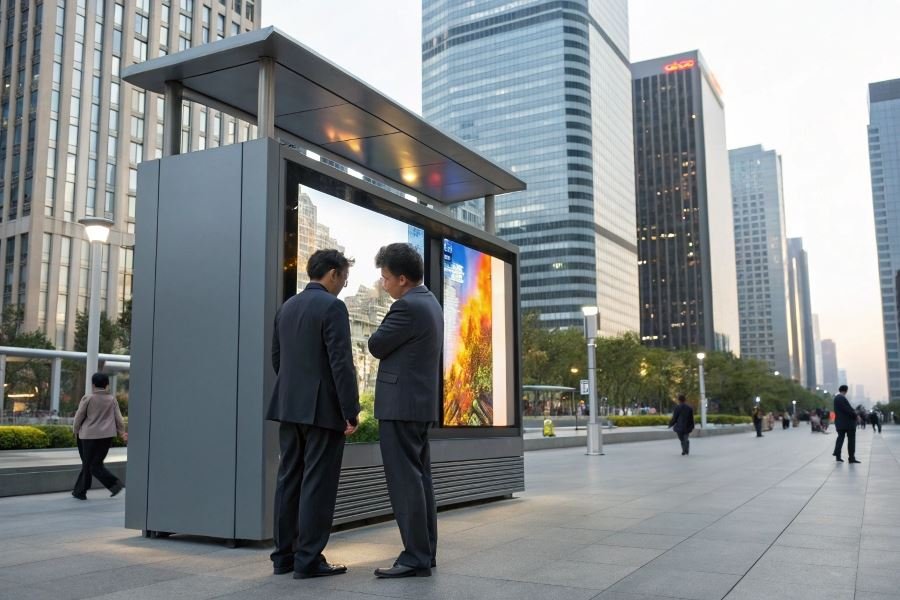
What if I told you the billboard you drove past this morning is becoming extinct? Digital advertising displays are rapidly transforming how businesses connect with consumers, creating experiences that static posters and print ads simply cannot match.
Digital advertising displays are electronic screens used to deliver dynamic content to viewers in public spaces. What began as simple LED signs in the 1970s has evolved into sophisticated networks of high-definition screens capable of real-time content updates, interactivity, and audience analytics. The journey from static billboards to today’s intelligent displays represents one of advertising’s most significant technological leaps.
The numbers tell a compelling story: the global digital signage market reached $21.1 billion in 2023 and is projected to nearly double by 2030. Adoption rates have accelerated dramatically, with retail, transportation, and hospitality sectors leading implementation. Meanwhile, traditional advertising channels—newspapers, magazines, static billboards, and broadcast TV—continue their steady decline, with print advertising revenue falling by over 60% since 2008.
Why this matters: Traditional media advertising has historically relied on one-way communication—static images or messages broadcast to passive audiences. These methods offer limited targeting capabilities, minimal engagement opportunities, and virtually no real-time performance metrics. Digital displays fundamentally change this equation by enabling dynamic content that responds to viewers, environments, and business objectives in ways previously impossible.
The transformation isn’t just technological—it’s reshaping the very nature of how brands communicate with their audiences in physical spaces.
Digital Displays That Outperform Traditional Media
Dynamic Content Creates Deeper Connections
Traditional billboards and print ads have served businesses well for decades, but they’re static messengers in a dynamic world. Digital advertising displays fundamentally transform how brands connect with audiences through motion, interaction, and timely relevance. Studies from the Digital Signage Federation show that dynamic digital content captures 400% more views than static displays, with average dwell times increasing from 2-3 seconds for traditional media to 8-10 seconds for digital displays.
The advantages of digital advertising displays over traditional media become most apparent when examining audience engagement metrics. Digital displays allow brands to tell complete stories through animation, video, and sequential messaging that static billboards simply cannot match. A retail installation by Samsung demonstrated that conversion rates increased by 33% when product demonstrations replaced static imagery.
Real-Time Updates That Keep Content Fresh
Imagine changing a billboard’s message during rush hour to highlight breakfast options, then switching to dinner specials by evening. Digital displays make this reality.
Traditional media suffers from:
- Print lead times (often 2-4 weeks)
- Installation delays
- Fixed messaging
- Weather vulnerability
Digital displays eliminate these constraints through:
| Capability | Traditional Media | Digital Displays |
|---|---|---|
| Update speed | Days/weeks | Minutes/seconds |
| Update cost | $500-2,000 per change | Minimal/included |
| Weather adaptability | None | Automatic |
| Dayparting | Impossible | Programmable |
The BrightSign platform exemplifies this flexibility, allowing businesses to schedule content changes based on time, weather conditions, or even inventory levels. A restaurant chain using their system reported a 27% increase in promoted item sales by adjusting digital menu boards to highlight different offerings throughout the day.
Targeting That Reaches The Right People
Traditional media broadcasts the same message to everyone, regardless of relevance. Digital displays can now deliver personalized experiences that resonate with specific audience segments.
Advanced targeting capabilities include:
Demographic Recognition: Using anonymous vision analysis, displays can determine approximate age, gender, and attention levels, adjusting content accordingly. Intel’s audience impression metrics technology has shown engagement increases of up to 48% when content matches viewer demographics.
Contextual Relevance: Digital displays can integrate with environmental sensors to display weather-appropriate products or time-sensitive offers. A sporting goods retailer using Scala digital signage reported 22% higher conversion rates when promoting seasonal equipment based on real-time weather conditions.
Interactive Personalization: Touch-enabled displays allow customers to navigate to information relevant to their specific needs. A car dealership implementing LG’s interactive displays saw customer satisfaction scores increase by 37% when visitors could explore vehicle features at their own pace.
The data speaks volumes: according to the Outdoor Advertising Association, digital displays deliver an average ROI 34% higher than traditional media when measured against campaign objectives. This performance gap continues to widen as technology advances, making digital displays not just an alternative to traditional media, but their inevitable successor.
Measurable Advantages That Transform Business Results
Analytics That Reveal True Performance
Digital advertising displays have revolutionized how businesses track campaign effectiveness. Unlike traditional billboards or print ads that rely on estimated impressions, digital signage systems like BrightSign and Samsung SMART Signage deliver real-time performance metrics that transform guesswork into precision.
Modern digital displays capture viewer engagement through integrated cameras and sensors, providing data on:
- Dwell time (how long viewers engage with content)
- Demographic information (age ranges, gender distribution)
- Interaction rates (for touchscreen displays)
- Conversion tracking (when paired with QR codes or NFC technology)
This wealth of data enables businesses to calculate exact ROI figures rather than approximations. A retail chain implementing digital displays across 50 locations can precisely determine which content drives foot traffic and which locations generate the highest engagement—information that remains perpetually invisible with traditional media.
“The difference between traditional and digital advertising is the difference between shooting in the dark and using precision targeting with night vision goggles.”
Cost Efficiency Beyond Initial Investment
While the upfront investment for digital displays typically exceeds traditional signage, the long-term operational math heavily favors digital solutions. Consider these comparative costs:
| Expense Category | Traditional Media | Digital Displays |
|---|---|---|
| Content Updates | $500-2,000 per change | Near-zero after setup |
| Installation Labor | Recurring for each update | One-time with occasional maintenance |
| Material Costs | Ongoing printing expenses | Eliminated entirely |
| Energy Consumption | Static (lighting only) | Optimized with smart scheduling |
A medium-sized business running 12 promotional campaigns annually through traditional print media might spend 24, 000−60,000 on printing and installation alone. The same business using LG Commercial Displays could update content remotely in minutes with no recurring material costs.
Digital displays also eliminate waste from outdated materials. When a promotion ends or contains an error, traditional media requires physical replacement—digital content simply updates with a few keystrokes from anywhere in the world.
Environmental Impact That Matters
The sustainability advantages of digital displays create both environmental benefits and positive brand perception:
Reduced paper waste stands as the most obvious benefit—a single 55″ display can replace thousands of printed posters over its lifetime. The Nanolumens displays, for example, have an operational lifespan exceeding 100,000 hours, eliminating the need for approximately 7,300 poster replacements.
Energy efficiency improvements continue advancing rapidly. Modern LED displays from manufacturers like Sony Professional consume up to 40% less power than models from just five years ago, with smart features that automatically adjust brightness based on ambient light conditions and power down during off-hours.
Extended lifecycles further enhance sustainability profiles. Quality commercial-grade displays typically maintain optimal performance for 5-7 years, compared to traditional signage that deteriorates visibly within months of outdoor exposure.
For businesses committed to environmental responsibility, the transition to digital represents a measurable reduction in carbon footprint that resonates with increasingly eco-conscious consumers while simultaneously delivering superior marketing performance.
Discover how digital advertising displays outperform traditional media with dynamic content, real-time updates, and precise targeting capabilities. Learn about measurable ROI, cost efficiency, and sustainability benefits in modern marketing.
Discover how digital advertising displays outperform traditional media with dynamic content, real-time updates, and precise targeting capabilities. Learn about measurable ROI, cost efficiency, and sustainability benefits in modern marketing.