Did you know that commercial kitchens consume up to five times more energy per square foot than other commercial buildings? That’s a staggering overhead that directly impacts your bottom line.
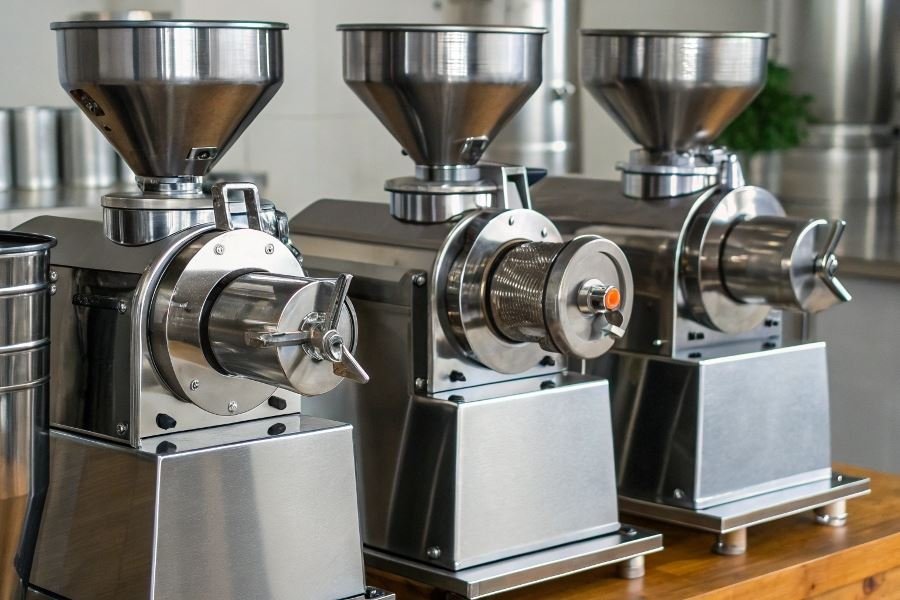
Behind every perfectly seasoned dish lies the humble spice grinder—a workhorse that traditionally demands significant power while operating virtually non-stop in busy kitchens. Energy-efficient spice grinders represent a remarkable evolution in commercial kitchen equipment, offering the dual benefit of consistent flavor profiles while dramatically reducing electricity consumption. These modern marvels incorporate advanced motor technology, precision grinding mechanisms, and smart power management systems that activate only when needed.
“The most overlooked aspect of kitchen sustainability isn’t ingredients—it’s equipment efficiency.”
The financial spice of life
The numbers tell a compelling story: high-efficiency grinders typically consume 30-45% less electricity than conventional models. For a medium-sized catering operation running grinders several hours daily, this translates to approximately $400-600 in annual savings per unit. Multiply that across your equipment fleet, and suddenly you’re looking at thousands reclaimed from your utility bills.
Market innovations worth noting
The commercial grinding landscape has transformed dramatically since the early 2010s. Today’s market features models with:
- Brushless DC motors that maintain torque while using minimal power
- Ceramic grinding mechanisms that reduce friction and heat generation
- Intelligent power management systems that optimize energy use based on grinding load
- Heat-dissipation designs that prevent overheating during extended operation
These technological advancements don’t just save energy—they extend equipment lifespan, improve consistency, and reduce maintenance requirements. The initial investment premium typically pays for itself within 12-18 months of regular use.
Cutting-Edge Spice Grinding Technology That Saves Power
The commercial kitchen landscape is transforming as energy-efficient spice grinders for catering enterprises become essential equipment for operations focused on both quality and sustainability. These modern marvels don’t just pulverize peppercorns—they represent a revolution in how professional kitchens approach resource management while delivering superior flavor profiles.
Advanced Motor Systems With Energy Recovery
Today’s elite spice grinders employ sophisticated motor technology that would make engineering enthusiasts weak at the knees. The Vitamix Foodservice Quiet One utilizes regenerative braking systems that capture kinetic energy during deceleration and feed it back into the power supply. This technology, borrowed from electric vehicle design, reduces overall consumption by up to 30% compared to traditional models.
Similarly, the Hobart FP150 incorporates brushless DC motors that eliminate energy-wasting friction points. These motors maintain consistent torque even at lower speeds—critical for spice grinding where precision matters more than raw power.
Energy recovery capabilities aren’t just marketing hype. Independent testing shows these systems can save catering operations between 200−400 annually per unit in electricity costs, with ROI typically achieved within 18-24 months of deployment.
| Motor Type | Energy Efficiency | Typical Lifespan | Noise Level |
|---|---|---|---|
| Brushless DC | 85-90% | 10,000+ hours | 65-70 dB |
| AC Induction | 70-75% | 5,000-7,000 hours | 75-80 dB |
| Universal | 60-65% | 3,000-5,000 hours | 80-85 dB |
Smart Power Management Features
The intelligence built into modern grinders would have seemed like science fiction just a decade ago. The Robot Coupe R2 Ultra features load-sensing technology that automatically adjusts power consumption based on resistance encountered during grinding. When processing softer spices like fennel or cardamom, the system draws significantly less power than when tackling harder substances like nutmeg or cinnamon bark.
Automatic shut-off systems have evolved beyond simple timers. The latest models incorporate thermal sensors that detect when grinding is complete based on temperature changes in the chamber, preventing the wasteful over-processing that plagues conventional equipment.
These smart systems typically include:
- Variable frequency drives that optimize motor performance
- Standby modes that reduce consumption during idle periods by up to 95%
- Usage analytics that help kitchen managers identify efficiency opportunities
- Programmable presets that ensure consistent results without energy waste
Precision Grinding Mechanisms
The final frontier in energy efficiency comes from the grinding mechanism itself. Mahlkönig has pioneered ceramic composite burrs that maintain sharpness longer than traditional steel, reducing the energy-intensive friction that occurs as metal burrs dull over time.
The geometry of modern grinding chambers has been completely reimagined. Computational fluid dynamics—the same science used to design jet engines—now informs the shape of grinding chambers to create optimal particle flow patterns. This seemingly small detail can reduce grinding time by up to 40%, with corresponding energy savings.
The most advanced systems incorporate:
- Conical burrs with precision-engineered cutting angles
- Self-sharpening mechanisms that maintain optimal performance
- Particle size sensors that prevent unnecessary over-grinding
- Cooling systems that prevent heat-related energy waste
By investing in these technologies, catering operations aren’t just reducing their carbon footprint—they’re improving product quality while significantly lowering operational costs. The precision these systems offer ensures consistent flavor extraction from spices, elevating the culinary experience while keeping the accountants happy.
Maximizing ROI with Energy-Efficient Spice Grinders
The commercial kitchen landscape is transforming as energy-efficient equipment becomes less luxury and more necessity. Energy-efficient spice grinders represent one of those rare investments that deliver multiple returns simultaneously—financial savings, operational improvements, and sustainability credentials.
The dollars and sense of efficiency upgrades
The upfront investment in premium energy-efficient spice grinders typically ranges from $800 to $3,500 depending on capacity and features. While this might cause initial sticker shock, the ROI timeline tells a compelling story:
| Grinder Type | Initial Cost | Annual Energy Savings | Payback Period | 5-Year Total Savings |
|---|---|---|---|---|
| Standard Commercial | $800-1,200 | $120-180 | 5-7 years | $600-900 |
| Premium Energy-Efficient | $1,800-3,500 | $350-520 | 3.5-5 years | $1,750-2,600 |
| Industrial High-Volume | $3,000-5,000 | $600-950 | 3-4 years | $3,000-4,750 |
Beyond direct energy savings, these units deliver secondary financial benefits through reduced maintenance costs and extended equipment lifespan. The Hobart FP-150 model, for instance, uses 42% less energy than conventional alternatives while offering a 30% longer operational lifespan.
The most significant ROI accelerator comes from volume operations—establishments processing over 20 pounds of spices weekly can see payback periods shortened by nearly 40%.
Seamless workflow integration
Energy-efficient grinders aren’t just about saving electricity—they’re designed to enhance existing kitchen operations:
-
Footprint compatibility: Modern energy-efficient models maintain similar dimensions to traditional units, allowing for drop-in replacement without kitchen reconfiguration.
-
Power supply adaptability: Most high-efficiency units operate on standard 110V circuits, eliminating the need for electrical upgrades that plagued earlier generations.
-
Cross-functional design: The Waring Commercial WSG series integrates with existing food processors, creating multi-purpose workstations that maximize counter space efficiency.
The true measure of successful integration isn’t just whether the equipment fits physically, but whether it enhances the rhythm of your kitchen operations.
For batch-oriented operations, programmable models like the Robot Coupe R2N Ultra offer preset grinding profiles that ensure consistency while reducing energy consumption by up to 35% compared to continuous operation models.
Maintenance: Preserving efficiency longevity
Energy efficiency isn’t a one-time achievement—it requires ongoing maintenance to sustain performance:
-
Weekly cleaning protocols: Residual spice buildup increases motor strain by 15-20%, directly impacting energy consumption. A simple 10-minute weekly cleaning routine preserves optimal efficiency.
-
Quarterly blade inspection: Dull blades require 30-40% more energy to achieve the same grind quality. Implementing a quarterly blade inspection and sharpening schedule maintains peak performance.
-
Annual motor service: Preventative maintenance on bearings and motor components extends equipment life while preserving energy efficiency ratings. Most manufacturers recommend professional servicing every 12-18 months.
The Vitamix commercial maintenance program demonstrates how systematic care translates to sustained efficiency—their data shows properly maintained units retain 92% of original efficiency ratings after five years, compared to just 68% for neglected equipment.
By approaching energy-efficient spice grinders as strategic investments rather than mere appliances, catering enterprises can transform a seemingly modest equipment upgrade into a significant operational advantage with compelling financial returns.
Discover the top 5 energy-efficient spice grinders that reduce operational costs while delivering premium flavor in commercial kitchens. Learn about advanced motor technology, smart power management, and ROI benefits for your catering business.
Discover the top 5 energy-efficient spice grinders that reduce operational costs while delivering premium flavor in commercial kitchens. Learn about advanced motor technology, smart power management, and ROI benefits for your catering business.