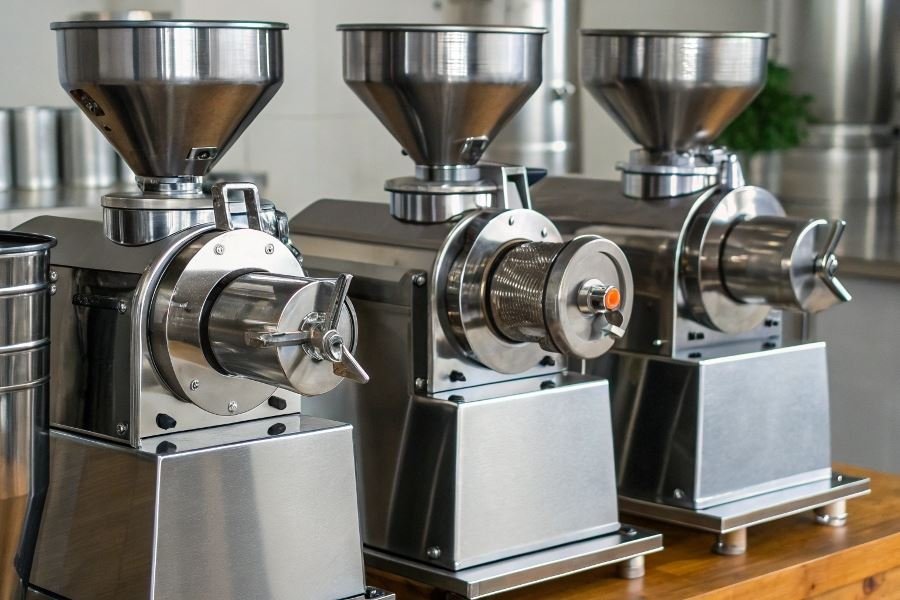
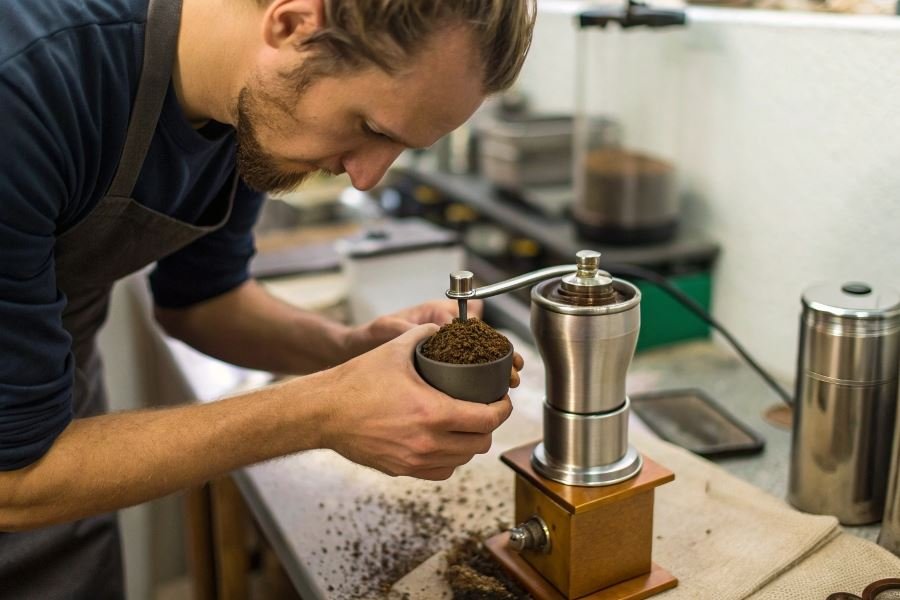
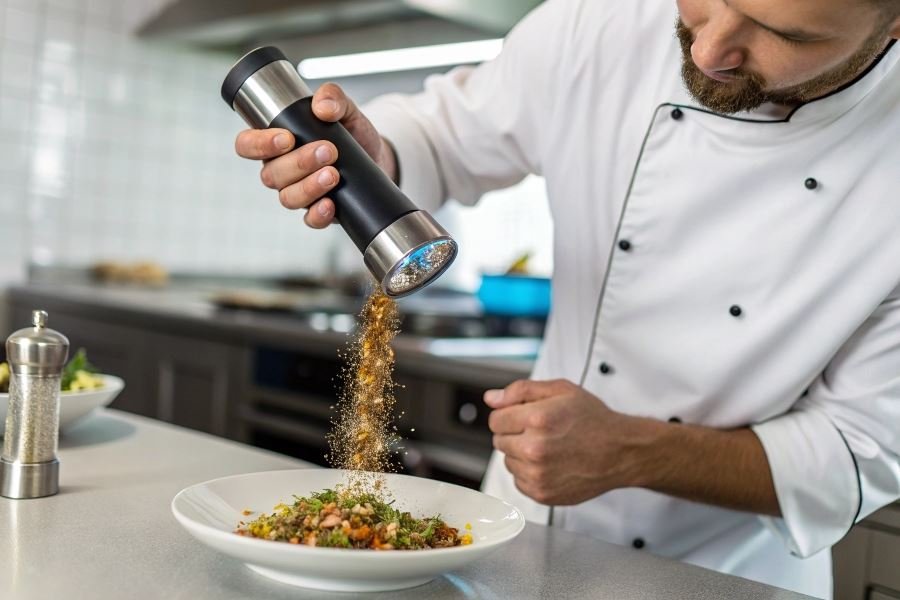
What if the secret to consistent flavor, reduced labor costs, and increased production efficiency was hiding in plain sight? For businesses in the food industry, automatic spice grinding systems are transforming operations from the ground up—literally.
The journey from mortar and pestle to sophisticated grinding technology tells a fascinating story of innovation. Since the early 1900s, commercial spice processing has evolved dramatically. What began as labor-intensive manual grinding transitioned to basic mechanical mills in the 1950s, and now culminates in today’s precision-engineered automatic systems that can process hundreds of pounds per hour while preserving volatile oils and flavor compounds.
“The difference between freshly ground spices and pre-ground is like comparing high-definition to standard television—once you experience it, there’s no going back.” — James Peterson, award-winning cookbook author
Today’s market offers a diverse ecosystem of grinding solutions, from compact units processing 5-10 pounds hourly to industrial behemoths handling 500+ pounds. The North American spice grinding equipment market alone exceeds $120 million annually, with growth accelerating as restaurants, specialty food producers, and even craft beverage makers recognize the competitive advantage of freshly ground spices.
Transforming business through automation
These systems fundamentally reshape business operations in three critical ways:
- Quality consistency – Precision grinding to exact specifications eliminates batch variations
- Operational efficiency – Reducing labor costs by up to 70% while increasing throughput
- Product differentiation – Enabling businesses to create signature flavor profiles impossible with pre-ground spices
For food manufacturers, restaurants, and specialty producers, automatic spice grinding represents not just an equipment upgrade, but a strategic business advantage in an increasingly competitive marketplace.
Transforming Spice Processing with Automation
Efficiency That Scales
The spice industry has witnessed a remarkable transformation through technological advancement. Modern automatic spice grinding systems have revolutionized how businesses process herbs and spices, creating unprecedented opportunities for growth and market expansion. These systems don’t merely replace manual labor—they fundamentally reimagine the entire production workflow.
When examining automatic spice grinding systems: advantages for business become immediately apparent in production numbers. Traditional methods might process 20-30 pounds per hour, while automated systems can handle 200-500 pounds in the same timeframe. The Bühler Group industrial grinders, for instance, demonstrate throughput increases of up to 400% compared to semi-automatic alternatives.
Consistency That Builds Trust
Particle size uniformity remains one of the most compelling benefits of automation. Manual grinding inevitably produces inconsistent results—some batches finer, others coarser—creating product variability that customers notice.
Modern grinding systems employ precision-engineered components that deliver:
- Uniform particle size distribution (typically within ±5 microns)
- Consistent flavor release profiles
- Reliable color characteristics
- Standardized moisture content
The Fryma Koruma grinding technology utilizes advanced sensors that continuously monitor and adjust grinding parameters in real-time, ensuring batch-to-batch consistency that builds customer loyalty and strengthens brand reputation.
Cost Efficiency Beyond Labor Savings
While labor reduction often drives initial investment decisions, the financial benefits extend far beyond payroll savings:
| Cost Factor | Manual Processing | Automated Systems | Improvement |
|---|---|---|---|
| Waste percentage | 8-12% | 2-3% | 70-75% reduction |
| Energy consumption | High | Optimized | 30-40% savings |
| Floor space required | Large | Compact | 40-60% reduction |
| Maintenance downtime | Unpredictable | Scheduled | 50-70% less disruption |
The true ROI emerges from the cumulative effect of these improvements, not just from any single factor.
Quality That Differentiates
Automated systems preserve volatile oils and aromatic compounds through temperature-controlled grinding environments. The Netzsch cooling systems maintain optimal temperatures during processing, preventing heat damage that degrades flavor profiles.
Quality isn’t just about consistency—it’s about preserving the intrinsic characteristics that make each spice unique and valuable.
Waste Reduction That Matters
Modern grinding systems capture and recirculate airborne particles that would otherwise be lost. This dust recovery technology from manufacturers like Russell Finex can reclaim up to 99.5% of product that traditional methods would lose, directly improving yield and reducing environmental impact.
The transition to automated spice grinding represents more than an operational upgrade—it’s a strategic business decision that affects everything from production capacity and product quality to operational costs and market positioning. For businesses ready to scale, these systems don’t just process spices; they create competitive advantage in an increasingly demanding marketplace.
Transforming Spice Operations: Implementation and ROI
Integration strategies across business scales
Implementing automatic spice grinding systems requires different approaches depending on your operation size. Small artisanal spice shops might begin with a single Mahlkönig EK43 commercial grinder that processes 2-3 pounds per minute—a significant upgrade from manual methods without overwhelming spatial or financial resources.
Mid-sized operations typically benefit from modular systems that can grow alongside their business. The Bühler Group offers scalable grinding lines that start at processing 100 pounds hourly and can be expanded with additional units as demand increases. This approach allows for a 15-25% annual capacity increase without complete system overhauls.
For industrial-scale spice producers, comprehensive grinding systems from manufacturers like Fryma Koruma integrate seamlessly with existing production lines. These systems handle 500+ pounds hourly and include automated cleaning cycles, reducing downtime between batches from hours to minutes.
The integration sweet spot: Implement automation where it creates the greatest efficiency gain while preserving your product’s distinctive quality characteristics.
Real-world success stories
Case Study: Desert Oasis Herbs
This Arizona-based operation invested $175,000 in a medium-capacity automatic grinding system in 2021. Within 18 months, they:
- Increased production capacity by 340%
- Reduced labor costs by 62%
- Improved product consistency to 98.7% batch-to-batch uniformity
- Expanded their wholesale client base from 23 to 87 accounts
Case Study: Heritage Spice Company
This family-owned business implemented a modular grinding system with a $95,000 initial investment. Their phased approach allowed them to:
- Maintain their signature flavor profiles while increasing output
- Reduce product loss from 8.3% to 1.2%
- Decrease energy consumption by 41% compared to their previous equipment
- Achieve ROI in 14 months, significantly faster than their projected 24-month timeline
Long-term ROI considerations
The financial benefits of automatic spice grinding systems extend far beyond initial productivity gains:
| ROI Factor | Typical Impact | Long-term Value |
|---|---|---|
| Labor efficiency | 50-70% reduction in grinding-related labor | Allows reallocation of skilled staff to product development |
| Energy consumption | 30-45% reduction vs. older equipment | Compounds annually as energy costs rise |
| Product consistency | 95%+ batch uniformity | Builds brand reputation and reduces returns/complaints |
| Waste reduction | 5-8% improvement in yield | Significant savings on premium raw materials |
| Maintenance costs | Higher initially, lower after 3 years | Modern systems require less emergency maintenance |
The most successful implementations share common characteristics: phased rollout plans, comprehensive staff training, and maintenance partnerships with equipment manufacturers. Companies that invest in operator certification programs report 23% fewer operational issues during the first year.
For businesses processing more than 10,000 pounds of spices annually, automatic grinding systems typically achieve complete ROI within 18-36 months. The Spice House, for example, reported that their system paid for itself in just 22 months through increased production capacity alone—not counting additional savings from reduced waste and improved quality control.
Discover how automatic spice grinding systems revolutionize business operations with enhanced efficiency, consistent quality, and reduced costs. Learn implementation strategies and ROI benefits for your commercial spice processing operation.
Discover how automatic spice grinding systems revolutionize business operations with enhanced efficiency, consistent quality, and reduced costs. Learn implementation strategies and ROI benefits for your commercial spice processing operation.