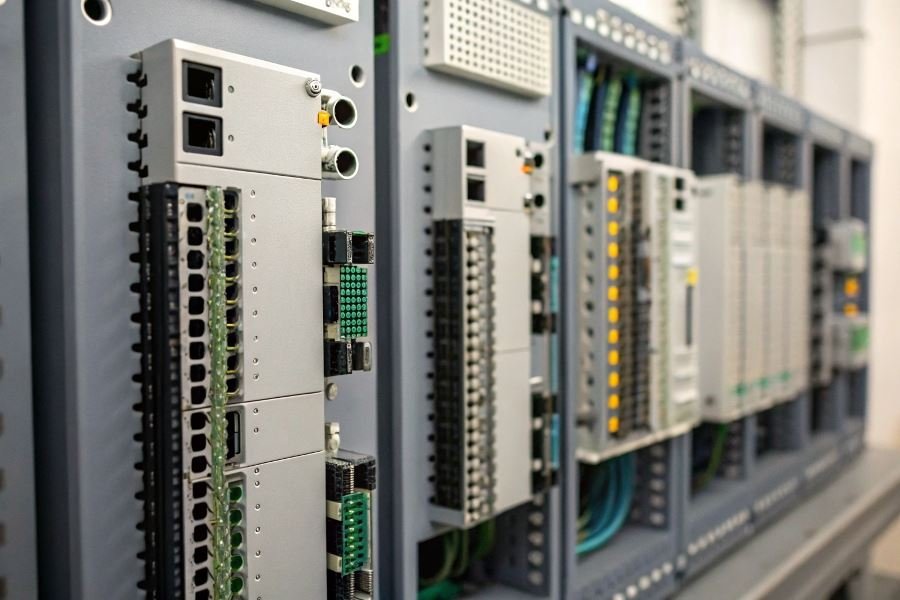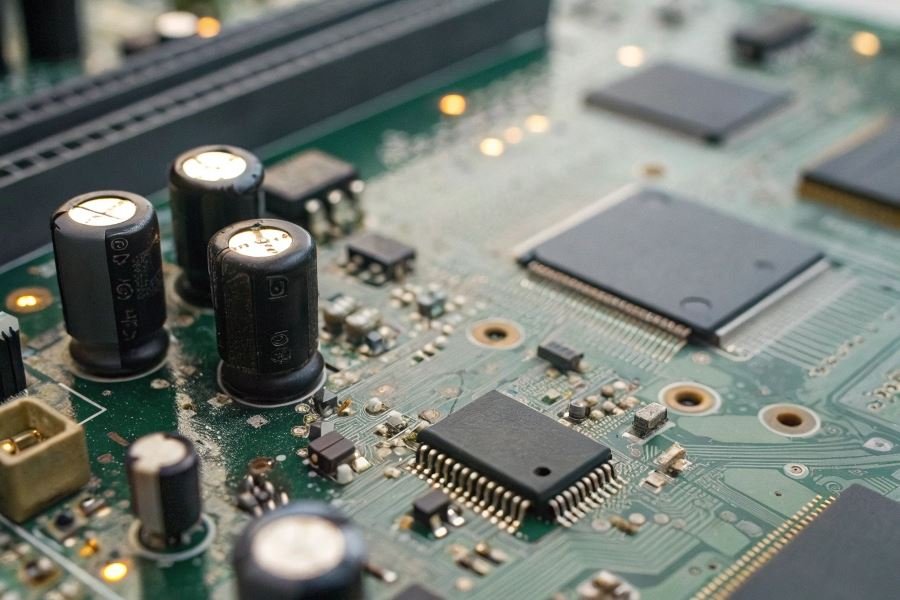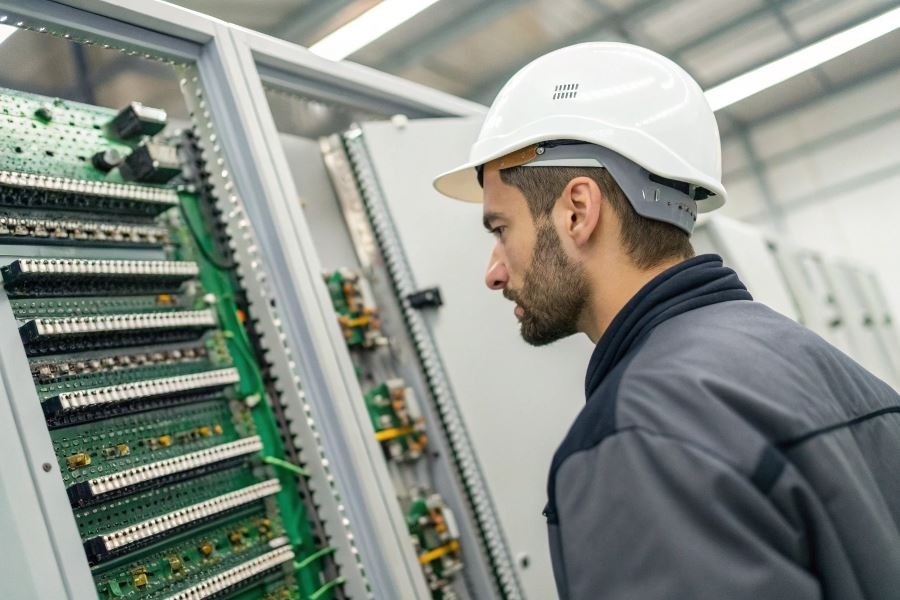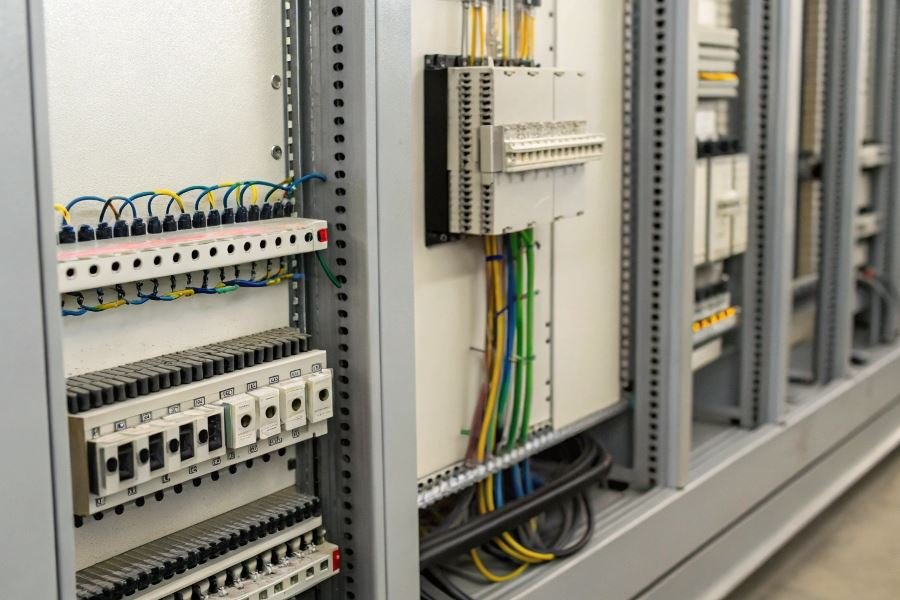
Ever wondered what keeps your factory equipment from frying during a power surge? The unsung heroes might be sitting quietly on your control rack right now. Galvanic isolation technology in input-output boards creates an invisible electrical fortress that could save your business thousands in equipment damage—yet most professionals overlook this critical protection layer.
At their core, input-output boards with galvanic isolation create a complete electrical separation between circuits while still allowing signals to pass through. This elegant solution uses components like optocouplers, transformers, or capacitors to transmit information via light, magnetic fields, or electric fields rather than direct electrical connections. The result? Critical protection against voltage spikes, ground loops, and electrical noise that would otherwise wreak havoc on sensitive equipment.
The technology has evolved dramatically since its early implementations in the 1960s when bulky transformers were the primary isolation method. Modern isolation barriers now achieve separation ratings exceeding 5000V while maintaining signal integrity across increasingly faster data rates. Today’s high-performance I/O boards feature isolation components smaller than a fingernail yet capable of protecting million-dollar equipment investments.
Key specifications to evaluate include:
- Isolation voltage rating (typically 1000V to 5000V)
- Channel-to-channel isolation capabilities
- Common mode rejection ratio (CMRR)
- Response time (critical for real-time applications)
This invisible protection layer has become indispensable in environments where electrical safety and signal integrity cannot be compromised.
The Triple Shield: Core Advantages of Galvanic Isolation
Industrial control systems face constant electrical threats that can compromise both equipment and personnel safety. When designing robust automation systems, engineers increasingly turn to input-output boards with galvanic isolation as their first line of defense against electrical hazards. These specialized components create an impenetrable barrier between circuits while maintaining signal integrity across the isolation boundary.
The advantages of using input-output boards with galvanic isolation extend far beyond basic protection. These sophisticated interfaces serve as critical safety components in environments where electrical separation between high and low voltage circuits is non-negotiable. By physically isolating input and output channels, these boards prevent dangerous current paths while ensuring reliable data transmission—a perfect marriage of safety and performance that industrial system designers can’t afford to overlook.
Electrical Separation: The Safety Imperative
Galvanic isolation creates a physical barrier that prevents current flow between separate circuits while allowing signals to pass through. This separation is typically achieved using:
- Optical isolators (optocouplers)
- Transformer-based isolation
- Capacitive coupling
- Magnetic isolation
The safety benefits are substantial. In industrial settings where high voltages are common, isolation prevents dangerous current from reaching operators or sensitive equipment. A typical isolation board provides protection ranging from 1,000V to 4,000V, creating a critical safety buffer in hazardous environments.
“Safety isn’t expensive, it’s priceless.” This philosophy drives the implementation of galvanic isolation in mission-critical systems where failure isn’t an option.
Signal Integrity in Noisy Environments
Industrial environments are electrical battlegrounds. Motors, drives, and high-power equipment generate electromagnetic interference (EMI) that can corrupt sensitive signals. Galvanic isolation serves as the perfect defense mechanism.
By breaking ground connections between circuits, isolated I/O boards prevent noise currents from flowing between systems. This isolation dramatically improves:
| Performance Aspect | Without Isolation | With Isolation |
|---|---|---|
| Signal-to-Noise Ratio | Poor to moderate | Excellent |
| Data Accuracy | Compromised | Highly reliable |
| Measurement Precision | Variable | Consistent |
| EMI Susceptibility | High | Minimal |
Engineers at Texas Instruments have demonstrated that properly isolated systems can maintain signal integrity even when subjected to noise levels exceeding 100V/m—performance impossible with non-isolated alternatives.
Protection Against Electrical Anomalies
Perhaps the most compelling advantage of galvanic isolation is protection against two common but devastating electrical problems: ground loops and voltage spikes.
Ground loops occur when multiple devices share ground connections at different potentials, creating unwanted current paths. These currents can introduce:
- Measurement errors
- System instability
- Component damage
- Data corruption
Isolated I/O boards break these loops by eliminating direct electrical connections between grounds.
Voltage spikes represent another serious threat. Industrial environments frequently experience transients from:
- Lightning strikes
- Motor switching
- Power grid fluctuations
- Load changes
Isolation barriers absorb these energy surges before they reach sensitive components. A quality isolation board from Analog Devices can withstand transients exceeding 4kV without damage—protecting both equipment and the integrity of your control system.
When properly implemented, these three core advantages—enhanced safety, improved signal integrity, and protection against electrical anomalies—transform vulnerable control systems into robust industrial platforms capable of reliable operation even in the harshest electrical environments.
Putting Isolation to Work: Real-World Applications
Transforming industrial automation
Industrial environments present some of the most demanding conditions for electronic systems. Input-output boards with galvanic isolation excel here by creating essential safety barriers between high-voltage machinery and sensitive control systems. In manufacturing facilities, these boards prevent catastrophic failures when voltage spikes occur—which they inevitably do.
A paper mill in Michigan implemented isolated I/O boards throughout their control systems and reported an 87% reduction in downtime related to electrical interference issues. The isolation prevented cascading failures when one of their primary motors experienced a major fault.
“The ROI wasn’t just in equipment protection—it was in production continuity. Every hour of downtime used to cost us $15,000.” — Operations Director at a Fortune 500 manufacturing company
Modern Allen-Bradley control systems incorporate multi-channel isolated I/O as standard, allowing facilities to monitor high-voltage equipment while keeping control systems protected from electrical noise that would otherwise corrupt sensor readings.
Safeguarding lives in medical settings
In medical environments, the stakes couldn’t be higher. Patient monitoring equipment must maintain perfect isolation between patients and power systems. Here, galvanic isolation isn’t just about equipment protection—it’s about human safety.
Medical-grade isolated I/O boards provide:
| Feature | Benefit | Safety Standard |
|---|---|---|
| 4000V isolation barriers | Prevents microshocks to patients | IEC 60601-1 |
| Low leakage current (<10μA) | Protects vulnerable patients | UL 544 |
| Redundant isolation channels | Ensures fail-safe operation | ISO 13485 |
Philips Healthcare implements multi-layer isolation in their patient monitoring systems, creating redundant safety barriers that exceed regulatory requirements. This approach has become the gold standard in critical care units where patients are connected to multiple electronic devices simultaneously.
The business case for isolation
Implementing isolated I/O solutions requires upfront investment, but the financial analysis overwhelmingly favors adoption:
- Reduced maintenance costs: Companies report 30-45% lower annual maintenance expenses after implementing properly isolated systems
- Extended equipment lifespan: Isolation protects expensive control systems, extending their operational life by an average of 3-5 years
- Decreased downtime: A manufacturing facility typically saves 10, 000−50,000 per avoided downtime incident
The initial cost premium for isolated I/O boards (typically 15-30% higher than non-isolated alternatives) is quickly recovered through these operational benefits. A medium-sized manufacturing operation can expect complete ROI within 8-14 months of implementation.
Implementation considerations
When implementing isolated I/O solutions, businesses should consider:
- Isolation voltage requirements: Match isolation ratings to your specific environment’s voltage potential
- Channel density needs: Higher density boards offer more I/O points per dollar but may compromise on isolation quality
- Signal type compatibility: Ensure your isolation solution supports your specific analog/digital signal requirements
Companies like Advantech offer configurable isolation solutions that allow businesses to optimize their implementation based on specific requirements rather than overspending on unnecessary isolation features.
The most successful implementations take a targeted approach, applying higher isolation ratings to critical pathways while using standard isolation for less vulnerable connections—balancing protection with pragmatic cost management.
Discover how galvanic isolation in I/O boards enhances safety, prevents electrical interference, and protects critical systems. Learn why industry professionals choose isolated solutions for superior performance and equipment longevity.
Discover how galvanic isolation in I/O boards enhances safety, prevents electrical interference, and protects critical systems. Learn why industry professionals choose isolated solutions for superior performance and equipment longevity.