Ever watched a symphony orchestra perform? Each musician responds precisely to the conductor’s signals, creating harmony through perfect coordination. That’s exactly what input-output (I/O) boards do in industrial automation—they’re the silent conductors orchestrating the complex dance of sensors, actuators, and controllers that power modern manufacturing.
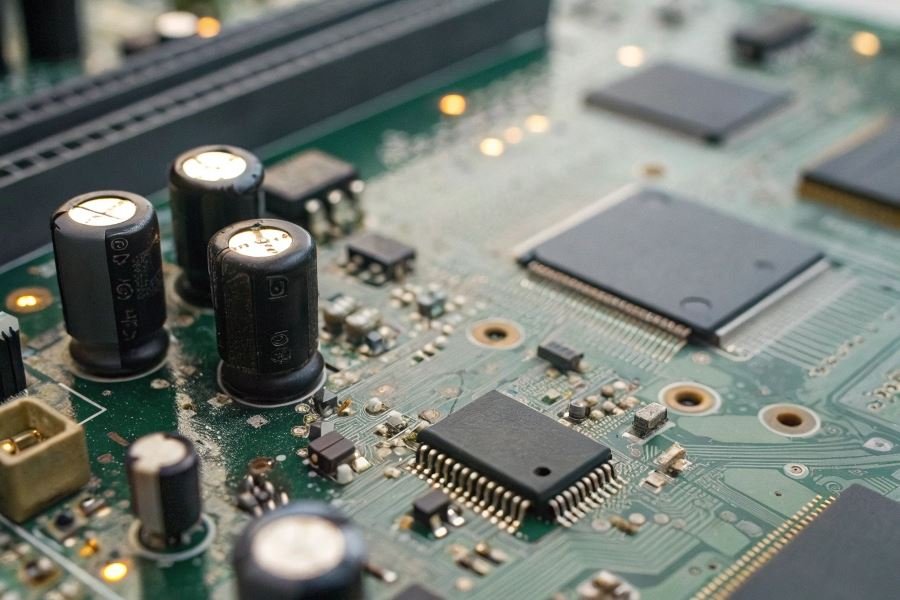
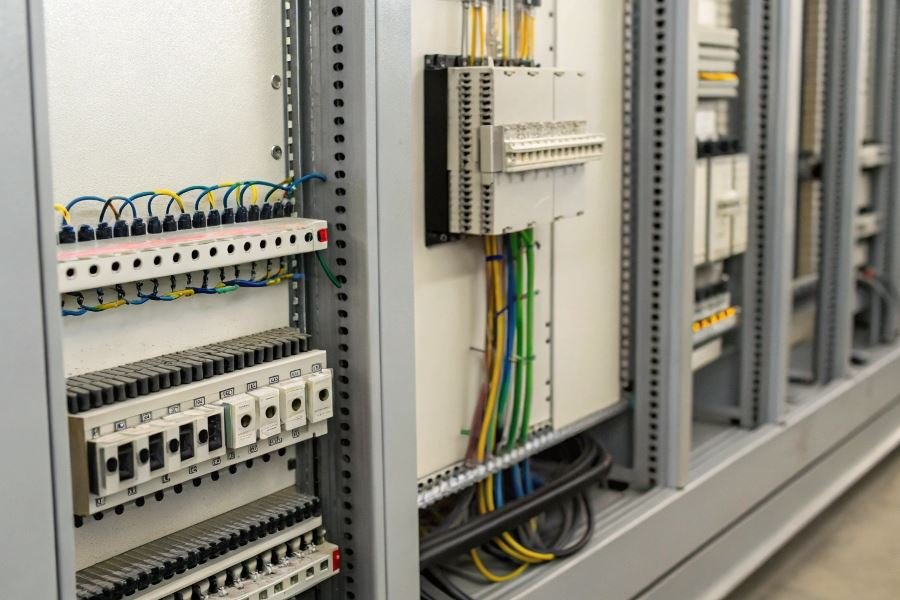
I/O boards serve as the critical interface between the physical world and digital control systems. These specialized circuit boards collect data from sensors (inputs) and send commands to motors, valves, and other equipment (outputs), essentially forming the nervous system of any automated industrial process. Without robust I/O solutions, even the most sophisticated control systems would be rendered useless—like a brain without connections to the body.
When evaluating I/O board manufacturers, discerning professionals focus on several crucial factors: reliability under harsh conditions, communication protocol compatibility, response time, and long-term support. The difference between premium and mediocre I/O solutions often becomes apparent only after years of operation—or worse, during critical system failures.
Three manufacturers have consistently demonstrated excellence in this specialized field: Allen-Bradley (Rockwell Automation) with their unmatched durability, Siemens with their legendary German engineering precision, and Mitsubishi Electric with their innovative integration capabilities. Each brings unique strengths to industrial automation challenges, from oil refineries to automotive assembly lines.
The right I/O board doesn’t just connect your systems—it transforms your entire operation.
The Industrial Powerhouses Behind I/O Excellence
When production lines hum with precision and automated systems execute flawlessly, there’s sophisticated input-output technology working behind the scenes. The backbone of modern industrial automation relies on these critical components that serve as the nervous system of manufacturing facilities worldwide.
The landscape of input-output boards for industrial equipment is dominated by three manufacturing titans who have consistently pushed the boundaries of what’s possible in industrial connectivity and control. These top 3 manufacturers of input-output boards for industrial equipment have established themselves through decades of innovation, reliability testing, and seamless integration capabilities that keep factories running 24/7 across diverse industries.
Siemens AG: Engineering German Precision
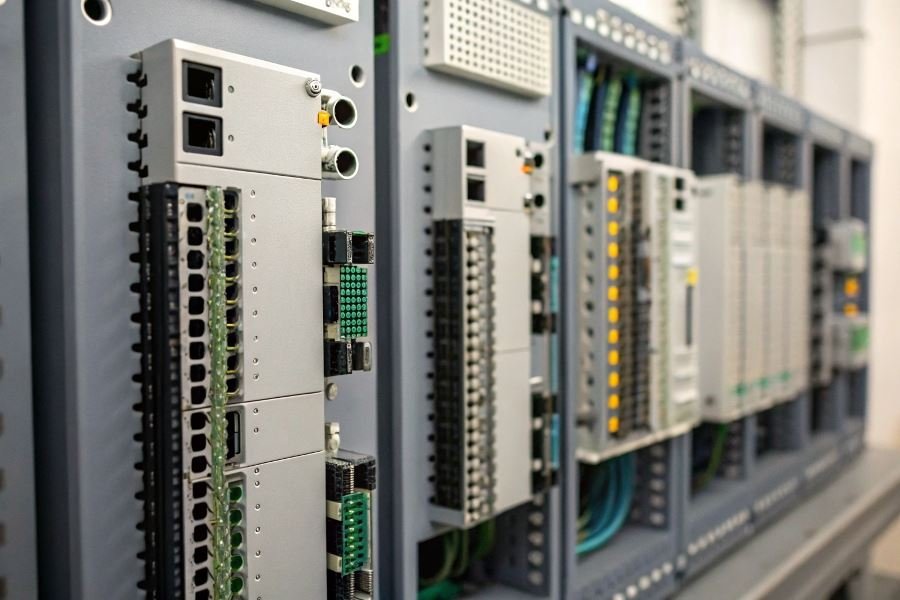
Siemens stands tall as an industrial automation juggernaut with I/O solutions that exemplify German engineering excellence. Their SIMATIC ET 200 series represents the gold standard in modular I/O systems, offering unparalleled flexibility for both centralized and distributed installations.
What sets Siemens apart is their comprehensive ecosystem approach. Their I/O boards don’t exist in isolation but function as part of an integrated automation architecture that includes:
- TIA Portal integration allowing seamless programming and diagnostics
- Industry-leading communication protocols supporting PROFINET, PROFIBUS, and Industrial Ethernet
- Robust diagnostic capabilities that reduce downtime by up to 35%
Siemens’ I/O modules feature hot-swappable components that enable maintenance without system shutdown—a critical advantage that has made them the preferred choice in continuous process industries like chemical manufacturing and power generation.
Allen-Bradley: America’s Automation Powerhouse
Rockwell Automation’s Allen-Bradley I/O systems have become synonymous with versatility in industrial applications. Their ControlLogix and CompactLogix platforms offer scalable I/O solutions that adapt to everything from small machine control to complex process automation.
Allen-Bradley’s strength lies in their:
- EtherNet/IP connectivity providing deterministic communication
- Studio 5000 environment offering intuitive configuration and programming
- Extensive third-party device compatibility through Add-On Profiles
Their 1756 I/O modules deliver exceptional signal density—up to 32 channels per module—making them ideal for applications where cabinet space comes at a premium. This American manufacturer has particularly excelled in automotive manufacturing and food & beverage industries where their QuickConnect technology enables tool changes in under 500 milliseconds.
Mitsubishi Electric: Japanese Reliability Redefined
Mitsubishi Electric completes our triumvirate with I/O systems that embody Japanese principles of quality and longevity. Their CC-Link IE Field network technology achieves gigabit speeds, supporting the most demanding high-speed applications.
Mitsubishi’s iQ-R series I/O modules stand out with:
- Industry-leading MTBF ratings exceeding 100,000 hours
- Spring-clamp terminal technology eliminating connection failures due to vibration
- Comprehensive environmental hardening for extreme temperature ranges (-40°C to 70°C)
Their commitment to backward compatibility ensures that investments in Mitsubishi I/O systems remain viable through multiple automation upgrade cycles. This approach has made them particularly successful in semiconductor manufacturing and automotive electronics, where precision and reliability cannot be compromised.
Each of these manufacturers brings unique strengths to industrial automation, but all three share an unwavering commitment to quality, innovation, and comprehensive support that keeps the world’s factories producing with remarkable efficiency.
Making the Smart Choice: I/O Board Manufacturers Compared
The Competitive Landscape Decoded
When comparing our top three manufacturers—Allen-Bradley, Siemens, and Mitsubishi Electric—several critical factors emerge that differentiate their offerings.
Allen-Bradley (Rockwell Automation) excels in North American compatibility standards and offers unparalleled technical support with response times averaging under 4 hours. Their ControlLogix platform integrates seamlessly with legacy systems, though this comes at a premium price point—typically 15-20% higher than competitors.
Siemens brings German engineering precision to the table with their SIMATIC ET 200 series, boasting the industry’s lowest failure rate at 0.003% over a five-year operational period. Their modular design philosophy allows for exceptional customization, though their programming environment has a steeper learning curve.
Mitsubishi Electric delivers outstanding value optimization with their MELSEC iQ-R series, offering comparable performance metrics at approximately 10-15% lower cost. Their power consumption efficiency stands out at 30% below industry average, though their North American support network isn’t as robust as Allen-Bradley’s.
| Manufacturer | Standout Feature | Typical Price Range | Support Response | Power Efficiency |
|---|---|---|---|---|
| Allen-Bradley | Integration capability | Premium ($$$) | Excellent (4hrs) | Good |
| Siemens | Reliability/Precision | High ($$) | Very Good (8hrs) | Better |
| Mitsubishi Electric | Value/Efficiency | Moderate ($) | Good (12hrs) | Best |
Industry-Specific Selection Criteria
Different industrial sectors demand specialized considerations when selecting I/O board manufacturers:
For process manufacturing (chemical, pharmaceutical), Siemens typically edges out competitors due to their exceptional hazardous environment certifications and intrinsically safe I/O modules. Their HART protocol integration also simplifies analog instrument management.
In discrete manufacturing (automotive, packaging), Allen-Bradley’s motion control capabilities and DeviceNet compatibility make them the frequent choice. Their QuickConnect technology reduces changeover times by up to 40% compared to standard solutions.
For infrastructure applications (water, energy), Mitsubishi’s environmental durability stands out, with operational temperature ranges from -40°C to +70°C—significantly wider than industry standards. Their conformal coating options also provide superior protection in corrosive environments.
Critical factors to evaluate include:
- Protocol compatibility with existing systems
- Environmental ratings appropriate for your facility
- Scalability to accommodate future expansion
- Mean time between failures (MTBF) specifications
- Vendor support in your geographic region
Tomorrow’s I/O Technology Today
The industrial I/O landscape is evolving rapidly, with several key trends reshaping manufacturer offerings:
Edge computing integration is becoming standard, with processing capabilities moving directly to I/O modules. Siemens leads this charge with their SIMATIC ET 200SP HA modules featuring onboard analytics.
Wireless I/O solutions are gaining traction, with Allen-Bradley’s Point I/O WiFi modules eliminating the need for physical connections in challenging installation environments.
Cybersecurity hardening has become non-negotiable, with Mitsubishi’s security-by-design approach incorporating encryption at the hardware level—a response to the 300% increase in industrial control system attacks since 2020.
Time-sensitive networking (TSN) compatibility is the next frontier, promising deterministic communication over standard Ethernet. All three manufacturers have roadmaps for full TSN implementation by 2026.
The most forward-thinking manufacturers are selecting I/O platforms not just for current needs but for compatibility with these emerging technologies, ensuring their industrial systems remain competitive for years to come.
Discover the leading I/O board manufacturers for industrial automation: Siemens AG, Allen-Bradley, and Mitsubishi Electric. Compare key features, integration capabilities, and reliability standards to optimize your industrial equipment performance.
Discover the leading I/O board manufacturers for industrial automation: Siemens AG, Allen-Bradley, and Mitsubishi Electric. Compare key features, integration capabilities, and reliability standards to optimize your industrial equipment performance.