Ever opened your cabinet to a cascade of falling mugs or spent precious minutes hunting for that one serving platter? The average American spends nearly 55 hours per year searching for misplaced items at home. Your dish cabinet doesn’t have to be part of that statistic.
Think of your dish cabinet as command central for daily meals and entertaining. A thoughtfully organized cabinet system isn’t just about aesthetics—it’s about creating a functional workflow that saves time, reduces frustration, and even prevents breakage. When plates, bowls, and glasses have designated homes that make sense for how you actually use them, kitchen tasks become remarkably more efficient.
Assess what you’re working with
Before purchasing a single organizer, take everything out of your cabinets. Everything. This inventory process reveals exactly what you own and helps identify duplicates, rarely-used items, or pieces that should be retired. Sort dishes into categories:
- Daily use: Items your household uses constantly
- Occasional use: Special occasion pieces
- Sentimental items: Pieces kept primarily for emotional value
Measure your cabinet dimensions precisely—height, width, and depth. Note any fixed shelves versus adjustable ones. These measurements become your blueprint for maximizing every inch.
Define your kitchen reality
Your ideal organization system should reflect your actual habits, not an aspirational version. Consider:
“The most efficient kitchen is one designed around your natural movements, not one that forces you to adapt to it.”
How many people typically eat meals at home? Do you entertain frequently? Are there mobility considerations for household members? A young family might prioritize unbreakable dishes in lower cabinets, while someone who hosts dinner parties might need easy access to serving pieces.
By establishing clear goals based on your household’s specific needs, you create a foundation for a dish storage system that works with you, not against you.
Strategic Cabinet Organization That Transforms Your Kitchen
The kitchen cabinet—that unassuming space behind wooden doors—often becomes a chaotic repository of mismatched dishes, precariously stacked bowls, and forgotten serveware. Yet with thoughtful planning, this humble storage area can become a masterpiece of efficiency. Professional chefs understand that how to organize storage in a cabinet for dishes: ergonomics and efficiency isn’t just about aesthetics—it’s about creating a functional system that saves time, prevents breakage, and makes cooking a joy rather than a frustrating treasure hunt.
Zone Organization by Usage Frequency
The foundation of intelligent cabinet organization begins with honest assessment of how often you use each item. The 80/20 principle applies perfectly here: you likely use 20% of your dishes 80% of the time.
Primary Zone (Daily Use): Position everyday plates, glasses, and mugs between waist and eye level—the “golden zone” requiring minimal reaching or bending. This ergonomic sweet spot reduces physical strain and makes grabbing that morning coffee mug effortless.
Secondary Zone (Weekly Use): Place items used several times weekly on middle shelves. Think serving bowls, special dinnerware, and entertaining essentials.
Tertiary Zone (Occasional Use): Holiday platters, formal china, and rarely-used specialty items belong on higher or lower shelves. While less accessible, these spaces perfectly accommodate items needed only a few times yearly.
Pro Tip: Conduct a quarterly “usage audit” by placing a small dot sticker on items as you use them. After three months, anything without a sticker might be a candidate for donation or deeper storage.
Maximizing Vertical Real Estate
Cabinet space isn’t just about square footage—it’s about cubic footage. Most cabinets have substantial vertical space that goes unused due to fixed shelving.
Adjustable Shelving Systems: Invest in cabinets with movable shelf pins or retrofit existing cabinets with adjustable systems. This allows customization based on your specific collection rather than forcing dishes to conform to predetermined spaces.
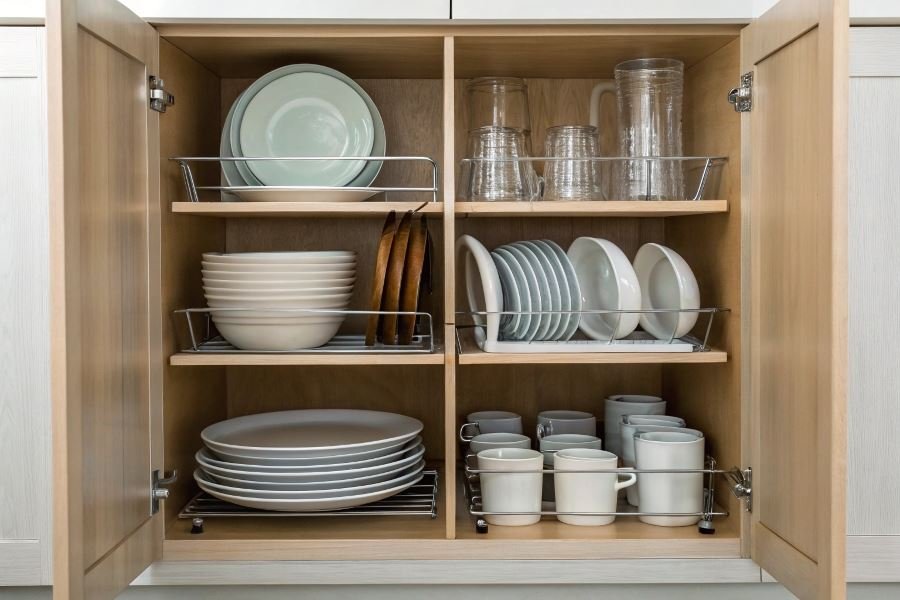
Shelf Risers and Expanders: These affordable additions can instantly double usable surface area. A 6-inch riser creates space for dessert plates beneath dinner plates or teacups under mugs.
| Solution | Best For | Approximate Cost |
|---|---|---|
| Wire Risers | Plates, Bowls | $15-25 |
| Expandable Shelves | Corner Cabinets | $25-40 |
| Under-Shelf Baskets | Mugs, Small Items | $12-20 |
| Vertical Dividers | Cutting Boards, Trays | $18-30 |
Ceiling-to-Floor Thinking: Don’t ignore the often-wasted inches at the very top or bottom of cabinets. These spaces can accommodate seasonal items or backup supplies in protective containers.
Specialized Storage Solutions by Dish Type
Different dishware demands different storage approaches. One-size-fits-all organization inevitably leads to inefficiency and potential damage.
Plate Storage: Vertical plate organizers reduce the footprint needed for dinner plates by up to 70% compared to stacking. They also eliminate the risk of scratching fine china and make individual plate retrieval possible without moving an entire stack.
Glassware Protection: Stemware racks mounted under shelves reclaim unused space while protecting delicate items. For everyday glasses, consider stackable designs specifically created with stability in mind.
Odd-Shaped Items: Pot lid organizers work brilliantly for serving platters and oddly-shaped dishes that resist conventional stacking. These vertical solutions transform awkward items from storage nightmares into organized components.
The thoughtful organization of dish cabinets isn’t merely about creating Instagram-worthy spaces—it’s about designing a kitchen that works with you rather than against you, saving precious minutes every day and protecting your investments in quality dishware.
Maintaining Your Dish Cabinet Organization for the Long Haul
The perfect dish cabinet doesn’t organize itself—and it certainly doesn’t stay organized without intention. After investing time in creating your ideal storage system, protecting that investment becomes your next mission. Let’s explore how to maintain that beautiful organization you’ve worked so hard to achieve.
Daily Habits That Preserve Order
The secret to maintaining any organizational system lies in consistent daily practices. These micro-habits require minimal effort but deliver maximum impact:
- Return items to their designated homes immediately after use. This simple act prevents the “I’ll deal with it later” pile-up that inevitably leads to chaos.
- Create a 15-second reset ritual before bed where you quickly scan cabinets to ensure everything is in place.
- Implement a “one-touch rule”—handle each dish only once when putting it away, placing it directly in its final position.
The most effective organizational systems aren’t the most complex—they’re the ones you’ll actually maintain day after day.
Teaching household members these habits transforms maintenance from a solo burden to a shared responsibility. Consider creating a visual guide using Canva that shows exactly where each item belongs, making it foolproof for everyone to participate.
Seasonal Cabinet Reassessments
Just as you rotate your wardrobe with the seasons, your dish storage deserves quarterly attention:
Spring: Deep clean all surfaces and assess which items have collected dust (indicating low usage).
Summer: Evaluate entertaining needs—are your serving platters accessible for outdoor gatherings?
Fall: Prepare for holiday hosting by reorganizing to prioritize special occasion dishware.
Winter: Post-holiday reset—return to everyday efficiency and consider which gifted items need integration.
During these seasonal reviews, remove everything from at least one cabinet section, clean thoroughly, and deliberately replace items. This prevents the gradual drift toward disorder that happens in even the best-organized spaces.
Adapting to Your Evolving Collection
Your dish collection is a living entity that grows, shrinks, and transforms over time. Maintaining organization means embracing this evolution:
- Implement the one-in-one-out rule when acquiring new pieces to prevent overcrowding.
- Reassess the function of each zone when your needs change—perhaps your coffee station needs expansion as your brewing methods diversify.
- Document your system using photos or notes in Evernote so you can quickly restore order if things get shuffled.
Consider installing adjustable shelving systems from The Container Store that can be reconfigured as your collection changes. These modular solutions allow your storage to grow with you rather than constraining your future options.
Maintenance Tools Worth Having
Invest in these maintenance allies:
| Tool | Purpose | Approximate Cost |
|---|---|---|
| Shelf liners | Prevent slipping and surface damage | $15-30 |
| Cabinet door organizers | Maximize vertical space | $20-45 |
| Microfiber cleaning cloths | Quick dust removal | $10-15 |
| Label maker | Create clear identification | $25-50 |
The most organized cabinets aren’t static museum displays—they’re dynamic systems that evolve with your lifestyle while maintaining core efficiency principles. By establishing daily habits, conducting seasonal reviews, and adapting thoughtfully to changes, your dish storage will remain a source of satisfaction rather than frustration for years to come.
Discover practical strategies for creating an ergonomic dish cabinet that maximizes space and efficiency. Learn zone-based organization techniques, vertical storage solutions, and maintenance tips for a functional kitchen that works for your lifestyle.
Discover practical strategies for creating an ergonomic dish cabinet that maximizes space and efficiency. Learn zone-based organization techniques, vertical storage solutions, and maintenance tips for a functional kitchen that works for your lifestyle.