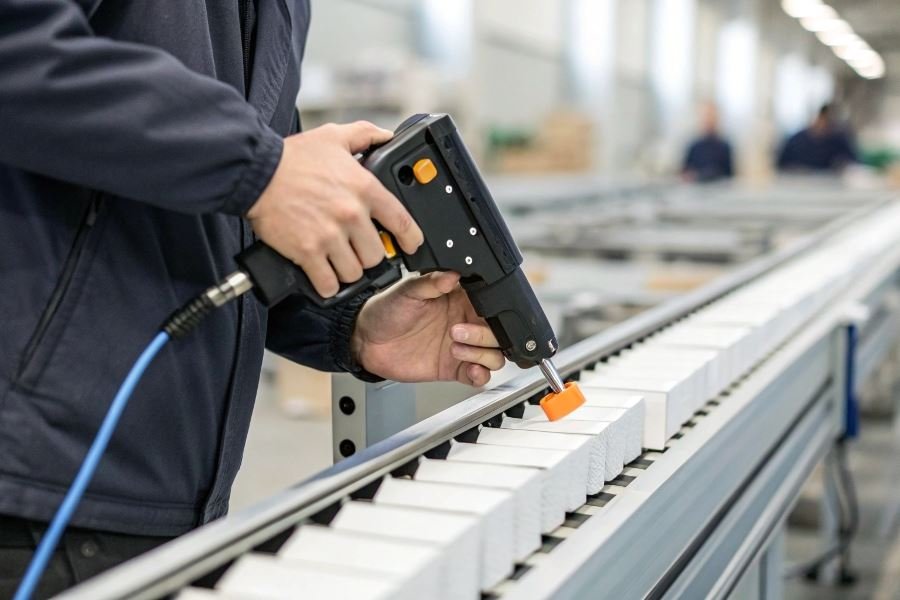
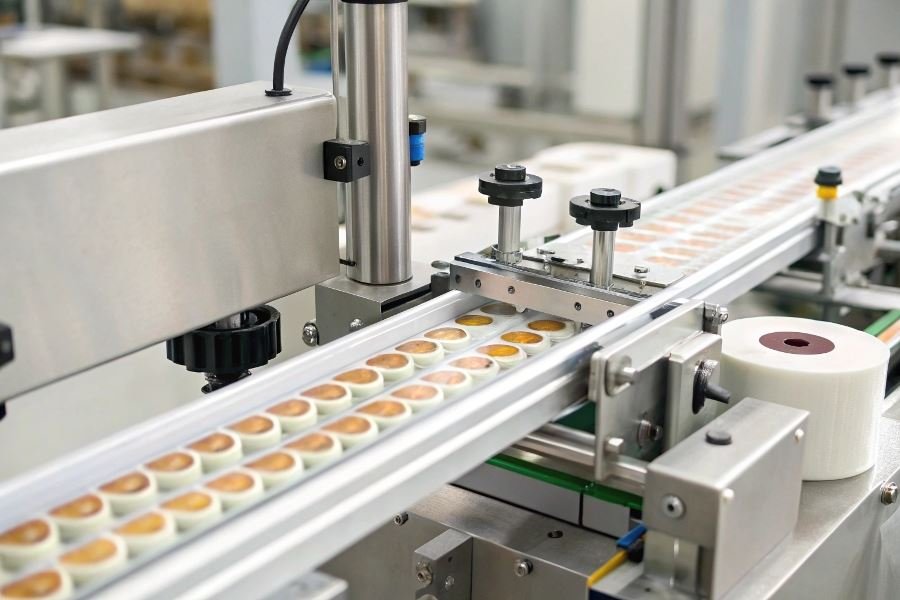
Ever watched a perfectly labeled product line in action? There’s something mesmerizing about the precision—each label landing exactly where it should, thousands of times per hour, without a single wrinkle or bubble. Behind this seemingly simple process lies sophisticated technology that can make or break your product’s market appeal.
Self-adhesive label applicators transform the labeling process from a labor-intensive headache into a streamlined operation. These machines precisely apply pre-printed pressure-sensitive labels to products, containers, or packaging at speeds that manual application simply cannot match. The right applicator doesn’t just save time—it elevates brand perception through consistent placement that screams quality and attention to detail.
The global self-adhesive labeling market continues its robust expansion, projected to exceed $38 billion by 2027. This growth stems from increasing demand across food, beverage, pharmaceutical, and consumer goods sectors, all seeking efficiency without sacrificing precision.
Before investing in a label applicator, three critical considerations demand attention:
- Production volume and speed requirements – Are you labeling 50 products per hour or 5,000?
- Application precision needs – Does your product require placement accuracy measured in millimeters?
- Container characteristics – Flat surfaces allow for simpler applicators, while curved or irregular surfaces demand more sophisticated solutions.
The difference between adequate and exceptional labeling equipment often comes down to understanding these nuances before making your selection. The right applicator doesn’t just apply labels—it becomes an invisible yet crucial component of your product’s perceived value.
Essential Features That Define Label Applicator Performance
When selecting equipment for your production line, the features of choosing applicators for self-adhesive labels can make the difference between seamless operation and costly downtime. The right applicator doesn’t just stick labels on products—it becomes an integral part of your efficiency equation, directly impacting your bottom line and product presentation.
Application Speed and Throughput Capabilities
The heartbeat of any labeling system is its speed. Modern high-performance applicators from manufacturers like Herma and Weber Marking offer throughput rates ranging from 20 to 500+ products per minute. But raw speed numbers can be misleading.
What truly matters is sustained performance. A machine rated for 300 units per minute that requires frequent adjustments delivers less value than a 250 units per minute workhorse that runs continuously without intervention.
Consider these throughput factors:
- Acceleration/deceleration rates that prevent label bunching
- Buffer systems that maintain consistent application during roll changes
- Servo motor technology that ensures precise speed matching with conveyor lines
The most sophisticated systems now incorporate variable speed technology that automatically synchronizes with your production line’s pace, eliminating the need for manual adjustments when product flow fluctuates.
Compatibility With Label Materials and Adhesive Types
Not all applicators handle all materials equally well. The physical properties of your labels—thickness, rigidity, adhesive type—directly determine which applicators will perform optimally.
The relationship between material and machine is symbiotic. Paper labels with standard adhesives may work across most platforms, while specialty materials demand specialized equipment.
| Label Material | Ideal Applicator Type | Special Considerations |
|---|---|---|
| Standard Paper | Most applicators | Temperature control for hot environments |
| Film/Plastic | Wipe-on or air-blow | Static elimination systems required |
| Metallized | Tamp or blow-on | Sensor adjustments for reflective surfaces |
| RFID-Enabled | Specialized applicators | Verification systems integration |
Adhesive compatibility presents another critical dimension. Hot-melt, pressure-sensitive, and removable adhesives each require different application pressures and contact times. Premium systems like those from Quadrel Labeling Systems offer adjustable pressure settings and specialized rollers to accommodate these variations.
Precision and Placement Accuracy Specifications
In the world of label application, millimeters matter. Modern premium applicators achieve placement accuracy of ±0.5mm or better, but this precision comes with important qualifications.
Accuracy specifications should always be evaluated under real-world conditions:
- At maximum rated speed
- With your specific label materials
- On your actual product surfaces (curved, textured, etc.)
- Under your facility’s environmental conditions
The most advanced systems employ vision verification technology that monitors placement in real-time, automatically adjusting for drift before it becomes visible to the human eye. Videojet and Domino Printing offer integrated vision systems that can detect misalignments as small as 0.2mm.
Placement consistency across different product sizes requires applicators with programmable settings that can be stored and recalled. Look for systems offering at least 50 memory positions for different product configurations to minimize changeover times.
The precision of your applicator directly impacts brand perception—inconsistent label placement suggests inconsistent product quality, a subtle but powerful message to consumers that can affect purchasing decisions.
Advanced Selection Criteria for Label Applicators That Matter
When investing in self-adhesive label applicators, looking beyond basic specifications separates industry leaders from those constantly fighting operational headaches. The right applicator doesn’t just stick labels—it transforms your production line’s efficiency, reliability, and adaptability to market demands.
Automation That Works With Your Operation
Modern label applicators offer automation levels ranging from semi-automatic tabletop units to fully integrated inline systems. The difference isn’t just about speed—it’s about intelligent integration.
Integration capabilities have evolved dramatically, with top-tier systems now offering:
- Direct communication with ERP and MES systems
- Real-time production data exchange
- Remote monitoring and diagnostics
- Seamless connection with vision inspection systems
Herma applicators, for example, feature open-architecture controls that allow integration with virtually any production line protocol, while Weber systems excel at multi-point data exchange across diverse manufacturing environments.
The most successful implementations match automation levels precisely to production needs—neither overengineering nor constraining future growth.
The True Cost Equation
Maintenance requirements and total cost of ownership (TCO) often reveal the substantial difference between seemingly similar applicators.
| Cost Factor | Budget Systems | Premium Systems |
|---|---|---|
| Downtime frequency | 2-3× higher | Minimal planned stops |
| Spare parts inventory | Extensive | Modular, standardized |
| Technical support | Limited hours, often remote | 24/7, on-site options |
| Energy consumption | 15-30% higher | Optimized efficiency |
| Label waste | 3-5% typical | Under 1% |
Quadrel applicators feature tool-less changeovers that reduce maintenance time by up to 70% compared to conventional systems. Meanwhile, Accraply builds machines with predictive maintenance algorithms that schedule service before failures occur.
The true cost of an applicator isn’t revealed on the invoice—it emerges over years of operation through maintenance hours, downtime, and operational efficiency.
Building For Tomorrow Today
Perhaps the most overlooked yet critical selection criterion is future-proofing through adaptability and scalability.
Key adaptability factors to evaluate include:
- Modular design allowing component upgrades without full system replacement
- Speed range flexibility to accommodate both current and projected production rates
- Material versatility for handling evolving label stocks and adhesive technologies
- Control system upgradability through software updates rather than hardware replacement
CTM Labeling Systems designs applicators with modular print engines that can be upgraded independently as technology advances. Labelmate builds scalable systems where additional application heads can be added as production demands increase.
Smart manufacturers evaluate not just current needs but anticipate how packaging requirements might evolve over the next 5-7 years. The most forward-thinking operations select systems with expansion capabilities that might seem excessive today but prevent costly replacements tomorrow.
The difference between adequate and exceptional label applicator selection often comes down to these advanced criteria—where the initial investment perspective shifts from price tag to long-term operational excellence.
Discover the essential features for selecting the right self-adhesive label applicator for your production needs. Learn about speed capabilities, material compatibility, precision placement, automation options, and long-term cost considerations to optimize your labeling process.
Discover the essential features for selecting the right self-adhesive label applicator for your production needs. Learn about speed capabilities, material compatibility, precision placement, automation options, and long-term cost considerations to optimize your labeling process.