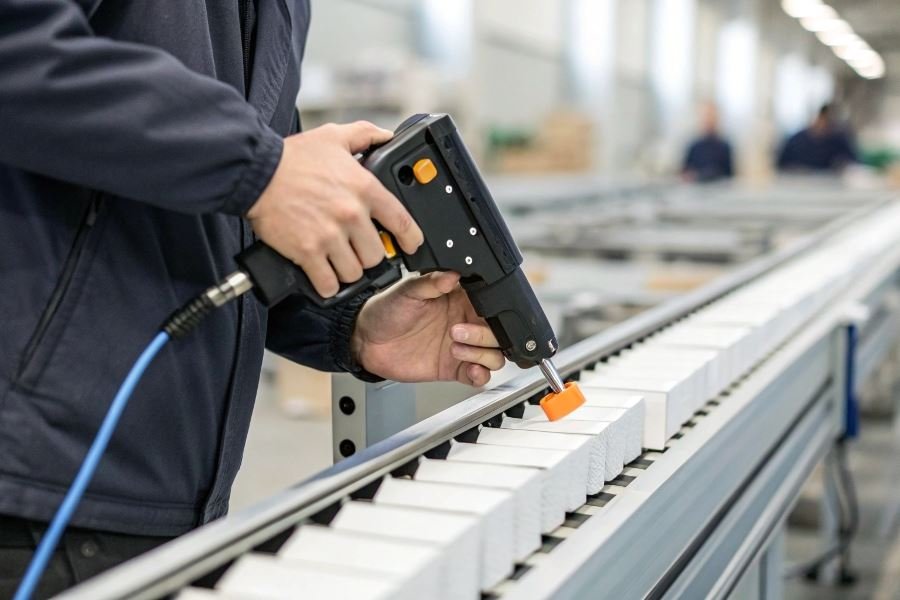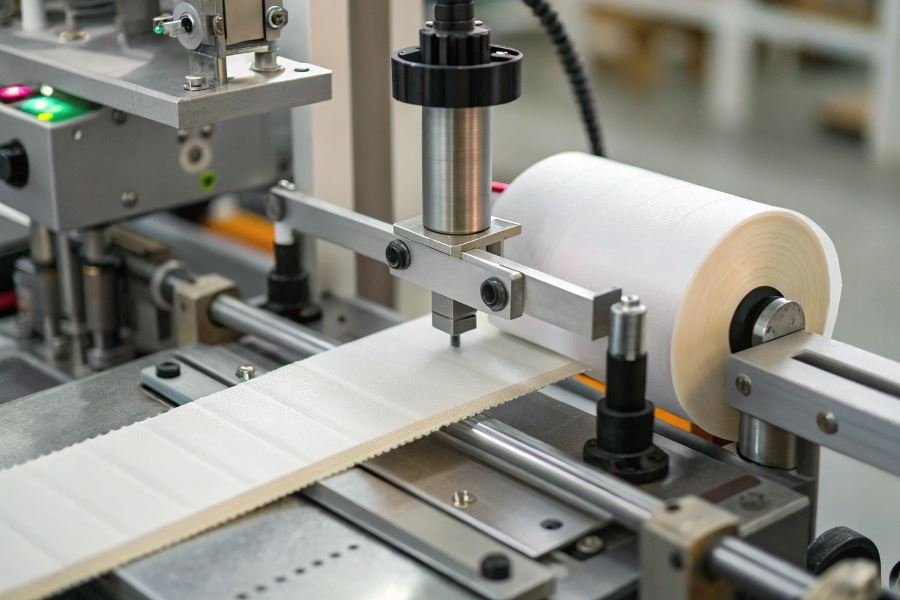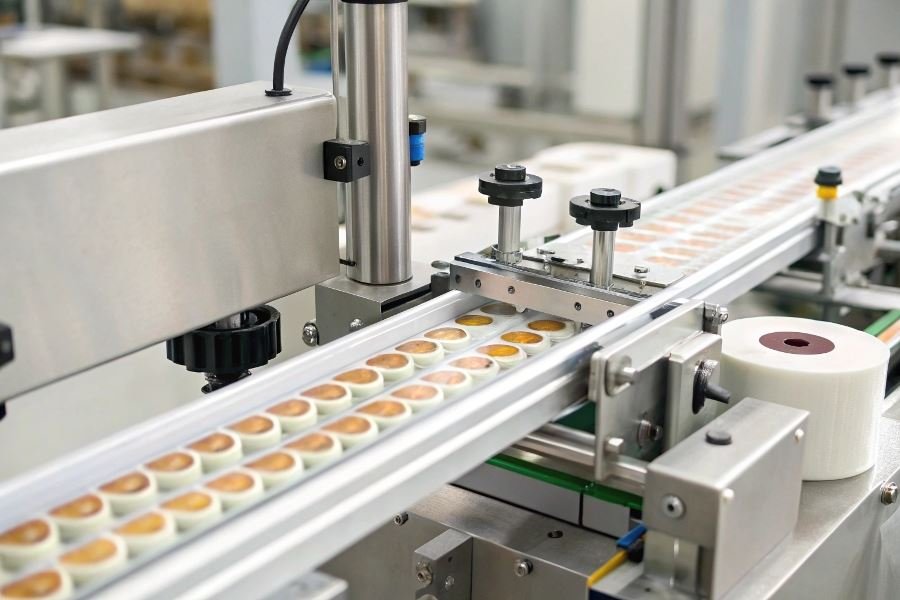
Ever watched a small business owner hunched over products, manually applying labels for hours? That’s time and money evaporating before your eyes.
Small businesses face a critical turning point when packaging operations start consuming more hours than actual production. This is where label applicators enter the picture—not as luxury equipment, but as essential productivity tools that deliver immediate returns.
The hidden cost of manual labeling
Manual labeling isn’t just tedious—it’s expensive. When calculating the true cost, consider:
- Labor hours spent on repetitive tasks
- Inconsistent label placement affecting brand perception
- Wasted labels from human error (typically 5-15% waste)
- Reduced production capacity
A craft brewery in Portland discovered that switching from hand-labeling to a semi-automatic applicator increased their bottling output by 300% while reducing labor costs by 40%. The investment paid for itself in just 11 weeks.
How applicators transform your workflow
Label applicators bring precision and speed to your packaging process. Whether you’re labeling jars of artisanal jam or custom leather goods, the right applicator ensures:
“The difference between amateur and professional packaging often comes down to label consistency. Customers notice.”
Modern applicators can handle various label types—from basic product identification to sophisticated branding elements—while maintaining perfect alignment and eliminating bubbles or wrinkles that plague manual application.
Beyond efficiency: The competitive edge
Investing in the right label applicator isn’t merely about operational efficiency—it’s about positioning your business for growth. Professional labeling elevates product perception, reduces returns due to misidentification, and allows you to scale production without proportionally increasing labor costs.
Essential Factors for Selecting the Perfect Label Applicator
Choosing the right label applicator for your small business operations can dramatically transform your packaging efficiency. The market offers numerous options, each with specific capabilities designed to address different production needs. When evaluating how to choose a label applicator for a small business, several critical factors must be considered to ensure you’re making an investment that will serve your operation effectively for years to come.
Production Volume and Speed Requirements
The throughput capacity of your label applicator should align perfectly with your production demands. Manual applicators might suffice for businesses labeling fewer than 100 products daily, while semi-automatic systems handle 500-1,000 units per shift comfortably.
Speed specifications matter tremendously. Entry-level automatic applicators typically process 20-30 products per minute, while advanced models can reach speeds of 100+ units per minute. Consider not just your current needs but where you expect to be in 12-18 months.
The most expensive mistake small businesses make isn’t buying too much capacity—it’s underestimating growth and being forced to replace equipment prematurely.
For seasonal businesses, look for applicators with adjustable speed settings that can ramp up during peak periods without sacrificing label placement accuracy.
Label Size, Shape, and Material Compatibility
Label versatility represents perhaps the most overlooked aspect of applicator selection. Your equipment must accommodate:
- Dimensional range: Can it handle both your smallest and largest labels?
- Material compatibility: Will it work with paper, film, foil, or specialty materials?
- Adhesive types: Hot-melt, pressure-sensitive, or cold-glue applications require different mechanisms
Most small businesses benefit from applicators that handle labels between 0.5″ × 0.5″ and 5″ × 8″. If your products require unusually shaped labels (oval, round, or custom die-cuts), verify compatibility before purchasing.
The Herma H400 and Primera AP550 offer exceptional versatility for small businesses needing to apply different label types across product lines.
Available Space and Production Line Integration
Your physical workspace constraints directly impact applicator selection. Measure your available footprint carefully—most small business applicators require between 2-4 square feet of dedicated space.
Consider these integration factors:
| Integration Factor | Importance | Common Pitfalls |
|---|---|---|
| Height adjustment | Critical | Fixed-height applicators can’t adapt to different container sizes |
| Power requirements | Moderate | Some units require dedicated circuits |
| Mobility options | Variable | Caster wheels enable repositioning for different production runs |
Semi-automatic applicators from Pack Leader USA offer excellent space efficiency while maintaining production flexibility. For truly limited spaces, tabletop models from Tach-It provide surprising capability in compact dimensions.
Budget Considerations and ROI Analysis
Initial purchase price represents only one component of your total investment. A comprehensive ROI analysis should include:
- Labor savings: Calculate hours saved at your hourly labor rate
- Error reduction: Quantify the cost of mislabeled products and returns
- Throughput increases: Measure additional production capacity gained
- Maintenance requirements: Factor in annual service costs (typically 5-10% of purchase price)
Entry-level manual applicators start around $500, while semi-automatic systems range from 2, 000−8,000. Fully automatic inline systems begin at $10,000 and can exceed $30,000 for high-speed operations.
Most small businesses achieve complete ROI within 6-18 months, particularly when upgrading from manual labeling processes. The Quadrel Labeling Systems Versaline series offers an excellent balance of capability and investment for growing operations.
Remember that financing options, including equipment leasing, can make higher-end applicators accessible while preserving capital for other business needs.
Label Applicator Types That Will Transform Your Small Business
Choosing the right label applicator can dramatically streamline your production process, reduce labor costs, and ensure your products look professionally finished every time. Let’s dive into the three main categories that small businesses should consider, with all the juicy details you need to make an informed decision.
Manual Label Applicators That Punch Above Their Weight
Manual label applicators represent the entry point for many small businesses looking to upgrade from hand-applying labels. These devices typically cost between $50 and $300, making them accessible for even the smallest operations.
Key features of manual applicators include:
- Handheld design for operator-controlled application
- Mechanical dispensing mechanisms that peel labels from backing
- Ability to handle various label sizes with minimal adjustment
- No electricity required—perfect for mobile operations
The beauty of manual applicators lies in their simplicity. A Tach-It label dispenser, for instance, can increase labeling speed by up to 300% compared to peeling and applying by hand, while maintaining the flexibility small batch producers need.
Manual applicators shine brightest when your production volume is under 500 units daily or when you’re dealing with irregularly shaped products that require human judgment for placement.
Semi-Automatic Systems That Scale With You
When your business outgrows manual application but isn’t ready for full automation, semi-automatic label applicators offer the perfect middle ground. These workhorses typically range from $1,000 to $5,000 depending on features.
Semi-automatic applicators combine:
- Powered label dispensing with manual product placement
- Consistent label positioning through guides and sensors
- Higher throughput (typically 500-2,000 products daily)
- Versatility across different container types
The Primera AP360 and similar models can apply labels at rates of 1,200+ per hour while maintaining placement accuracy within 1/32 of an inch—precision that’s simply impossible with fully manual methods.
Industry insight: Semi-automatic applicators typically deliver ROI within 3-6 months for businesses labeling more than 50 products daily, primarily through labor savings and reduced waste from misapplied labels.
These systems work exceptionally well for:
- Small wineries and craft breweries
- Cosmetics and personal care product manufacturers
- Specialty food producers with multiple SKUs
- E-commerce businesses with seasonal volume fluctuations
Automatic Applicators For Serious Production Demands
When consistency, speed, and reduced labor costs become paramount, automatic label applicators enter the conversation. Starting around $6,000 and reaching $25,000+ for sophisticated systems, these represent a significant investment with equally significant returns.
Standout capabilities include:
- Integrated conveyor systems for continuous operation
- Application rates of 2,000+ units per hour
- Precision placement through computer-controlled mechanisms
- Multiple label application in a single pass
The Pack Leader USA ELF-50 and similar entry-level automatic systems can transform operations by reducing per-unit labeling costs by up to 80% compared to manual methods.
Automatic systems make financial sense when:
- Your daily production exceeds 1,000 units
- Labor costs for manual application exceed $2,500 monthly
- Consistency is critical to your brand presentation
- You have limited product variation and consistent packaging
The transition to automatic labeling typically coincides with other production line improvements, creating compound efficiency gains that can dramatically improve your bottom line.
Discover how to select the perfect label applicator for your small business needs. Compare manual, semi-automatic, and automatic options while considering production volume, label compatibility, space requirements, and budget constraints for maximum efficiency.
Discover how to select the perfect label applicator for your small business needs. Compare manual, semi-automatic, and automatic options while considering production volume, label compatibility, space requirements, and budget constraints for maximum efficiency.