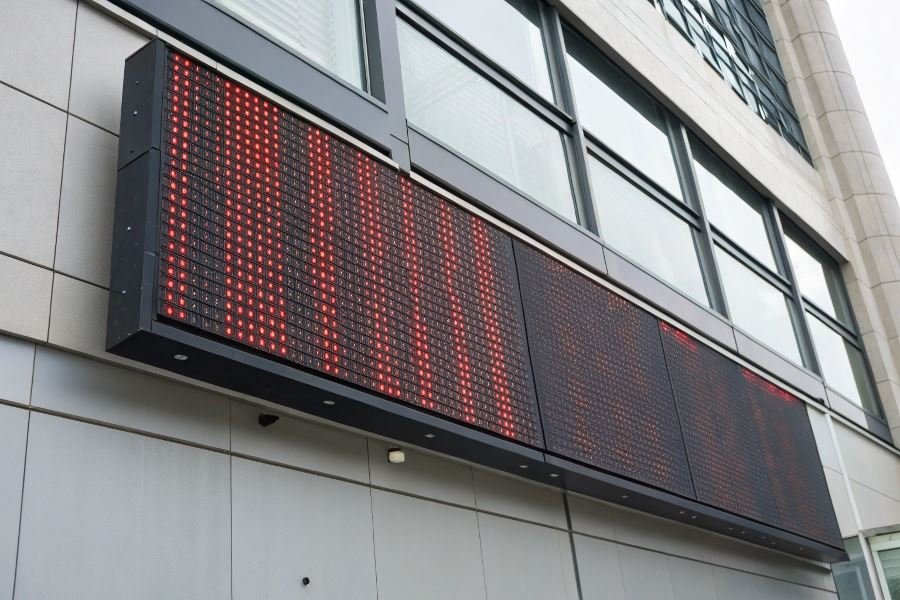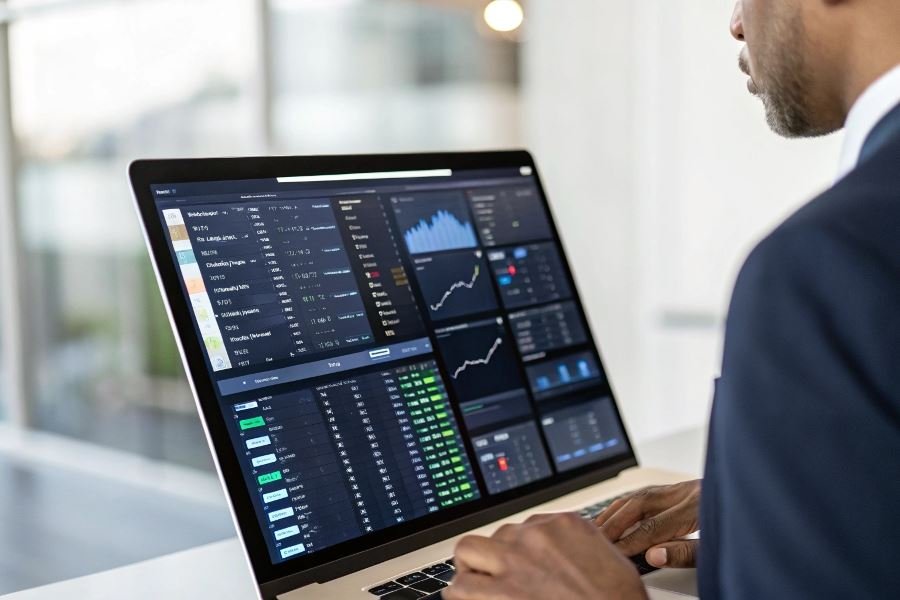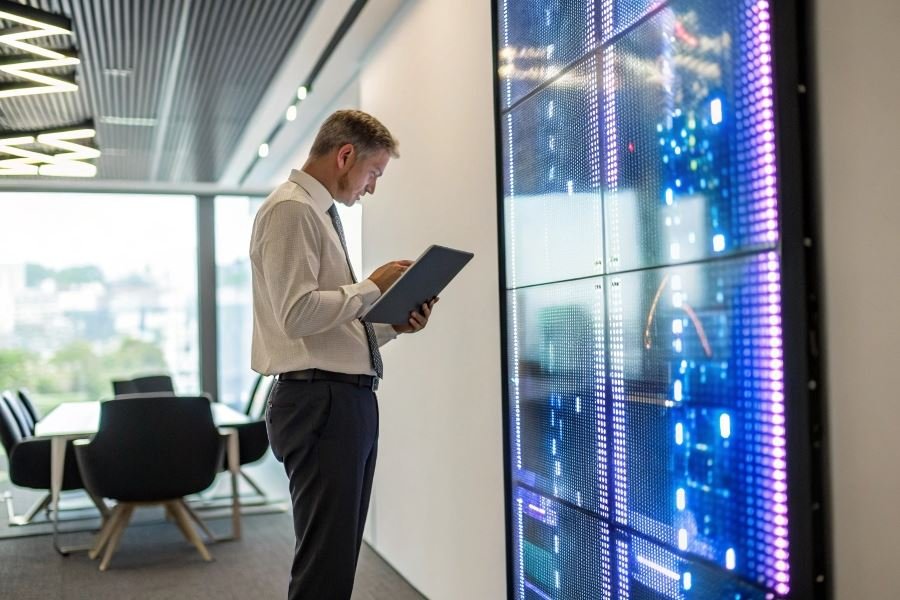
What if the digital signs illuminating our cities could use 90% less energy while looking better than ever? This isn’t science fiction—it’s the reality of modern LED information display technology.
The energy efficiency of LED displays represents far more than a technical specification—it’s the intersection of environmental responsibility and business intelligence. When a single large-format outdoor display can consume as much electricity as several households, efficiency becomes both an ecological imperative and a financial necessity.
The efficiency evolution
LED display technology has undergone remarkable transformation since its commercial introduction in the 1960s. Early LED signs were simple monochrome indicators with limited applications. The efficiency breakthrough came in the 1990s with the development of high-brightness LEDs, but these early commercial displays still consumed substantial power.
Fast forward to today, and the difference is striking. Modern LED displays utilize advanced semiconductor materials and precision manufacturing techniques that have increased light output while dramatically reducing power requirements. What once required 500 watts per square meter now often needs less than 100 watts to produce even brighter, more vibrant imagery.
Today’s efficiency landscape
The market for energy-efficient information displays has matured into a sophisticated ecosystem where manufacturers compete on both performance and sustainability metrics. Leading displays now incorporate ambient light sensors, intelligent power management, and pixel-level dimming technologies that can reduce energy consumption by up to 70% compared to models from just a decade ago.
The most efficient displays don’t just save energy—they redefine what’s possible in digital communication.
The Technology Powering Efficient LED Displays
Revolutionary Semiconductor Materials
The heart of any LED display is its semiconductor material, and recent breakthroughs have transformed what’s possible in the efficiency space. Modern displays now utilize Gallium Nitride (GaN) and Indium Gallium Nitride (InGaN) compounds that dramatically reduce power requirements while maintaining—or even improving—brightness levels.
These advanced materials have revolutionized energy efficiency of modern LED information displays across commercial applications. A standard 4×6 foot outdoor display that consumed 1,200 watts in 2015 now operates at just 400-500 watts with these new semiconductors—a 60% reduction that translates to substantial operational savings.
Quantum dot technology represents the cutting edge, with displays achieving up to 90% power efficiency compared to the 40-50% common just five years ago. These microscopic semiconductor particles precisely control light wavelengths, eliminating wasted energy through heat dissipation.
| Semiconductor Type | Power Efficiency | Color Accuracy | Relative Cost |
|---|---|---|---|
| Traditional LED | 40-50% | Good | $ |
| GaN/InGaN | 65-75% | Excellent | $$ |
| Quantum Dot | 80-90% | Superior | $$$ |
Smart Brightness That Adapts
The days of displays blasting at full brightness 24/7 are thankfully behind us. Today’s intelligent systems incorporate sophisticated ambient light sensors that continuously monitor environmental conditions and adjust brightness accordingly.
These adaptive systems can reduce power consumption by up to 70% compared to fixed-brightness displays while maintaining optimal visibility.
Modern Samsung and LG commercial displays feature multi-point sensing technology that creates brightness maps across the entire display surface. This allows for:
- Zone-specific dimming in partially shaded areas
- Rapid response to changing light conditions (under 100ms)
- Customizable brightness thresholds based on content type
The most advanced systems now incorporate AI algorithms that learn viewing patterns and environmental conditions over time, preemptively adjusting brightness before conditions change—further reducing unnecessary power consumption during transition periods.
Power Management Gets Intelligent
The control systems behind LED displays have undergone a quiet revolution. Modern power management innovations have dramatically reduced standby power consumption and improved operational efficiency.
Distributed power architecture has replaced centralized systems, allowing displays to power only the sections actively showing content. This approach can reduce overall consumption by 15-30% in typical usage scenarios.
Advanced displays from Daktronics and Unilumin now feature:
- Pixel-level power management that can shut down individual LEDs
- Dynamic refresh rate adjustment based on content complexity
- Intelligent heat management systems that optimize performance based on temperature
Perhaps most impressive are the new predictive content analysis algorithms that analyze incoming video signals milliseconds before display, optimizing power delivery precisely when and where needed. These systems can reduce power spikes by up to 40% during high-brightness scenes.
The combination of these technologies means today’s LED information displays deliver stunning visual performance while consuming a fraction of the energy required just a few years ago—a win for both businesses and the environment.
The Future of LED Display Efficiency Looks Brilliantly Green
The evolution of LED information displays has been nothing short of revolutionary. As we look toward what’s next, the trajectory points to even more impressive advances in energy efficiency that promise to transform both commercial landscapes and environmental footprints.
Next-generation technologies redefining power consumption
The future of LED display efficiency is being shaped by several breakthrough technologies. Micro-LED technology stands at the forefront, offering pixel-level control that reduces power needs by up to 70% compared to traditional LED displays. These microscopic LEDs—sometimes smaller than 100 micrometers—deliver stunning brightness while drawing minimal power.
Quantum dot technology is another game-changer. By enhancing color accuracy and brightness, Samsung’s implementation of quantum dots in their commercial displays has demonstrated energy savings of 25-30% while improving visual performance.
Perhaps most exciting is the development of self-powered displays. Researchers at MIT have created prototype displays that harvest ambient light to partially power themselves, potentially reducing external energy requirements by up to 20% in well-lit environments.
The compelling business case for efficiency
The economic argument for energy-efficient LED displays has never been stronger. Consider this breakdown of potential savings:
| Display Type | Annual Energy Cost | 5-Year Operating Cost | Carbon Footprint (tons CO₂/year) |
|---|---|---|---|
| Legacy LCD | $3,200 | $16,000 | 12.4 |
| Standard LED | $1,800 | $9,000 | 7.1 |
| High-Efficiency LED | $950 | $4,750 | 3.8 |
| Next-Gen LED | $580 | $2,900 | 2.3 |
These figures are based on a 100 sq. ft. commercial display operating 12 hours daily
Beyond direct energy savings, businesses are discovering additional financial benefits. LG Business Solutions reports that their clients experience extended display lifespans of up to 30% with energy-efficient models, reducing replacement costs significantly.
The environmental impact is equally compelling. A single large-format efficient LED display can reduce carbon emissions by up to 10 tons annually compared to older technologies—equivalent to planting 165 trees each year.
Maximizing efficiency through smart implementation
Intelligent brightness adaptation represents the single most effective strategy for energy conservation. Displays that automatically adjust brightness based on ambient light conditions can reduce power consumption by 30-45% without compromising visibility.
Content optimization also plays a crucial role. Dark-mode interfaces and strategic color choices can slash energy usage by 15-20%. Sony Professional has demonstrated that displays showing predominantly dark content with bright accents can use 25% less power than those displaying bright backgrounds.
Network-level management systems provide another efficiency frontier. Centralized control platforms like those offered by Daktronics enable scheduled dimming, selective pixel activation, and usage analytics that typically yield 20-35% energy savings across display networks.
The most forward-thinking implementations combine hardware efficiency with operational intelligence. Retail chains implementing smart scheduling—displaying full brightness only during peak traffic hours—report energy reductions of up to 40% with no measurable impact on customer engagement.
As LED display technology continues its rapid advancement, the convergence of visual performance and energy efficiency creates a compelling proposition for businesses looking to modernize their visual communications while strengthening their sustainability credentials.
Discover how cutting-edge LED display technology reduces power consumption while delivering stunning visuals. Learn about advanced semiconductor materials, intelligent brightness systems, and power management innovations transforming digital signage efficiency.
Discover how cutting-edge LED display technology reduces power consumption while delivering stunning visuals. Learn about advanced semiconductor materials, intelligent brightness systems, and power management innovations transforming digital signage efficiency.