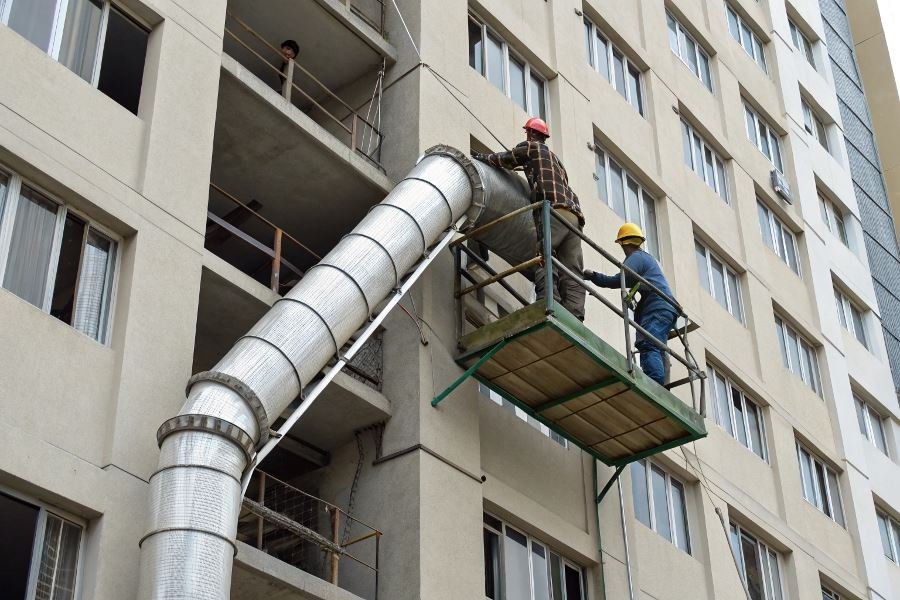
Ever watched a construction site transform from chaos to clockwork precision with a single equipment choice? Construction waste chutes—those vertical pathways that funnel debris from upper floors directly to collection points—are revolutionizing how projects manage the 15-20% of materials that typically end up as waste.
These seemingly simple tubes represent the difference between a hazardous, inefficient worksite and a streamlined operation where safety and productivity coexist. Waste chutes create dedicated channels for debris removal, eliminating the dangerous practice of tossing materials from heights or the labor-intensive process of manually carrying waste down stairs or elevators.
The stakes couldn’t be higher. Proper waste management doesn’t just satisfy regulatory requirements—it directly impacts project timelines, worker safety, and profitability. A well-implemented waste chute system can reduce disposal costs by up to 30% through better sorting and recycling opportunities.
Today’s construction managers face a critical choice between two dominant materials: traditional metal chutes and newer plastic alternatives. Each brings distinct advantages to the table:
- Metal chutes offer unmatched durability and heat resistance
- Plastic systems provide lightweight handling and corrosion immunity
The right choice depends on project-specific factors including budget constraints, environmental conditions, and the nature of waste materials. Understanding these differences isn’t just about compliance—it’s about unlocking hidden efficiencies that can transform your project’s bottom line.
Metal vs Plastic Waste Chutes: The Ultimate Showdown
Durability that stands the test of time
When selecting construction waste chutes, durability becomes the cornerstone of your decision-making process. Metal chutes, typically fabricated from galvanized steel or aluminum, boast impressive lifespans of 10-15 years under normal conditions. Their robust construction withstands the daily barrage of construction debris, from concrete chunks to sharp metal scraps, with minimal wear.
A thorough comparison of metal and plastic construction waste chutes reveals striking differences in longevity. While metal options demonstrate superior impact resistance, plastic alternatives (usually made from high-density polyethylene or polypropylene) offer surprising resilience against chemical corrosion. However, plastic chutes typically last 5-7 years before showing significant signs of wear, particularly UV degradation and brittleness in sections experiencing high friction.
The true cost equation
Initial investment versus long-term value presents a fascinating economic puzzle. Metal chutes command premium prices—typically $150-300 per section—reflecting their durability and strength. Plastic alternatives entice with entry points of $80-150 per comparable section, creating an immediate budget advantage.
The math becomes more complex when calculating total ownership costs:
| Feature | Metal Chutes | Plastic Chutes |
|---|---|---|
| Initial cost | Higher ($150-300/section) | Lower ($80-150/section) |
| Replacement frequency | Every 10-15 years | Every 5-7 years |
| Repair costs | Moderate | Low to moderate |
| Salvage value | High (recyclable) | Low |
| Weight-related costs | Higher transportation & installation | Lower transportation & installation |
Smart contractors recognize that metal’s higher upfront investment often yields superior returns for projects exceeding 18 months or in high-volume waste scenarios.
Installation complexities unveiled
Metal chutes demand respect during installation. Weighing 20-35 pounds per section, they require proper lifting equipment and multiple workers to position safely. Connection systems typically involve heavy-duty clamps and brackets that ensure stability but add complexity.
Plastic alternatives shine in the installation phase. At 8-15 pounds per section, they allow for single-worker handling and rapid deployment. Many feature intuitive snap-lock systems that reduce installation time by up to 60% compared to their metal counterparts.
Weather warriors
Construction doesn’t stop for weather, and neither should your waste management system. Metal chutes demonstrate exceptional performance across temperature extremes, functioning reliably from -40°F to 180°F. Their weight provides stability in high winds, though this advantage diminishes in hurricane conditions exceeding 75 mph.
Plastic chutes present a mixed weather profile. They resist freezing conditions admirably, with no risk of the condensation-related freezing that can plague metal systems. However, they become increasingly brittle below -10°F and may warp when exposed to temperatures above 140°F for extended periods. Their lighter weight also makes them more susceptible to wind displacement, often requiring additional securing measures.
Maintenance realities
Maintenance requirements create significant operational distinctions. Metal chutes develop predictable wear patterns—primarily dents, connection stress, and occasional rust spots at seams. Annual maintenance typically involves connection tightening and rust treatment, with section replacement needed only after severe impacts.
Plastic systems require different attention. They resist corrosion naturally but develop stress cracks along high-impact zones. UV degradation demands periodic treatment with protective coatings every 12-18 months in sunny climates. Their lighter weight makes them easier to disassemble for cleaning, but they require more frequent inspection for structural integrity.
The choice between these materials ultimately depends on your specific project demands, timeline, and environmental conditions—each offering distinct advantages in the waste management ecosystem.
Making the Right Waste Chute Decision
Matching materials to project demands
Selecting between metal and plastic construction waste chutes isn’t just a matter of preference—it’s a strategic decision that impacts project efficiency, budget, and safety. For high-rise projects exceeding 20 stories, metal chutes typically offer superior durability under constant heavy debris loads. The structural integrity of steel chutes becomes particularly valuable when projects extend beyond 12 months, as the repeated impact of construction materials would quickly deteriorate plastic alternatives.
Conversely, renovation projects in occupied buildings often benefit from plastic chutes. Their significantly lower noise transmission creates less disruption for residents or workers, with some premium HDPE models reducing noise by up to 40% compared to metal counterparts. For projects with frequent relocation requirements, plastic’s lighter weight (typically 60-70% lighter than steel) translates to faster setup and breakdown times.
Budget constraints should be evaluated against the project timeline—plastic’s lower upfront cost might be offset by metal’s longer lifespan for extended projects.
Environmental considerations beyond the build
The sustainability equation for waste chutes extends far beyond their functional period. Metal chutes, particularly aluminum options, boast impressive recycling credentials with nearly 98% of the material recoverable at end-of-life. Steel variants maintain approximately 85-90% recyclability rates while requiring significant energy during initial production.
Plastic chutes present a more complex environmental profile:
| Material Aspect | Plastic Chutes | Metal Chutes |
|---|---|---|
| Production Carbon Footprint | Lower initial emissions | Higher manufacturing emissions |
| Recyclability | 30-70% depending on polymer type | 85-98% depending on metal type |
| Biodegradability | Poor (500+ years) | Poor (but fully recyclable) |
| Transportation Emissions | Lower due to lighter weight | Higher due to material density |
Modern HDPE plastic chutes increasingly incorporate recycled content, with leading manufacturers achieving up to 30% post-consumer recycled material without compromising structural integrity. However, the end-of-life management remains significantly more challenging than metal alternatives.
Navigating the regulatory landscape
Safety standards and compliance requirements often become the deciding factor in material selection. OSHA regulations require all waste chutes to withstand specific impact forces, with metal chutes typically exceeding minimum requirements by 30-40%. This safety margin provides additional protection against unexpected debris loads.
Fire resistance presents another critical regulatory consideration. Metal chutes offer inherent fire resistance, while plastic variants require fire-retardant additives to meet building codes in most jurisdictions. These additives can impact recyclability and potentially release harmful compounds if improperly disposed of.
Local building codes increasingly incorporate sustainability requirements, with some municipalities offering expedited permitting for projects utilizing higher percentages of recyclable materials. This regulatory trend favors metal chutes despite their higher initial carbon footprint.
The decision ultimately requires balancing immediate project needs against long-term environmental impact and regulatory compliance. By evaluating these factors against specific project parameters, construction managers can select waste chute materials that optimize both operational efficiency and sustainability goals.
Discover the key differences between metal and plastic construction waste chutes, including durability, cost, installation, and weather resistance. Make an informed choice for your construction waste management needs.
Discover the key differences between metal and plastic construction waste chutes, including durability, cost, installation, and weather resistance. Make an informed choice for your construction waste management needs.