Ever wondered where those 7 billion gallons of used motor oil go each year? The answer might keep you up at night. Behind every smooth-running engine is a critical but overlooked system that determines whether that oil becomes an environmental hazard or a recyclable resource.
Auto service operations face a critical challenge: efficiently collecting used oil while meeting increasingly stringent environmental regulations. The EPA has designated used oil as a hazardous waste since 1992, with penalties for improper disposal reaching up to $50,000 per day. Yet beyond compliance, choosing the right oil collection system represents a pivotal business decision that affects workflow efficiency, customer perception, and ultimately, profitability.
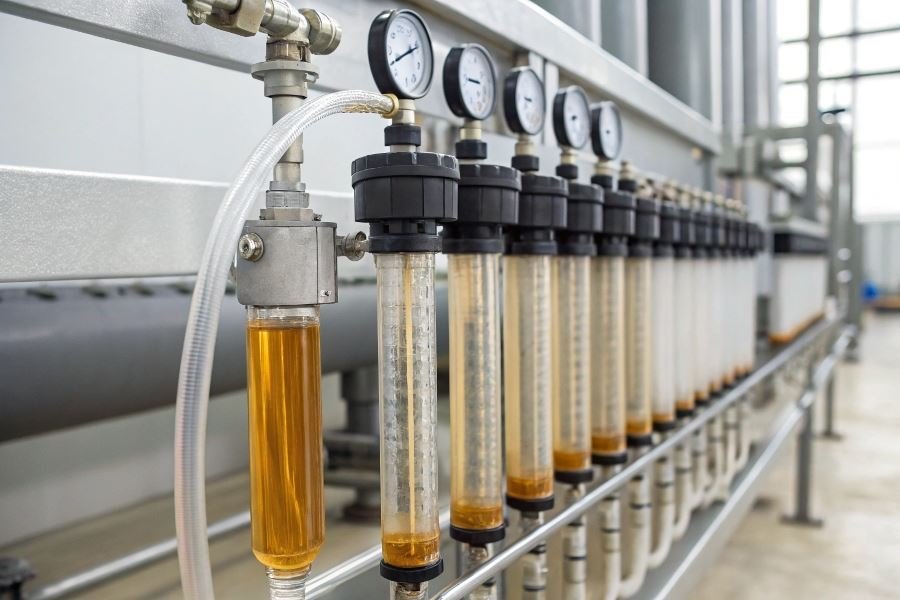
Today’s oil collection systems range from basic gravity-fed drains to sophisticated vacuum-powered units with filtration capabilities. The market has evolved dramatically, with modern systems offering features like heated reservoirs that maintain optimal viscosity, digital monitoring for capacity tracking, and even automated documentation for regulatory reporting.
“The right oil collection system isn’t just equipment—it’s environmental stewardship and business intelligence combined.”
Three primary categories dominate the landscape: portable collection units ideal for smaller operations, centralized systems for high-volume shops, and specialized solutions for synthetic oils and hybrid vehicles. Each represents a different approach to balancing immediate costs against long-term operational benefits.
The environmental stakes couldn’t be higher: one gallon of improperly disposed oil can contaminate one million gallons of drinking water. With proper collection, however, that same gallon can be re-refined into 2.5 quarts of lubricating oil—a remarkable efficiency that benefits both business and planet.
Key Factors for Selecting the Perfect Oil Collection System
When setting up or upgrading an auto service facility, few decisions impact daily operations more than your oil collection system. The right equipment streamlines workflows, reduces spills, and ultimately boosts your bottom line. Let’s dive into what truly matters when evaluating these systems for your shop.
Capacity That Matches Your Volume
The foundation of choosing an oil collection system for an auto service begins with an honest assessment of your daily oil change volume. A neighborhood shop handling 10-15 oil changes daily has dramatically different needs than a high-volume quick lube center processing 50+ vehicles.
Small to medium operations typically benefit from systems with 20-30 gallon capacity. These units provide sufficient volume without consuming excessive floor space. For reference, a standard passenger vehicle oil change produces approximately 4-6 quarts of waste oil.
High-volume facilities require industrial-grade solutions with 50-100 gallon capacity to prevent constant emptying cycles that disrupt workflow.
Consider your growth trajectory as well—purchasing a system with 25% more capacity than your current needs provides headroom for business expansion without immediate replacement costs.
| Service Volume | Recommended Capacity | Emptying Frequency |
|---|---|---|
| 5-15 daily | 20-30 gallons | Weekly |
| 16-30 daily | 30-50 gallons | 2-3 times weekly |
| 31+ daily | 50-100+ gallons | Daily |
Mobility vs. Fixed Installation
The mobility question fundamentally shapes your operational approach. Portable units offer flexibility but sacrifice capacity, while fixed systems maximize volume but limit adaptability.
Portable collection systems shine in multi-bay environments where technicians service vehicles throughout the facility. These units typically feature:
- Pneumatic operation for hands-free oil extraction
- Heavy-duty casters for smooth movement across shop floors
- Integrated funnels and collection chambers
- Capacity ranging from 15-30 gallons
Graco and Lincoln Industrial offer excellent portable options with reinforced wheels designed specifically for shop environments.
Fixed installation systems connect directly to central waste oil storage tanks, eliminating the need for manual transport. These systems utilize:
- Underground piping networks connecting multiple service bays
- Pneumatic pumps for efficient oil transfer
- Central monitoring systems tracking collection volumes
- Capacity often exceeding 100+ gallons
The decision ultimately hinges on your facility layout and service model. Shops with dedicated oil change bays benefit from fixed systems, while general service facilities typically require the flexibility of portable units.
Vehicle Compatibility Considerations
Modern auto service facilities handle everything from compact hybrids to heavy-duty trucks, each presenting unique oil change requirements. Your collection system must accommodate this diversity.
Universal adapters have become industry standard on premium collection systems, allowing connection to various drain plug configurations. Systems from Samoa Industrial feature adjustable collection funnels that prevent splashing regardless of drain height.
For shops servicing commercial vehicles, look for:
- Extended height adjustment ranges (12-72 inches)
- Reinforced collection chambers handling higher volumes
- Accelerated vacuum systems for faster extraction
- Temperature-resistant components for hot oil collection
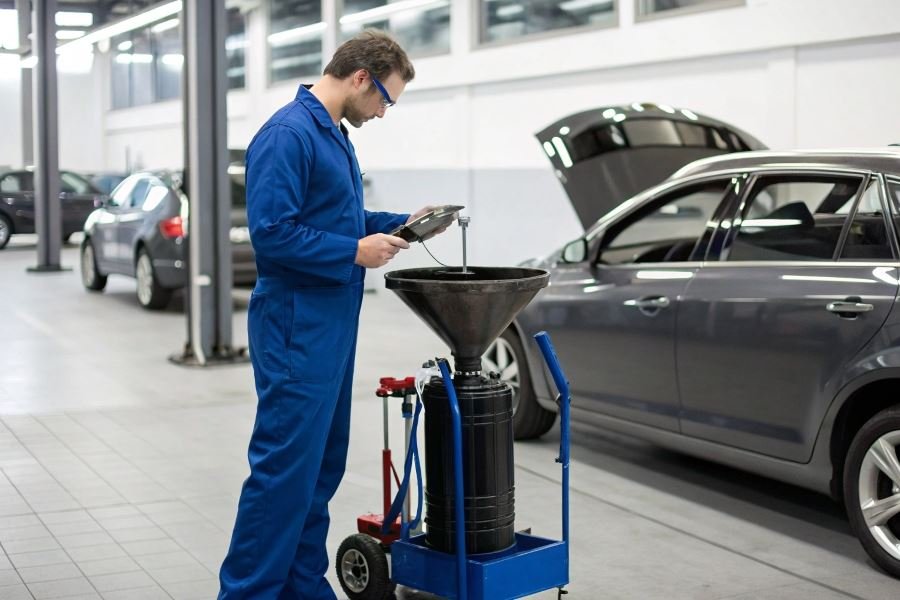
Specialty vehicles like luxury European models often require top-down extraction methods rather than traditional drain plug removal. Ensure your system includes vacuum extraction capabilities if these vehicles represent a significant portion of your clientele.
The most versatile systems incorporate both gravity drain collection and vacuum extraction capabilities, ensuring compatibility with virtually any vehicle entering your service bays.
The Performance Trinity of Auto Shop Oil Collection Systems
Drainage Speed That Keeps Bays Moving
When every minute counts in your service bay, drainage speed becomes the difference between profit and bottlenecks. The most efficient oil collection systems can drain a standard 5-quart engine in under 90 seconds, compared to 3-4 minutes with outdated equipment. This efficiency multiplies across dozens of oil changes daily.
Modern systems like the John Dow Industries JDI-25HDC utilize enlarged 2-inch drainage funnels that prevent splashback while accelerating flow rates by up to 40%. The physics is simple: wider drainage paths with optimized angles create laminar flow that prevents air locks and gurgling that slow traditional systems.
The collection efficiency isn’t just about speed—it’s about capturing every drop without the environmental hazards and cleanup time of spills.
Systems with integrated splash guards and wide-mouth funnels reduce cleanup time by an average of 3 minutes per service, translating to an additional oil change capacity per technician daily.
Maintenance Simplicity Equals Operational Uptime
The best oil collection systems are designed with emptying procedures that don’t require an engineering degree or superhuman strength.
| System Type | Emptying Method | Average Time | Spill Risk |
|---|---|---|---|
| Pneumatic | Compressed air evacuation | 2-3 minutes | Minimal |
| Gravity-fed | Manual valve drainage | 5-7 minutes | Moderate |
| Pump-assisted | Electric pump transfer | 3-4 minutes | Low |
Pneumatic evacuation systems like those from Samoa Industrial offer the cleanest hands-off approach, using your shop’s existing air supply to pressurize the tank and force oil into your bulk storage. This eliminates the heavy lifting and potential back injuries associated with portable units.
Maintenance requirements vary dramatically between systems. Look for:
- Self-cleaning screens that prevent clogging from debris
- Accessible filters that can be changed without draining the entire system
- Sight glasses that provide visual confirmation of oil levels without opening the system
The difference between weekly maintenance taking 15 minutes versus an hour adds up to nearly 40 hours annually—a full work week recovered.
The ROI Equation That Justifies Premium Equipment
Initial sticker shock often leads shops to choose budget oil collection systems, but this calculation ignores the true cost of ownership. A premium system priced at $1,200 versus an economy model at $700 seems significant until you factor in:
“The most expensive oil collection system is the one that sits broken in the corner while your technicians improvise with funnels and buckets.”
The Graco Pit Bull series demonstrates this principle with components rated for 15+ years of service compared to 3-5 years for budget alternatives. The math becomes compelling:
- Labor savings: 2-3 minutes per oil change × 20 daily services × 250 working days = 208-312 hours saved annually
- Reduced waste oil disposal costs through more efficient collection
- Decreased environmental liability from spills and improper disposal
- Technician satisfaction and retention from providing quality tools
The return on investment typically occurs within 8-14 months for premium systems, after which they continue generating returns through efficiency gains and reduced maintenance costs.
When evaluating systems, consider the total operational picture—not just the upfront price tag. The most efficient shops recognize that oil collection infrastructure directly impacts their bottom line through throughput capacity, technician productivity, and waste management costs.
Discover how to select the ideal oil collection system for your auto service with our comprehensive guide covering capacity needs, mobility options, and efficiency features that ensure regulatory compliance and maximize ROI.
Discover how to select the ideal oil collection system for your auto service with our comprehensive guide covering capacity needs, mobility options, and efficiency features that ensure regulatory compliance and maximize ROI.