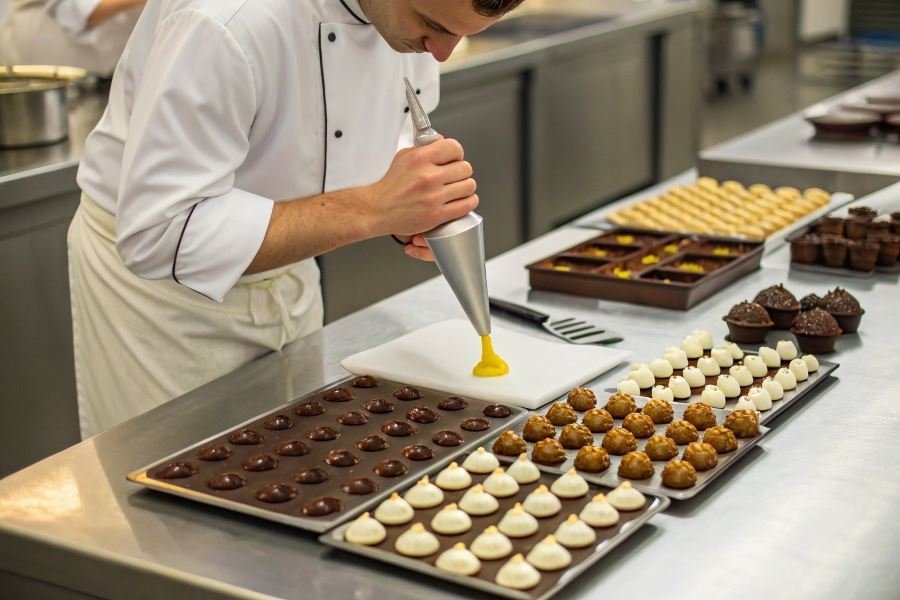
Ever watched a master pastry chef transform simple ingredients into edible art? Behind that magic lies an often-overlooked secret: the surface they work on. The right pastry table material can be the difference between a collapsed soufflé and a masterpiece that commands $200 at high-end restaurants.
Professional pastry preparation demands surfaces that perform under pressure. Think about it: dough that sticks to your work surface won’t just frustrate you—it fundamentally alters the final product’s texture and structure. The material beneath your rolling pin silently shapes everything from croissants to wedding cakes.
The material-quality connection
Temperature management represents perhaps the most critical relationship between materials and pastry quality. Marble’s natural cooling properties keep butter-based doughs from warming too quickly, maintaining those essential fat layers in laminated pastries. Meanwhile, wood absorbs excess moisture during kneading, creating the perfect environment for bread development.
“The surface you choose doesn’t just support your dough—it actively participates in the creation process.”
Efficiency through intelligent selection
Your workflow transforms when materials align with techniques. A heavy marble slab stays put during aggressive kneading, while a lightweight plastic board allows quick transfers between stations. The right material choice eliminates unnecessary steps, reducing fatigue during long baking sessions.
Evaluation trinity: Heat, hardiness, and health
When selecting pastry table materials, three factors reign supreme:
- Temperature resistance – Can it handle direct transfer from freezer to oven?
- Durability – Will it withstand years of rolling pins and bench scrapers?
- Food safety – Does it resist bacterial growth and clean easily?
The perfect pastry begins long before ingredients meet—it starts with the surface that supports your vision.
The Ultimate Guide to Pastry Table Materials
Professional pastry work demands the right surface. The difference between a perfect laminated dough and a butter disaster often comes down to your work surface. When evaluating materials for pastry tables, what is better for different tasks depends entirely on the specific techniques you’re employing and the results you’re seeking.
Let’s explore the three premier materials that dominate professional and home pastry kitchens, analyzing their unique properties and ideal applications.
Marble: The Cold-Working Champion
Marble stands as the undisputed king for butter-based pastries. Its natural thermal properties make it the perfect companion for temperature-sensitive doughs.
Temperature regulation: Marble naturally stays 5-8°F cooler than room temperature, providing crucial advantages when working with:
- Laminated doughs (croissants, puff pastry)
- Butter-heavy cookie doughs
- Chocolate tempering
The dense crystalline structure of marble absorbs and dissipates heat rapidly, preventing butter from melting during the critical rolling phases.
However, marble comes with considerations:
- Higher cost ($50-200 per square foot installed)
- Requires regular sealing to prevent staining
- Can chip or crack if heavy objects are dropped
| Marble Type | Temperature Properties | Price Range | Best For |
|---|---|---|---|
| Carrara | Excellent cooling | $70-100/sq ft | All-purpose pastry work |
| Calacatta | Superior heat resistance | $150-250/sq ft | Professional settings |
| Cultured Marble | Good cooling, more uniform | $40-80/sq ft | Home bakers |
Stainless Steel: The Workhorse Surface
In high-volume production environments, stainless steel delivers unmatched performance where sanitation and durability are paramount.
Key advantages:
- Non-porous surface prevents bacterial growth
- Withstands aggressive cleaning chemicals
- Temperature-neutral (can be chilled or heated as needed)
- Virtually indestructible under normal use
Stainless steel excels for:
- Commercial bakeries producing hundreds of items daily
- Environments requiring frequent sanitization
- Pastry work involving acidic ingredients (lemon curd, fruit fillings)
The 304-grade stainless steel (18/8) offers the ideal balance of corrosion resistance and durability for pastry applications. For extreme environments, 316-grade provides enhanced acid resistance.
While lacking the natural cooling properties of marble, stainless steel can be pre-chilled in refrigerators or with ice packs underneath to create an ideal surface for butter-based doughs.
Wood: Traditional Charm Meets Practical Function
Wood surfaces offer unique benefits that have kept them relevant for centuries in pastry kitchens.
Natural advantages:
- Gentle on cutters and tools
- Slight porosity absorbs excess moisture from doughs
- Natural antibacterial properties (especially maple and oak)
- Comfortable working height and feel
Hard maple remains the gold standard for pastry work, with its tight grain pattern and natural resistance to knife marks. End-grain butcher block construction provides the most durable surface, though edge-grain boards offer excellent value.
Wood excels for:
- Cookie and pie dough preparation
- Bread shaping and proofing
- General pastry assembly
The limitations become apparent with:
- Chocolate work (difficult to maintain cleanliness)
- Very wet doughs (can absorb moisture)
- High-volume production (maintenance requirements)
Regular maintenance with food-safe mineral oil ensures longevity and prevents cracking or warping in wooden pastry surfaces.
The ideal pastry kitchen often incorporates all three materials, allowing bakers to select the perfect surface for each specific technique.
Making the Perfect Choice: Pastry Table Materials for Professional Results
The decision matrix for pastry perfection
Selecting the right pastry table material isn’t just about aesthetics—it’s about creating the optimal working environment for your specific baking needs. The decision between marble, stainless steel, and wood should be driven by your primary baking activities and environmental conditions.
Marble excels when temperature control is paramount. Its natural cooling properties make it the go-to for chocolate work, pastry lamination, and delicate butter-based doughs. However, it requires more maintenance and comes with a higher price tag.
Stainless steel dominates in professional environments where sanitation and durability are non-negotiable. It’s virtually indestructible, handles high-volume production beautifully, and meets commercial health codes with ease. The trade-off? It doesn’t offer the temperature benefits of marble.
Wood (particularly maple and walnut) provides the perfect middle ground for bread making and general pastry work. Its natural antibacterial properties, forgiving surface, and temperature stability make it versatile for home bakers and artisans alike.
The right pastry table material acts as a silent partner in your baking process—either enhancing your results or creating unnecessary challenges.
Maintenance strategies that maximize longevity
The lifespan of your pastry surface depends dramatically on your maintenance routine. Each material demands specific care:
Marble maintenance:
- Seal every 6-12 months with food-safe sealant
- Clean immediately after use with pH-neutral cleaners
- Avoid acidic ingredients that can etch the surface
- Use cutting boards to prevent scratches and damage
Stainless steel care:
- Daily cleaning with appropriate food-safe sanitizers
- Avoid chlorine-based cleaners that can cause pitting
- Polish periodically to maintain luster
- Check for and address any developing rust spots immediately
Wood upkeep:
- Oil monthly with food-grade mineral oil
- Sand lightly when surface becomes uneven
- Never soak in water or leave standing moisture
- Sanitize with diluted vinegar solution after raw dough contact
Investment value beyond the price tag
When evaluating pastry table materials, consider the total cost of ownership rather than just the initial investment:
| Material | Initial Cost | Maintenance Cost | Expected Lifespan | Value Rating |
|---|---|---|---|---|
| Marble | $$$ | 20+ years | ★★★★☆ | |
| Stainless Steel | $$$ | $ | 30+ years | ★★★★★ |
| Wood | $$ | $$ | 15-25 years | ★★★☆☆ |
Stainless steel offers exceptional long-term value despite its higher upfront cost. A quality Vollrath stainless steel table can serve a commercial kitchen for decades with minimal maintenance costs.
Marble represents a significant investment but delivers unmatched performance for specific pastry applications. Premium Carrara marble work surfaces retain their value and can even appreciate over time.
Wood provides excellent value for artisanal bakers, with John Boos maple blocks offering the perfect balance of performance and longevity when properly maintained.
The wisest approach is to match your material to your most frequent baking activities. Many professional pastry chefs incorporate multiple materials—stainless steel for general work, with dedicated marble sections for temperature-sensitive tasks. This hybrid approach maximizes functionality while managing investment costs effectively.
Remember that quality materials pay dividends through consistent results, reduced waste, and the sheer pleasure of working on a surface that enhances rather than hinders your craft.
Discover the perfect pastry table material for your culinary creations. Compare marble's temperature control, stainless steel's durability, and wood's traditional benefits to elevate your baking results and workflow efficiency.
Discover the perfect pastry table material for your culinary creations. Compare marble's temperature control, stainless steel's durability, and wood's traditional benefits to elevate your baking results and workflow efficiency.