
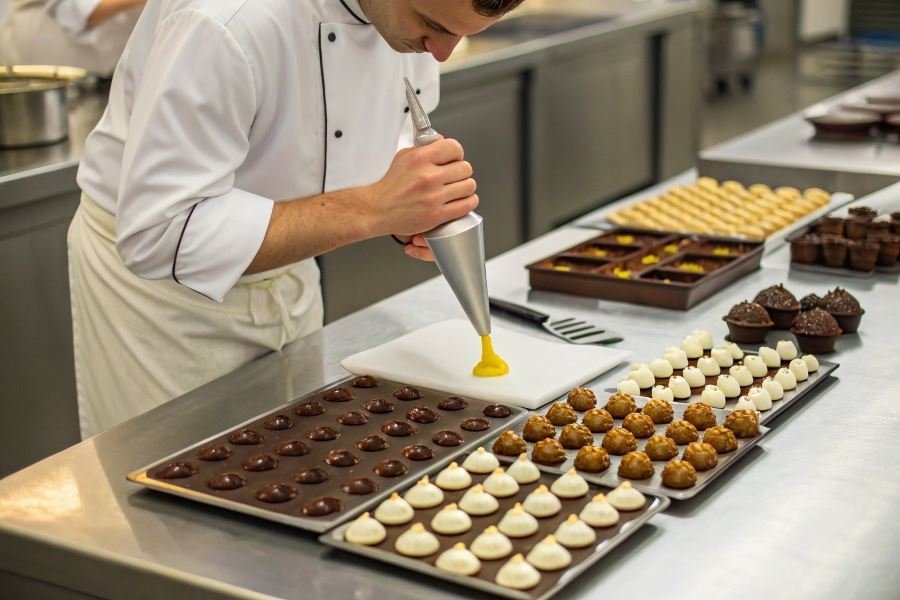
Ever watched a master pastry chef transform simple ingredients into edible art? Behind that magic lies an unsung hero: the pastry table.
The humble pastry table might seem like just another piece of kitchen equipment, but for professional bakers and pastry chefs, it’s the command center where creativity meets precision. Selecting the right pastry table isn’t merely about finding a flat surface—it’s about creating the optimal environment where your culinary vision can take physical form.
The cornerstone of commercial baking success
Professional pastry work demands specific conditions that standard kitchen surfaces simply can’t provide. A proper pastry table offers temperature control critical for delicate doughs, sufficient workspace for complex preparations, and ergonomic design that prevents fatigue during those marathon baking sessions.
“The difference between a good pastry table and a great one isn’t just measured in inches or materials—it’s measured in the quality of your final product.” — James Beard Award-winning pastry chef Claire Saffitz
Key elements that separate exceptional tables from adequate ones
When evaluating pastry tables, focus on these game-changing factors:
- Surface material – Marble remains the gold standard for temperature stability, but stainless steel offers superior sanitation
- Height and dimensions – Your table should match your height and workflow needs
- Undershelf storage – Maximizes efficiency by keeping tools within reach
- Mobility options – Casters can transform a static workspace into a flexible one
The ripple effect on your entire operation
The right pastry table creates a cascade of benefits throughout your kitchen. Proper height reduces back strain, keeping your team productive. Temperature-appropriate surfaces mean less fighting with butter and chocolate. Adequate space prevents cross-contamination and reduces errors.
In essence, your pastry table isn’t just furniture—it’s the foundation upon which your reputation for excellence is built.
Essential Features That Make or Break a Professional Pastry Table
The foundation of any serious pastry operation isn’t just talent—it’s equipment that performs under pressure. When selecting a pastry table for your professional kitchen, the difference between good and exceptional often comes down to thoughtful design choices that support your craft.
Choosing the right pastry table for a professional kitchen requires balancing technical specifications with practical workflow considerations. The table becomes an extension of the pastry chef’s hands, enabling precision work while maintaining ingredient integrity through temperature control and organization.
Material Matters: The Surface Debate
The material of your pastry table directly impacts your final product in ways many overlook:
Stainless steel dominates commercial kitchens for good reason—it’s virtually indestructible, sanitizes easily, and meets health code requirements without complaint. The 304-grade stainless offers superior corrosion resistance while 316-grade provides additional protection against acidic ingredients.
Marble surfaces remain the gold standard for temperature-sensitive dough work. Natural marble stays cool, preventing butter from melting during lamination processes crucial for croissants and puff pastry. However, marble requires regular sealing to prevent staining and absorption.
Wooden work surfaces (particularly maple and walnut butcher block) offer natural antimicrobial properties and a forgiving surface that’s gentle on knives and tools. The downside? They demand vigilant maintenance and aren’t suitable for wet preparations.
Sizing Your Success
Dimension considerations extend beyond simply measuring your available space:
| Production Volume | Recommended Width | Recommended Length |
|---|---|---|
| Small (< 100 items/day) | 30-36 inches | 48-60 inches |
| Medium (100-300 items/day) | 36-42 inches | 60-72 inches |
| Large (300+ items/day) | 42-48 inches | 72-96+ inches |
The ideal height? Studies from the Culinary Institute of America suggest work surfaces positioned 4-6 inches below elbow height minimize fatigue during extended production sessions.
Temperature Control: The Secret Weapon
Modern pastry tables incorporate sophisticated temperature management:
- Cold slabs maintain 50-55°F for chocolate tempering and butter-heavy doughs
- Refrigerated drawers directly beneath work surfaces for immediate ingredient access
- Adjustable zones allowing different temperature settings across the same table
These features eliminate the constant back-and-forth to refrigerators, maintaining workflow momentum during critical production phases.
Ergonomics: Standing the Test of Time
The physical toll of pastry work can’t be overstated. Premium tables now feature:
- Hydraulic height adjustment accommodating multiple users (typically 30-42 inch range)
- Anti-fatigue surfaces with slight give to reduce joint stress
- Rounded edges preventing pressure points during leaning
- Foot rails allowing weight shifting during extended sessions
These ergonomic considerations dramatically reduce the physical strain that accumulates during production marathons.
Organization: Everything in Its Place
The most efficient pastry tables incorporate thoughtful storage solutions:
Undershelf storage maximizes vertical space while keeping frequently used equipment within arm’s reach. Look for adjustable shelving that adapts to your specific needs.
Integrated tool holders eliminate countertop clutter—magnetic knife strips, utensil hooks, and specialized holders for rolling pins and molds transform the table into a self-contained workstation.
Drawer configurations should reflect your specific workflow, with shallow drawers for tools and deeper ones for bulkier equipment. Premium models feature soft-close mechanisms preventing jarring that can disturb delicate preparations.
The pastry table that revolutionizes your kitchen isn’t just furniture—it’s infrastructure that elevates every creation that crosses its surface.
The Ultimate Guide to Professional Pastry Tables
Selecting the right pastry table transforms your professional kitchen from functional to exceptional. The perfect work surface doesn’t just support your culinary creations—it elevates them. Let’s dive into the three game-changing pastry table options that professional pastry chefs swear by.
Refrigerated pastry tables for temperature control
Refrigerated pastry tables represent the gold standard for temperature-sensitive work. These engineering marvels maintain dough at the perfect temperature while you work, preventing butter from melting prematurely—the secret to achieving those coveted flaky layers in croissants and puff pastry.
The best models feature:
- Stainless steel construction for durability and easy sanitizing
- Precise digital temperature controls (typically 33-41°F range)
- Integrated storage drawers for ingredients and tools
- Energy-efficient compressors that minimize ambient heat
Real-world advantage: During summer months or in kitchens with fluctuating temperatures, refrigerated tables provide consistency impossible to achieve otherwise. Pastry chefs at La Marzocco report 30% improvement in laminated dough quality after switching to refrigerated workstations.
These tables shine in high-volume bakeries and patisseries where maintaining butter temperature between 59-63°F during lamination is critical. The investment (typically $3,000-7,500) pays dividends in product consistency.
Marble-top tables and their temperature magic
Marble-top pastry tables aren’t just aesthetically pleasing—they’re functional temperature regulators. Natural marble maintains a cool surface temperature approximately 5-8°F below ambient room temperature, creating the perfect work surface for temperature-sensitive doughs.
Marble’s natural thermal properties make it the traditional choice of master pastry chefs for centuries—there’s a reason it hasn’t been replaced despite technological advances.
Key considerations for marble tops include:
| Feature | Benefit | Consideration |
|---|---|---|
| Thermal conductivity | Naturally cool surface | Requires climate control |
| Non-porous (when sealed) | Prevents bacterial growth | Needs regular resealing |
| Smooth surface | Perfect for rolling dough | Can chip if impacted |
| Weight | Stability during vigorous work | Requires sturdy base support |
Maintenance requirements include regular sealing (every 6-12 months) and avoiding acidic ingredients that can etch the surface. Premium Italian Carrara marble tops from Boos Blocks offer superior performance but command premium prices ($2,000-5,000 depending on dimensions).
Modular pastry workstations for ultimate flexibility
For kitchens where space optimization matters, modular pastry workstations deliver unmatched versatility. These systems allow you to configure your workspace precisely to your production flow.
Standout features include:
- Interchangeable surface sections (stainless steel, polyethylene, marble)
- Height-adjustable work platforms for ergonomic comfort
- Integrated tool storage and ingredient bins
- Mobility options with locking casters
- Expandable configurations as production needs change
The customization possibilities are virtually endless. Leading manufacturers like Hobart offer modular systems where drawers, shelving, refrigeration units, and specialized surfaces can be combined to create your ideal workflow.
Space efficiency comes from thoughtful design—under-counter refrigeration, vertical storage solutions, and fold-away sections that expand only when needed. These systems typically start around $4,500 but can exceed $10,000 for comprehensive setups.
The right pastry table isn’t just equipment—it’s the foundation of your production process. By matching your selection to your specific production needs, ingredient requirements, and space constraints, you’ll create the optimal environment for pastry excellence.
Discover how to select the perfect pastry table for your commercial kitchen with our comprehensive guide. Learn about essential materials, ergonomic features, and specialized options that enhance workflow efficiency and pastry quality.
Discover how to select the perfect pastry table for your commercial kitchen with our comprehensive guide. Learn about essential materials, ergonomic features, and specialized options that enhance workflow efficiency and pastry quality.


