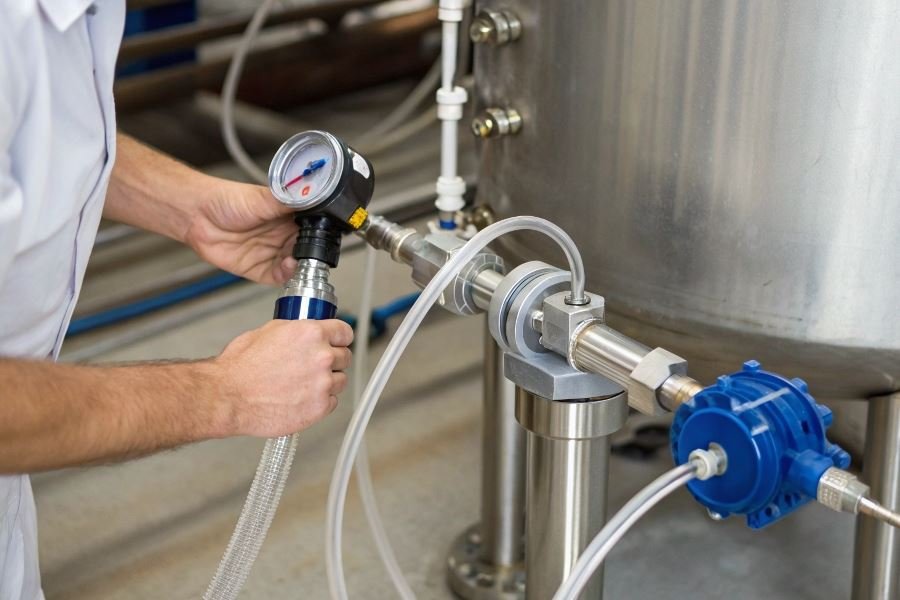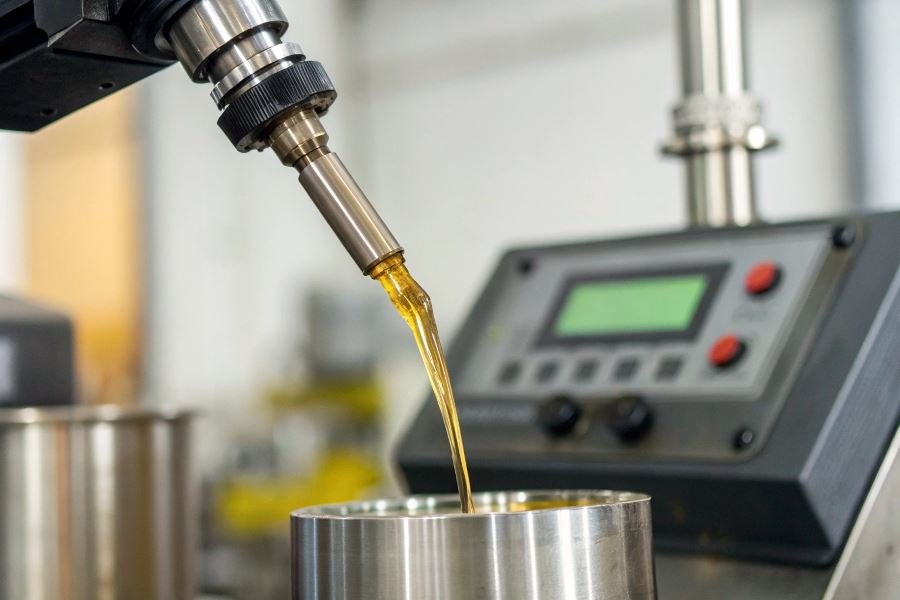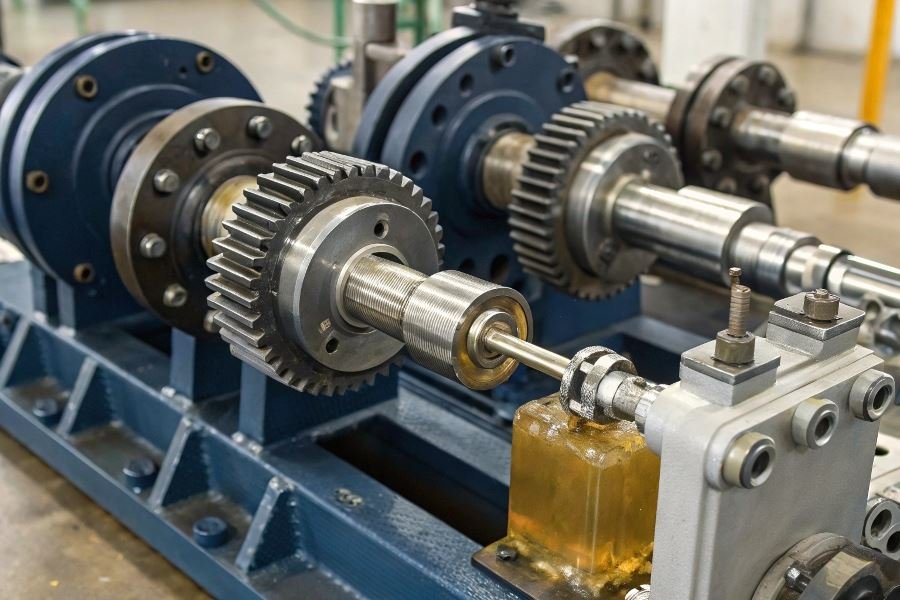
Ever wondered why some machinery runs smoothly for decades while others break down within months? The secret often lies in a small but mighty component: the lubricant dosing pump. These unsung heroes of industrial efficiency deliver microscopic amounts of lubricant with astonishing precision, often making the difference between optimal performance and costly failure.
Lubricant dosing pumps are specialized mechanical or electronic devices designed to deliver precise quantities of lubricants to critical friction points in machinery. They operate on a simple principle: controlled displacement of fluid through mechanical action, pneumatic pressure, or electronic regulation. Unlike manual lubrication, these systems ensure consistent delivery—whether we’re talking about nanoliters or gallons—at programmed intervals.
Why precision matters: In high-performance industrial settings, too little lubricant causes excessive wear and potential catastrophic failure. Too much wastes resources and can actually damage equipment or contaminate products. A study by the Massachusetts Institute of Technology found that proper lubrication can extend machinery lifespan by up to 300% while reducing energy consumption by 8-15%.
“The right amount of lubricant at the right time is the difference between profit and downtime.” — Industrial maintenance maxim
When selecting a dosing pump, three factors reign supreme:
- Viscosity compatibility – Can it handle your specific lubricant’s thickness?
- Flow rate requirements – Does it deliver the precise volume needed?
- Operating environment – Will it function reliably in your temperature range and conditions?
The evolution of these systems from simple mechanical devices to sophisticated electronic systems with IoT capabilities has revolutionized preventive maintenance strategies across manufacturing, mining, and transportation sectors.
Precision in Motion: The Definitive Guide to Lubricant Dosing Pumps
When machinery demands exact lubrication, the right dosing pump becomes the unsung hero of operational efficiency. The industrial landscape relies on precise lubricant delivery systems that can mean the difference between smooth operations and costly downtime. Understanding the various types of dosing pumps for lubricants allows maintenance engineers and system designers to make informed decisions that impact everything from equipment longevity to operational costs.
The selection of appropriate dosing pumps for lubricants depends largely on application requirements, viscosity ranges, and environmental conditions. Each pump type offers distinct advantages in specific scenarios, making the selection process both technical and strategic. Let’s examine the three primary pump technologies that dominate the precision lubrication landscape.
Piston-Based Dosing: The Power Players
Piston-based dosing pumps represent the workhorses of industrial lubrication systems. These robust units operate on a simple yet effective principle: a reciprocating piston creates positive displacement, forcing lubricant through the system with remarkable precision.
Key advantages include:
- Exceptional pressure handling (up to 10,000 PSI in specialized models)
- Superior accuracy (±0.5% in premium configurations)
- Excellent performance with high-viscosity lubricants
- Minimal flow rate variation under changing pressure conditions
These pumps excel in applications requiring consistent delivery against high backpressure, such as industrial gearboxes and heavy machinery bearings. The mechanical simplicity of piston pumps also translates to impressive longevity, with many units operating reliably for 15+ years with proper maintenance.
“The piston pump’s ability to maintain volumetric consistency regardless of discharge pressure makes it invaluable for critical lubrication points where precision directly impacts equipment lifespan.”
Diaphragm Dosing: Sealed for Success
Diaphragm dosing pumps utilize a flexible membrane to create the pumping action, effectively isolating the mechanical drive components from the lubricant being pumped. This design creates a leak-free operation that’s particularly valuable when handling expensive synthetic lubricants or environmentally sensitive applications.
Notable characteristics include:
- Zero leakage design
- Excellent chemical compatibility
- Maintenance-friendly construction
- Moderate pressure capabilities (typically 100-300 PSI)
| Feature | Benefit |
|---|---|
| No dynamic seals | Eliminates leakage paths |
| No lubricant contamination | Maintains fluid integrity |
| Self-priming capability | Simplifies system design |
| Low shear pumping action | Preserves lubricant properties |
Diaphragm pumps shine in applications where contamination prevention is paramount, such as food processing equipment lubrication or clean room environments. Their ability to handle abrasive particles without internal damage also makes them ideal for less-refined lubricants.
Peristaltic Dosing: Gentle Giants
Peristaltic dosing pumps employ a unique operating principle where rotating rollers compress a flexible tube, creating a moving occlusion that propels lubricant forward. This gentle pumping action offers distinct advantages for specialized applications.
Standout features include:
- Complete fluid isolation from mechanical components
- Ability to run dry without damage
- Exceptional metering precision for low-volume applications
- Simple maintenance with minimal wearing parts
These pumps excel when handling shear-sensitive lubricants or when absolute fluid containment is essential. Their self-priming capability and ability to handle entrained air make peristaltic pumps particularly valuable in mobile equipment or intermittent lubrication systems.
The inherent gentle handling characteristics of peristaltic technology makes these pumps ideal for specialized lubricants containing solid additives or micro-particles that might be damaged by more aggressive pumping methods.
Selecting the Right Dosing Pump for Your Lubrication Needs
The performance matrix of dosing technologies
When precision meets reliability in the lubrication world, the choice of dosing pump becomes critical. Each technology brings distinct advantages to specific applications, and understanding these differences can dramatically impact operational efficiency.
Pneumatic pumps excel in hazardous environments where electrical systems pose risks. With pressure ratios typically ranging from 3:1 to 100:1, these workhorses deliver consistent performance without the need for electrical connections. Their simplicity translates to maintenance intervals often exceeding 5,000 operating hours – a significant advantage in continuous operations.
Electric pumps offer unmatched precision with dosing accuracy of ±1% or better. Their programmable control systems allow for integration with production schedules, making them ideal for automated manufacturing environments. While their initial investment runs 15-30% higher than pneumatic alternatives, the enhanced control capabilities often justify the premium.
The distinction between piston and diaphragm technologies becomes particularly relevant when considering fluid characteristics:
| Pump Type | Viscosity Range | Pressure Capability | Particulate Tolerance | Typical Lifespan |
|---|---|---|---|---|
| Piston | Up to 100,000 cSt | Up to 6,000 psi | Low | 8-12 years |
| Diaphragm | Up to 10,000 cSt | Up to 300 psi | High | 5-7 years |
| Peristaltic | Up to 15,000 cSt | Up to 125 psi | Excellent | 3-5 years |
Industry-tailored lubrication solutions
Different industries demand specialized approaches to lubrication dosing. Manufacturing environments with multiple lubrication points benefit from progressive distribution systems that can service up to 150 points from a single pump. These systems reduce installation complexity by up to 40% compared to individual point solutions.
In the food and pharmaceutical sectors, Graco and SKF offer specialized dosing systems with FDA-compliant materials and sanitary connections. These systems typically command a 25-35% premium but eliminate cross-contamination risks.
Heavy equipment and mining operations gravitate toward robust dual-line systems capable of delivering high-viscosity lubricants (up to 150,000 cSt) over distances exceeding 100 meters. These systems incorporate pressure monitoring that can detect blockages with 98% accuracy, preventing catastrophic equipment failures.
Automotive assembly lines leverage high-speed dosing systems capable of precise application cycles measured in milliseconds. These systems synchronize with production rates exceeding 60 units per minute while maintaining volumetric accuracy within ±2%.
Tomorrow’s lubrication technology today
The lubrication industry stands at the threshold of significant technological advancement. IoT-enabled dosing systems now incorporate predictive maintenance algorithms that analyze flow patterns and pressure variations to forecast component failures up to 30 days before occurrence.
Smart dosing technology is revolutionizing efficiency through:
- Real-time viscosity compensation that automatically adjusts dosing parameters as lubricant temperatures fluctuate
- Consumption analytics that reduce lubricant waste by an average of 18%
- Remote monitoring capabilities that slash diagnostic time by 70%
Electro-hydraulic systems represent the cutting edge, combining the power density of hydraulics with the precision of electronic control. These hybrid systems deliver consistent performance across temperature ranges from -40°F to 180°F while consuming 30% less energy than conventional pneumatic systems.
The most promising development may be adaptive dosing technology that continuously optimizes lubrication delivery based on actual equipment operating conditions rather than fixed schedules. Early adopters report maintenance cost reductions averaging 22% and equipment lifespan extensions of 15-20%.
Selecting the optimal dosing pump requires balancing immediate performance needs against long-term operational considerations. The right choice delivers not just lubrication, but peace of mind.
Discover the essential types of industrial lubricant dosing pumps—piston, diaphragm, and peristaltic—and learn key selection factors for optimal precision, efficiency, and reliability in your machinery maintenance systems.
Discover the essential types of industrial lubricant dosing pumps—piston, diaphragm, and peristaltic—and learn key selection factors for optimal precision, efficiency, and reliability in your machinery maintenance systems.