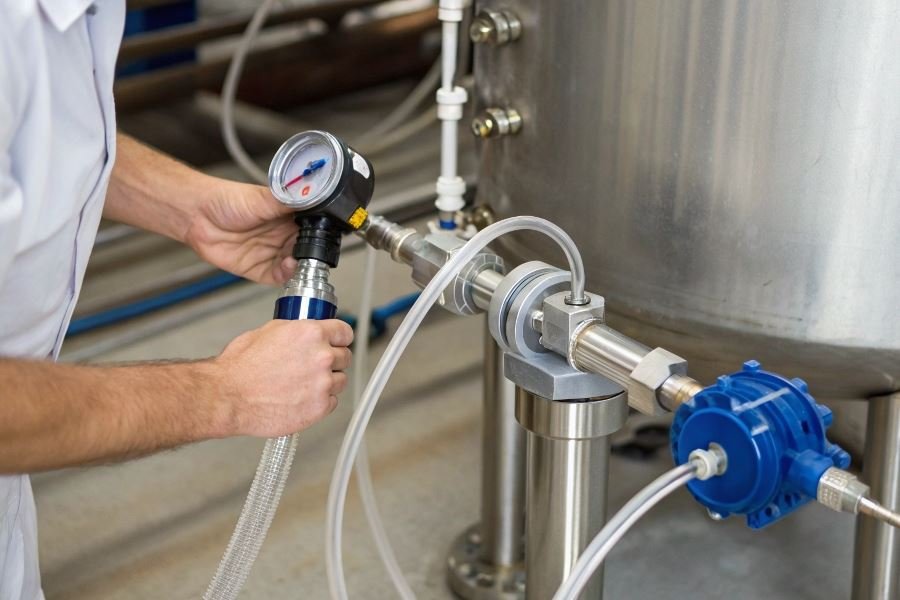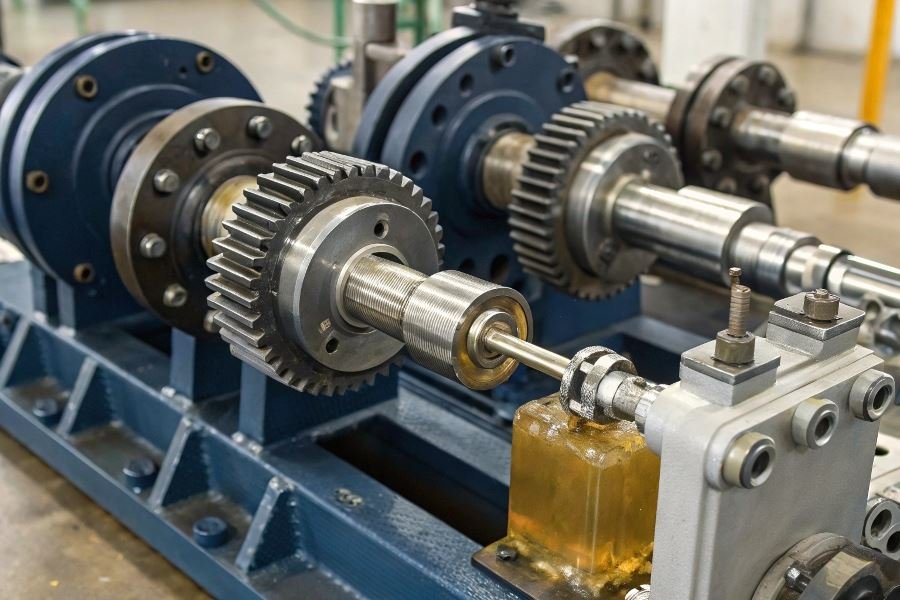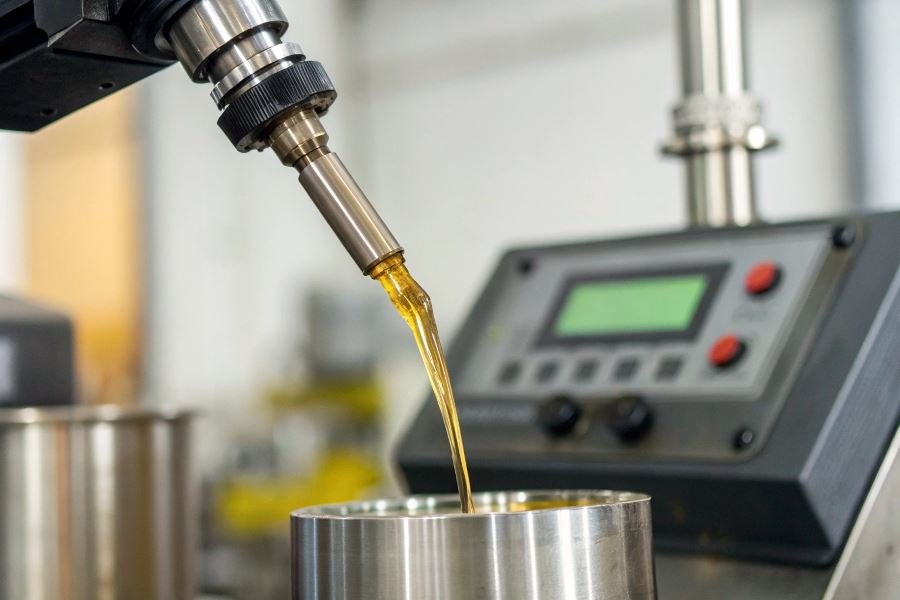
What’s the difference between a $10,000 equipment failure and a perfectly executed oil processing operation? Often, it comes down to the dosing equipment you select.
When it comes to oil processing and production, precision isn’t just a luxury—it’s the foundation of operational success. The right dosing equipment ensures consistent product quality, minimizes waste, and maximizes efficiency in ways that directly impact your bottom line.
The high stakes of precision dosing
In oil applications, even minor dosing inaccuracies can cascade into major issues. A mere 0.5% overdosing of additives in a large-scale operation can translate to thousands of dollars in unnecessary material costs annually. Conversely, underdosing can compromise product integrity, leading to quality control failures and potential regulatory non-compliance.
“Precision in oil dosing isn’t just about accuracy—it’s about reliability, repeatability, and adaptability to changing production demands.”
Navigating the equipment landscape
The market offers several distinct categories of dosing systems, each with specific advantages:
- Positive displacement pumps – Offering exceptional accuracy for viscous oils
- Peristaltic systems – Ideal for contamination-sensitive applications
- Gravimetric dosers – Providing weight-based precision for critical formulations
- Volumetric equipment – Delivering speed and efficiency for high-throughput operations
The efficiency equation
Selecting appropriate dosing technology directly influences operational metrics. Companies that invest in properly matched dosing systems typically report:
- Reduced material waste by 15-30%
- Decreased production downtime
- Improved batch-to-batch consistency
- Enhanced energy efficiency
- Extended equipment lifespan
The right dosing equipment doesn’t just measure oil—it transforms your entire production ecosystem into a model of precision and profitability.
Technical Mastery in Oil Dosing Equipment Selection
When precision meets performance in industrial fluid handling, the technical specifications of dosing equipment become the foundation of operational excellence. Selecting the right dosing system for oil applications demands a thorough understanding of the mechanical and physical parameters that will determine success or failure in your processing line.
The journey through criteria for selecting dosing equipment for oil begins with a clear assessment of your operational requirements. This technical evaluation forms the backbone of your investment decision, ensuring that the equipment you choose will deliver consistent performance throughout its service life while meeting your specific production demands.
Flow Rate Precision and Capacity Requirements
The heartbeat of any dosing system is its ability to deliver exact volumes consistently. Flow rates in oil dosing applications typically range from microliters per minute to hundreds of gallons per hour, depending on the scale of operation.
Volumetric accuracy becomes particularly critical when:
- Blending expensive additives where over-dosing creates unnecessary costs
- Formulating products with strict specifications where under-dosing affects quality
- Processing applications where timing and volume synchronization matter
For high-precision requirements, positive displacement pumps from manufacturers like Graco or Prominent offer repeatability within ±0.5% of set values. For larger industrial applications, Milton Roy dosing systems can handle capacities up to 15,000 liters per hour while maintaining precision.
Viscosity Handling and Temperature Management
Oil viscosity presents one of the most significant challenges in dosing applications, often varying dramatically with temperature changes.
| Viscosity Range (cP) | Recommended Pump Type | Temperature Considerations |
|---|---|---|
| 1-100 | Diaphragm, Peristaltic | Standard configurations sufficient |
| 100-1,000 | Progressive Cavity, Gear | May require heating jackets |
| 1,000-10,000 | Gear, Lobe | Requires integrated heating systems |
| 10,000 | Specialized Progressive Cavity | Complete temperature control system essential |
The relationship between viscosity and temperature creates a technical challenge that must be addressed in equipment selection. Systems handling heavy oils often incorporate:
- Jacketed pump heads that maintain consistent material temperature
- Heated suction lines preventing viscosity increases during transfer
- Temperature monitoring with feedback controls for viscosity management
- Material-specific seals rated for both the oil type and operating temperature range
Advanced dosing systems now feature adaptive controls that automatically adjust pump parameters based on real-time viscosity measurements, eliminating the guesswork in handling temperature-sensitive materials.
Pressure Tolerance and System Integration
The final technical consideration involves pressure requirements and how seamlessly the dosing equipment integrates with existing systems.
Pressure capabilities must account for:
- Static system pressure – the baseline pressure of your processing line
- Dynamic pressure fluctuations – caused by valve operations or process changes
- Back-pressure requirements – often necessary for precise metering
- Pressure pulsation damping – critical for sensitive instrumentation downstream
Modern dosing systems from Watson-Marlow or LEWA offer pressure capabilities ranging from atmospheric discharge to over 1,000 bar for specialized applications, with intelligent pulsation dampening technology that maintains smooth flow profiles even at high pressures.
System integration specifications should address communication protocols (4-20mA, HART, Profibus, Modbus), physical connection standards, and control system compatibility. The most sophisticated equipment provides plug-and-play integration with distributed control systems while offering standalone operation when needed.
By methodically evaluating these technical criteria, you’ll identify dosing equipment that doesn’t just meet today’s requirements but provides the flexibility and performance headroom for tomorrow’s challenges.
Beyond Purchase Price: The Long Game of Oil Dosing Equipment
The true cost equation
When investing in oil dosing equipment, the sticker price is merely the opening chapter of a much longer financial story. Total Cost of Ownership (TCO) analysis reveals that initial purchase costs typically represent just 20-30% of lifetime expenses. The remaining 70-80% comes from operation, maintenance, energy consumption, and eventual decommissioning.
Smart operators calculate TCO using this formula:
| TCO Component | Typical Percentage | Key Considerations |
|---|---|---|
| Purchase price | 20-30% | Equipment specifications, customization needs |
| Energy costs | 25-35% | Power requirements, efficiency ratings |
| Maintenance | 15-25% | Parts replacement, labor, downtime |
| Training | 5-10% | Staff certification, learning curve |
| Decommissioning | 5-10% | Disposal regulations, salvage value |
Efficiency metrics matter enormously. A premium dosing system from Graco or Nordson might cost $15,000 more upfront than budget alternatives but can deliver energy savings of $4,000-6,000 annually while reducing product waste by up to 15%. For high-volume operations, these savings compound dramatically over a 10-15 year equipment lifespan.
Maintenance accessibility drives operational success
The most sophisticated dosing equipment becomes worthless when downtime stretches from hours into days. Maintenance-friendly designs incorporate:
Quick-access panels that don’t require complete disassembly for routine maintenance
Modular components allowing targeted replacement of worn parts
Self-diagnostic capabilities that pinpoint issues before catastrophic failure
The Coperion K-Tron feeding systems exemplify this approach with their QuickChange™ technology, allowing complete disassembly and cleaning in under 30 minutes without specialized tools. This accessibility can reduce maintenance downtime by up to 60% compared to conventional systems.
Maintenance accessibility isn’t just convenience—it’s profit protection.
Vendor relationships as strategic assets
Equipment longevity extends far beyond robust construction. The most successful implementations treat vendor relationships as strategic partnerships rather than transactional purchases.
When evaluating vendor support, consider:
- Parts availability guarantees – Leading manufacturers like Emerson maintain 10+ year parts commitments for industrial dosing equipment
- Technical support response times – Industry leaders offer 24/7 support with 4-hour response windows for critical applications
- Training programs – Comprehensive training reduces operator error, which accounts for approximately 30% of equipment failures
- Upgrade pathways – Modular systems from providers like Siemens allow component upgrades without complete system replacement
The difference between 85% and 99% uptime isn’t just 14 percentage points—it’s potentially hundreds of thousands in production value annually. Equipment that maintains calibration precision over years rather than months delivers consistent product quality that builds customer loyalty.
When properly maintained, premium oil dosing systems routinely deliver 15-20 years of service—nearly double the lifespan of budget alternatives. This extended service life transforms what might initially appear as an expensive investment into the most economical long-term solution.
Discover key criteria for selecting optimal oil dosing equipment, from viscosity compatibility to flow rate requirements. Learn how proper equipment selection impacts efficiency, quality, and long-term operational costs in oil processing applications.
Discover key criteria for selecting optimal oil dosing equipment, from viscosity compatibility to flow rate requirements. Learn how proper equipment selection impacts efficiency, quality, and long-term operational costs in oil processing applications.