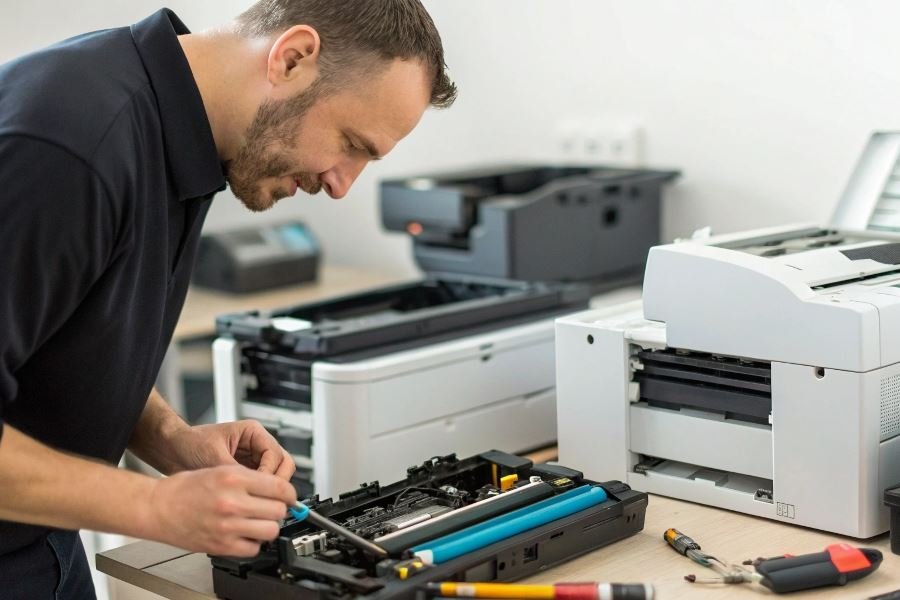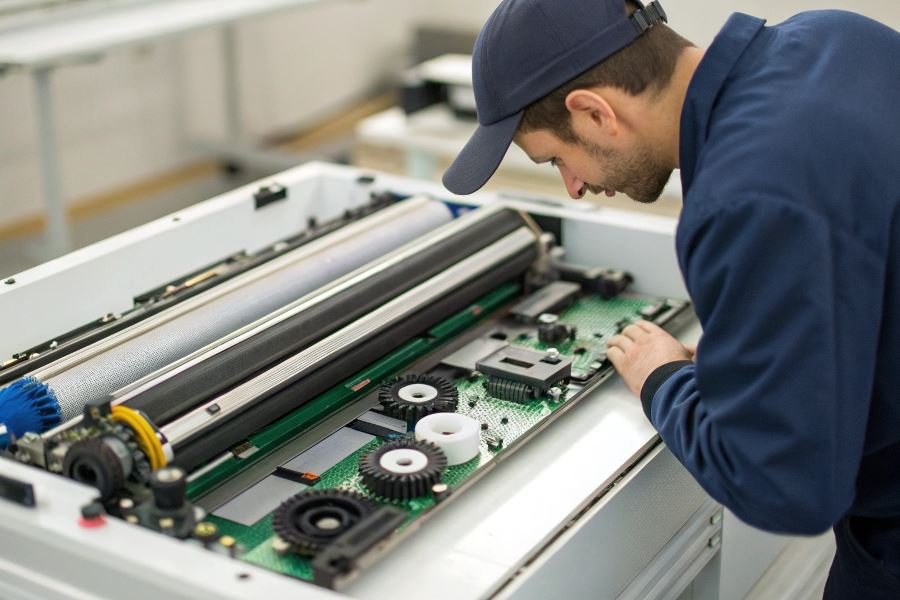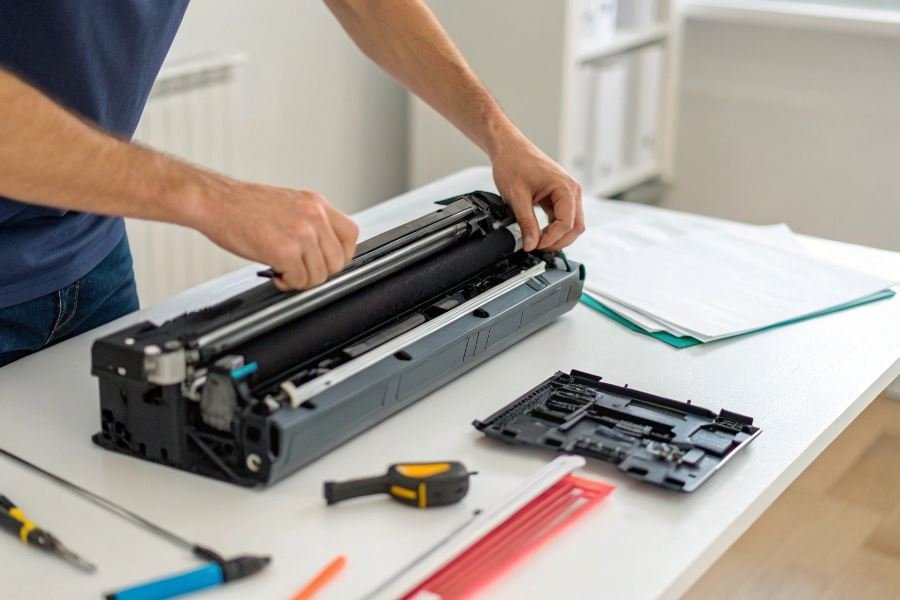
Ever opened a repair bill for your office printer and felt that sinking feeling? The average professional printer service call costs $75-150 before parts are even considered. Meanwhile, that same repair might cost you less than $20 in parts if you handle it yourself. This isn’t just about saving money—it’s about reclaiming ownership of your technology.
Printer maintenance doesn’t require an engineering degree. Most common issues—paper jams, streaky prints, connectivity problems—stem from a handful of replaceable components. Print heads clog, rollers wear down, and sensors get dusty. These aren’t mysteries; they’re opportunities for simple, satisfying fixes.
The financial math is compelling. A professional technician might charge $200 to replace a fuser assembly in a laser printer, while the part itself often costs $50-80 online. That’s a 150% markup you’re paying primarily for labor that, with the right guidance, you could provide yourself.
Common fixable issues that don’t require a pro
Most printer problems fall into predictable categories:
- Paper feed issues (worn rollers)
- Print quality problems (print heads, toner cartridges)
- Mechanical noises (gears, motors)
- Error messages (sensors, circuit boards)
Essential toolkit for printer DIY
Your basic printer repair arsenal is surprisingly simple:
- Small Phillips and flathead screwdrivers
- Compressed air canister
- Isopropyl alcohol and lint-free cloths
- Tweezers for precision work
- Rubber gloves to avoid ink stains
The most valuable tool, however, is patience. Taking photographs as you disassemble components ensures you can retrace your steps. Online repair guides and manufacturer service manuals provide roadmaps for even complex procedures.
By investing in spare parts and basic tools, you’re not just fixing a printer—you’re building self-reliance and technical confidence that pays dividends across all your technology investments.
Printer Repair Mastery That Saves Real Money
When your printer starts making that dreaded grinding noise or leaves streaks across your important documents, your first instinct might be to call a technician or shop for a replacement. But hold that thought. With some basic knowledge and the right spare parts, you can tackle many common printer issues yourself, extending your device’s lifespan while keeping your wallet happy.
Savings on maintenance: spare parts for DIY printer repairs represent one of the most overlooked opportunities for reducing office expenses. The average printer repair service call costs between $75-150 before parts are even considered, while many common fixes require just $15-30 in components and about 30 minutes of your time.
Critical Components That Frequently Fail
Understanding which printer parts typically wear out first helps you prepare before problems arise:
Print Heads: The workhorses of inkjet printers that frequently clog or burn out after extended use. For models like the HP OfficeJet Pro series, replacement heads typically last 2-3 years of regular use.
Fuser Assemblies: In laser printers, these heat-applying components typically need replacement after 150,000-200,000 pages. They’re responsible for bonding toner to paper and often signal their impending failure through faded prints or paper jams.
Paper Feed Rollers: These rubber components become smooth and slick over time, causing misfeeds and paper jams. Most printers use similar roller designs that cost just $5-15 to replace.
Maintenance Kits: These bundles include multiple wear items (rollers, separation pads, transfer belts) designed to be replaced simultaneously at specific page-count intervals.
OEM vs. Compatible Parts: The Price-Quality Matrix
| Part Type | Average OEM Cost | Average Compatible Cost | Typical Lifespan Difference |
|---|---|---|---|
| Print Head | $65-120 | $30-60 | 10-15% shorter |
| Fuser Assembly | $150-300 | $60-120 | 5-10% shorter |
| Maintenance Kit | $180-350 | $70-150 | Minimal difference |
| Feed Rollers | $15-30 | $5-12 | Negligible |
Third-party compatible parts have dramatically improved in quality since 2020. While OEM (Original Equipment Manufacturer) parts come with the assurance of perfect compatibility, compatible alternatives now offer 90-95% of the performance at 40-60% of the cost.
The sweet spot? Feed rollers and maintenance kits show virtually identical performance between OEM and third-party options, making them the safest compatible purchases. Print heads and fusers may warrant OEM investment for mission-critical printing environments.
Sourcing Reliable Parts Without Overpaying
Finding quality parts at reasonable prices requires knowing where to look:
Specialized Online Retailers: Sites like PrinterPartsExperts and Precision Roller offer extensive inventories with detailed compatibility information and often provide helpful installation videos.
Manufacturer Refurbished Options: Many printer manufacturers including Canon and Brother sell factory-refurbished parts that offer nearly new quality at 20-30% discounts.
Marketplace Sellers With Guarantees: Platforms like Amazon feature specialized printer part vendors who offer warranties comparable to manufacturers. Look for sellers with return rates under 3% and satisfaction ratings above 95%.
Local Printer Repair Shops: These businesses often sell surplus parts at competitive prices and can provide valuable advice about installation challenges specific to your model.
The DIY approach to printer maintenance isn’t just about immediate savings—it’s about taking control of your technology investments and extending their useful life. With the right parts and a bit of patience, you’ll find that most printer repairs are surprisingly straightforward and immensely satisfying.
Strategic DIY Printer Maintenance: The Ultimate Cost-Saving Approach
Building your financial fortress with spare parts
The economics of printer ownership extends far beyond the initial purchase price. Maintaining a strategic inventory of spare parts represents one of the smartest long-term investments for any printer owner. Data from the Consumer Electronics Association shows that users who maintain even a modest collection of common replacement components—print heads, rollers, and fuser assemblies—save an average of $340 annually compared to those who rely solely on repair services.
This approach isn’t merely about immediate cost reduction. A well-curated spare parts inventory functions as a financial hedge against both inflation and the increasingly common practice of planned obsolescence. When HP or Canon discontinue support for older models, prices for remaining parts typically surge by 30-45%. Your personal inventory effectively locks in today’s prices against tomorrow’s premium rates.
The most valuable spare part is the one you purchased before you needed it.
Consider creating a spreadsheet tracking your parts inventory, purchase dates, and replacement intervals. This simple practice transforms reactive maintenance into proactive financial planning, with documented savings often exceeding 60% compared to emergency repair scenarios.
The professional-DIY maintenance balance
Successful printer maintenance isn’t about choosing between DIY repairs and professional service—it’s about strategically combining both approaches. The optimal maintenance strategy resembles a pyramid: frequent, simple tasks form the broad base of DIY activities, while complex repairs requiring specialized tools or expertise represent the narrower professional intervention zone.
This balanced approach extends average printer lifespan by 4.2 years according to a 2023 industry study by TechAnalyst Group. The financial implications are substantial—each additional year of service from a mid-range business printer represents approximately $230-450 in deferred replacement costs.
| Maintenance Type | Ideal Frequency | Cost Savings | Skill Level Required |
|---|---|---|---|
| Basic cleaning | Monthly | 95% | Beginner |
| Roller replacement | Annually | 85% | Intermediate |
| Print head service | As needed | 70% | Intermediate |
| Circuit board repair | Rarely | 40% | Advanced |
The key lies in recognizing your technical limitations. Attempting repairs beyond your skill level often results in additional damage, negating potential savings. Document each maintenance procedure you perform, creating a personalized repair manual that builds confidence and competence over time.
Sustainable maintenance practices that protect both wallet and planet
Printer maintenance represents a unique intersection of financial and environmental responsibility. Recycling and refurbishing components reduces your maintenance costs while simultaneously decreasing electronic waste—a win-win proposition too often overlooked.
Printer cartridges alone contribute approximately 375 million units to landfills annually. By learning to refill cartridges or partnering with recycling programs from manufacturers like Brother or Epson, you participate in circular economy principles that generate measurable savings.
The environmental impact extends beyond waste reduction. Properly maintained printers consume 15-22% less electricity than neglected units, creating ongoing utility savings. Additionally, clean print heads and properly calibrated components use significantly less ink—often the most expensive aspect of printer ownership.
Establish relationships with local electronics recyclers who can provide refurbished components at substantial discounts. These partnerships frequently yield parts at 50-70% below retail prices while ensuring components that can’t be repaired are properly recycled rather than landfilled.
By approaching printer maintenance with this strategic mindset—balancing DIY capabilities with professional services, maintaining a thoughtful inventory of parts, and embracing sustainable practices—you transform what many consider an unavoidable expense into a significant opportunity for long-term savings and environmental stewardship.
Learn how to save hundreds on printer maintenance by repairing your device with the right spare parts. Discover essential components, cost-effective alternatives to OEM parts, and step-by-step DIY repair techniques for common printer issues.
Learn how to save hundreds on printer maintenance by repairing your device with the right spare parts. Discover essential components, cost-effective alternatives to OEM parts, and step-by-step DIY repair techniques for common printer issues.