Ever watched a master technician diagnose a complex circuit board failure in minutes while you’ve spent hours troubleshooting a simple device? The difference isn’t just experience—it’s the diagnostic equipment they wield with confidence.
When electronic systems fail, accurate diagnosis isn’t just helpful—it’s essential. The right testing equipment transforms frustrating guesswork into methodical problem-solving, saving countless hours and preventing costly mistakes. Today’s diagnostic landscape features sophisticated tools that can identify issues invisible to the naked eye, from microscopic solder fractures to intermittent signal failures.
Among the vast array of testing equipment, three diagnostic powerhouses stand out for their versatility, accuracy, and value. The digital multimeter, oscilloscope, and logic analyzer form the holy trinity of electronic troubleshooting, each bringing unique capabilities to your workbench. Whether you’re repairing vintage audio equipment or debugging cutting-edge microcontroller systems, these tools provide the insights needed to solve even the most perplexing electronic mysteries.
Selecting your diagnostic arsenal
When evaluating diagnostic equipment, several factors separate professional-grade tools from disappointing alternatives:
- Measurement accuracy: Look for tools with precision appropriate to your applications—±0.5% or better for serious work
- Durability: Quality testers withstand years of bench and field use
- Interface intuitiveness: Complex diagnostics require tools that display information clearly and logically
- Connectivity options: Modern diagnostics often benefit from data logging and computer analysis capabilities
The best diagnostic equipment becomes an extension of your technical thinking—revealing the invisible and making the complex understandable. Choose wisely, and these tools will transform not just your repair capabilities, but your entire approach to electronics.
Essential Testing Arsenal for Electronics Diagnostics
When precision matters in electronics troubleshooting, having the right diagnostic tools makes all the difference between guesswork and certainty. Professional technicians and serious hobbyists alike recognize that digital multimeters, oscilloscopes, and logic analyzers form the backbone of any comprehensive electronics testing setup. These three powerhouse instruments represent the top 3 best testers for diagnosing electronics, each serving distinct yet complementary functions in the diagnostic process.
Digital Multimeters: The Universal First Responder
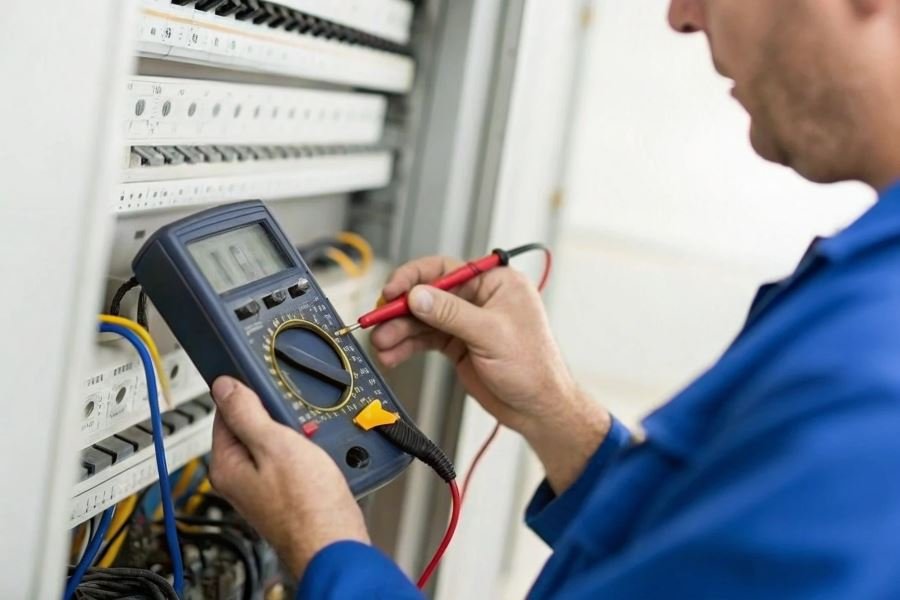
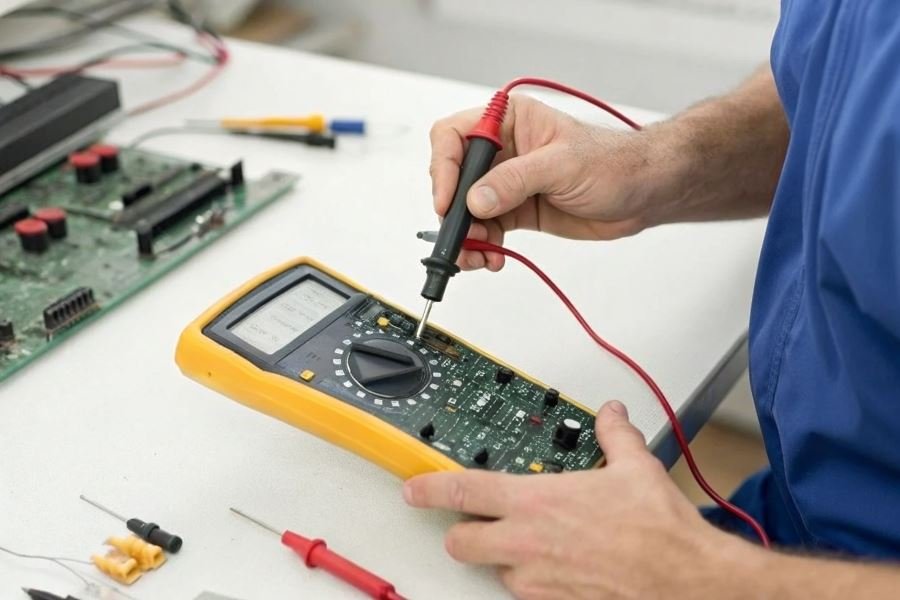
Digital Multimeters (DMMs) remain the most versatile and essential tool in any electronics toolkit. These handheld devices measure voltage, current, resistance, and often much more.
Entry-level options like the Fluke 101 ($50-90) provide reliable basic measurements with accuracy typically within ±0.5%. These models handle most household and automotive diagnostics with ease.
Mid-range multimeters such as the Klein Tools MM600 ($100-200) add capabilities like temperature sensing, capacitance measurement, and frequency testing—perfect for more complex circuit analysis.
Professional-grade models like the Keysight U1282A ($300-500) deliver laboratory-grade precision with accuracy often better than ±0.025%, data logging features, and specialized measurement modes for electronics development.
| DMM Class | Price Range | Key Features | Best For |
|---|---|---|---|
| Entry-level | $50-90 | Basic V/A/Ω, continuity | DIY repairs, basic troubleshooting |
| Mid-range | $100-200 | Added capacitance, frequency, temperature | Technicians, advanced hobbyists |
| Professional | $300-500+ | High accuracy, data logging, specialized modes | Engineers, professional repair |
Oscilloscopes: Visualizing Electronic Signals
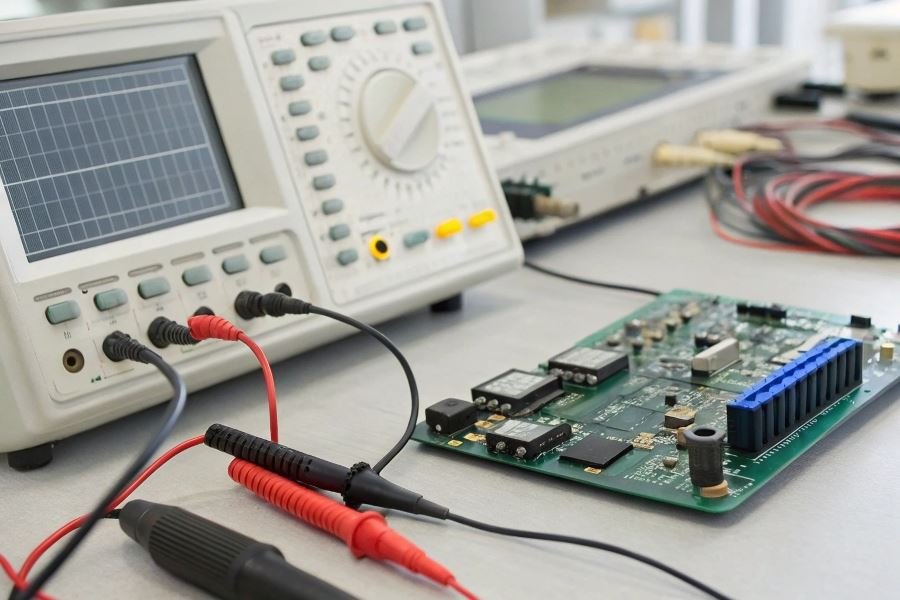
While multimeters show you numbers, oscilloscopes reveal the shape of electronic signals—an invaluable capability when diagnosing timing issues, signal integrity problems, or intermittent faults.
Beginner-friendly options like the Siglent SDS1052DL+ ($300-400) offer 50MHz bandwidth and dual channels—sufficient for hobbyist projects and basic audio/digital circuit analysis.
Intermediate scopes such as the Rigol DS1054Z ($400-700) provide 50-100MHz bandwidth with 4 channels and deeper memory, enabling more complex signal analysis and comparison.
Advanced instruments like the Tektronix TBS2000B ($1,200-2,500) deliver 200MHz+ bandwidth, exceptional sample rates, and sophisticated triggering options essential for high-speed digital design and professional troubleshooting.
The learning curve for oscilloscopes is steeper than for multimeters, but modern digital models with intuitive interfaces have made signal analysis more accessible than ever.
Logic Analyzers: Decoding Digital Communications
For professionals working with microcontrollers, embedded systems, or digital buses (I²C, SPI, UART), logic analyzers provide insights that other instruments simply cannot.
USB-based analyzers like the Saleae Logic 8 ($400-500) offer 8 channels at sample rates up to 100MHz, with exceptional software for protocol decoding and signal interpretation.
Mid-tier options such as the Zeroplus LAP-C ($700-1,000) provide 16-32 channels with deeper buffers for capturing longer signal sequences—ideal for debugging complex digital systems.
High-performance analyzers like the Keysight U4164A ($5,000+) deliver state-of-the-art capabilities with 100+ channels, multi-gigahertz sampling, and advanced triggering for mission-critical applications in aerospace, defense, and cutting-edge electronics development.
The true power of logic analyzers lies in their ability to decode and interpret digital protocols automatically, transforming seemingly random signal patterns into meaningful data exchanges between components.
Investing Wisely in Diagnostic Equipment
The ultimate tester comparison
When comparing our top three diagnostic powerhouses, clear distinctions emerge. The Fluke 87V stands as the industry workhorse with unmatched durability and accuracy for electrical measurements. The Autel MaxiSys Elite dominates automotive diagnostics with comprehensive vehicle coverage and advanced coding capabilities. Meanwhile, the Rigol DS1054Z oscilloscope delivers laboratory-grade signal analysis at a price point that continues to disrupt the market.
| Tester | Specialty | Durability | Learning Curve | Price Range |
|---|---|---|---|---|
| Fluke 87V | Electrical systems | Military-grade | Moderate | 400−500 |
| Autel MaxiSys Elite | Automotive ECUs | Professional | Steep | 2, 800−3,500 |
| Rigol DS1054Z | Signal analysis | Laboratory | Steep | 350−450 |
Each excels in specific diagnostic scenarios: the Fluke for troubleshooting electrical faults, the Autel for comprehensive vehicle systems analysis, and the Rigol for detailed waveform examination. Your primary diagnostic needs should guide your selection more than any other factor.
Return on diagnostic investment
The cost-benefit equation extends far beyond the initial purchase price. Consider the Fluke 87V—its $450 price tag might seem steep compared to budget alternatives, but professionals who’ve owned theirs for 15+ years report an effective cost of less than $30 annually. The device’s accuracy prevents costly misdiagnoses while its durability eliminates replacement costs.
The Autel MaxiSys Elite represents a significant investment at approximately $3,200, but shops report recovering this cost within months through:
- Reduced diagnostic time (averaging 40% faster troubleshooting)
- Expanded service capabilities (particularly with advanced driver assistance systems)
- Subscription value (software updates covering new models and systems)
The Rigol oscilloscope demonstrates perhaps the most dramatic value proposition. Offering capabilities that matched 2, 000 + instrumentsfromjustadecadeago, itssub−400 price point has democratized access to professional-grade signal analysis.
The true cost of diagnostic equipment isn’t what you pay today—it’s what you save tomorrow.
Matching tools to tasks and budgets
For small shops and independent technicians with budget constraints under $500, the Fluke 87V offers the most versatile foundation. Its reliability in electrical diagnostics applies across industries from HVAC to industrial controls.
Those focused primarily on automotive repair should consider starting with a mid-tier Launch X431 (1, 200−1,800) before graduating to the Autel MaxiSys Elite when volume justifies the investment.
For electronics repair specialists, the Rigol oscilloscope provides the highest diagnostic capability per dollar, though it requires more technical knowledge to utilize effectively.
Budget-conscious professionals might consider:
- Purchasing factory-refurbished units (typically 20-30% savings with full warranty)
- Exploring subscription-based diagnostic platforms for specialized, infrequent needs
- Prioritizing versatility over specialized capabilities initially
The wisest approach combines a primary diagnostic tool matching your most common tasks with strategic access to specialized equipment for edge cases. This hybrid model—owning essential tools while renting specialized ones—optimizes both capability and capital efficiency.
Remember that diagnostic accuracy translates directly to repair efficiency. The right tester doesn’t just find problems—it prevents creating new ones through misdiagnosis.
Discover the top 3 electronic diagnostic tools professionals rely on for precision repairs. Compare features of digital multimeters, oscilloscopes, and logic analyzers to make informed equipment investments for your electronics workshop.
Discover the top 3 electronic diagnostic tools professionals rely on for precision repairs. Compare features of digital multimeters, oscilloscopes, and logic analyzers to make informed equipment investments for your electronics workshop.