Ever stood for 10 hours in boots that feel like medieval torture devices? Your toes screaming for mercy while blisters form with every step? That’s not just discomfort—it’s a safety hazard waiting to happen.
When selecting work ankle boots, the right fit isn’t just about comfort—it’s about preventing injuries, enhancing productivity, and extending the lifespan of your footwear investment. Unlike casual shoes, work boots must accommodate specialized safety features while providing all-day support in demanding environments.
The anatomy of proper work boot fit
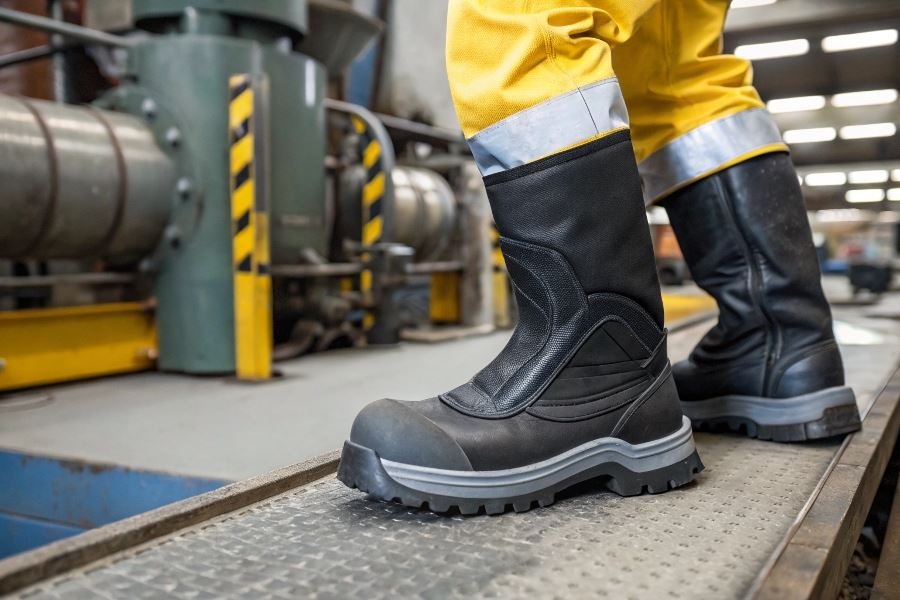
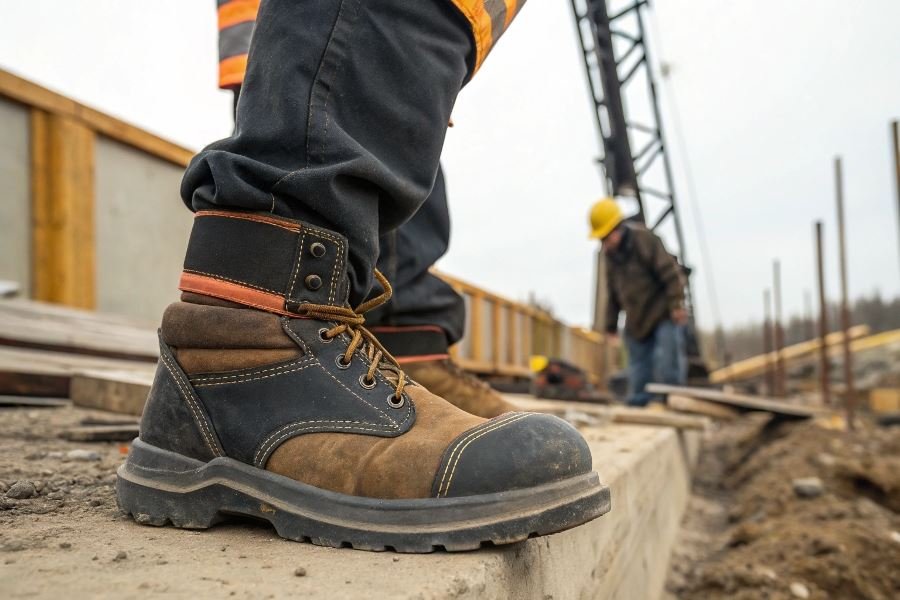
Work ankle boots differ fundamentally from everyday footwear. They typically feature reinforced toes, puncture-resistant soles, and specialized support structures—all of which affect how they should fit. The perfect size creates a protective cocoon around your foot without restricting movement or circulation.
Many workers make the critical mistake of applying regular shoe sizing logic to work boots. This overlooks crucial factors like:
- The need for thicker work socks
- Foot swelling during long shifts
- The extra space required by safety features
- Variations between manufacturers’ sizing standards
Finding your ideal work boot size requires understanding these unique considerations. A boot that’s too tight restricts blood flow and causes pain; too loose and you risk blisters, trips, and reduced protection. The sweet spot—where safety meets comfort—is what separates professionals who thrive from those who merely survive their workday.
The Perfect Fit: Mastering Work Boot Measurements
Finding work ankle boots that fit like they were custom-made starts with understanding the science of proper measurement. The difference between boots that protect and support versus those that cause blisters and fatigue often comes down to millimeters. Let’s dive into the measurement fundamentals that will revolutionize your workwear experience.
When tackling how to choose the size of work ankle boots for comfortable wear, precision becomes your best friend. Your feet deserve boots that complement their unique architecture, especially when you’re standing for hours in demanding environments.
Measuring With Military Precision
The foundation of proper boot sizing begins with three critical measurements:
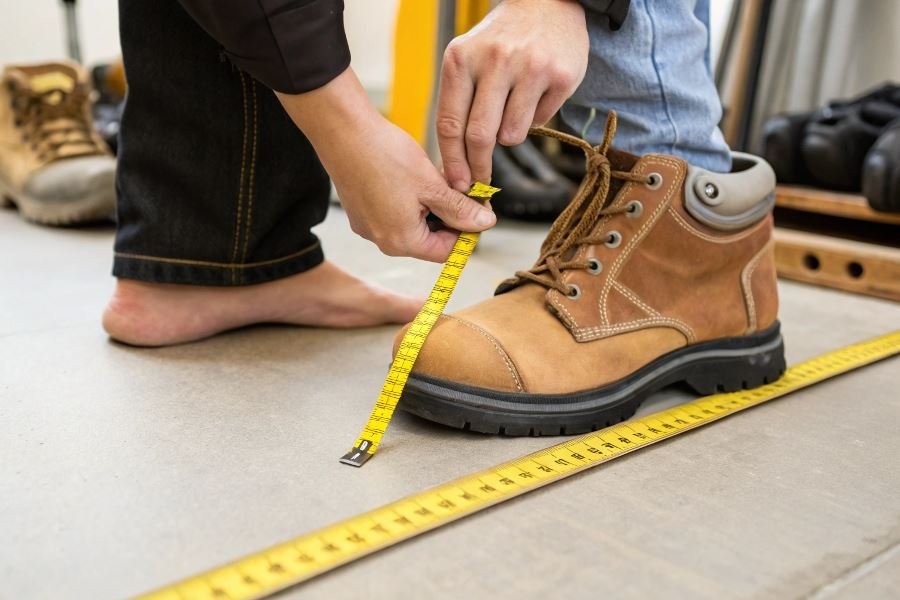
Length: Measure from heel to toe while standing, as feet expand under weight. Place a piece of paper against a wall, stand on it, and mark the longest toe and heel positions. Measure this distance in inches or centimeters.
Width: Wrap measuring tape around the widest part of your foot (usually the ball). This measurement is often overlooked but crucial for preventing lateral compression.
Arch height: Press your foot into a damp towel on a flat surface to reveal your arch type. High arches may require additional support, while flat feet need different accommodation.
Pro tip: Take measurements in the afternoon when feet are naturally at their largest due to daily swelling.
The Sock Factor: Not Just An Afterthought
Work boots aren’t worn barefoot, making sock thickness a critical sizing variable:
| Sock Type | Additional Size Allowance |
|---|---|
| Standard cotton | 1/4 size up |
| Medium wool work socks | 1/2 size up |
| Heavy thermal/winter socks | Full size up |
Never underestimate sock impact. A boot that fits perfectly with thin socks can become painfully tight with the thick wool socks you’ll need in winter conditions. When visiting stores to try on Red Wing or Thorogood boots, bring the actual socks you’ll wear on the job.
Navigating Brand Sizing Labyrinths
Boot manufacturers might as well be speaking different languages when it comes to sizing:
- European brands like Haix typically run narrower than American brands
- Timberland work boots often run a half-size large
- Keen Utility provides more toe box room than traditional brands
Always consult brand-specific conversion charts rather than assuming universal standards. Many manufacturers now offer interactive sizing tools on their websites that account for their unique lasts and construction methods.
Medical Considerations That Demand Attention
Certain foot conditions require specialized sizing approaches:
Bunions: Select wider boots with soft leather that will stretch and accommodate protrusions.
Plantar fasciitis: Prioritize arch support and cushioning, possibly sizing up to accommodate orthotic inserts.
Hammertoes: Look for boots with extra vertical toe box space to prevent painful pressure points.
Diabetes: Choose boots with seamless interiors and additional depth to prevent circulation issues.
Remember that proper sizing isn’t just about comfort—it’s about safety and health. Ill-fitting boots can lead to altered gait, which cascades into knee, hip, and back problems over time. The investment in finding your perfect fit pays dividends in productivity and physical wellbeing throughout your working life.
Testing Your Work Boots: The Ultimate Fit Guide
The Telltale Signs of Perfect Fit
Finding work ankle boots that fit correctly isn’t just about comfort—it’s about safety and productivity. When your boots fit properly, you’ll notice several key indicators: your toes should have about a half-inch of space at the front (roughly the width of your thumb), your heel remains firmly in place with minimal slippage when walking, and the widest part of your foot aligns perfectly with the widest part of the boot.
The pressure test is non-negotiable. When laced up, your boots should feel snug but never painful. If you feel pinching or numbness after 15 minutes of wear, something’s wrong. The boot should wrap your foot like a firm handshake—secure but not crushing.
A properly fitted work boot distributes pressure evenly across your foot, with no single hot spot of discomfort.
Sizing Adjustments for Different Work Environments
Different job sites demand different sizing considerations:
| Work Environment | Sizing Recommendation | Reasoning |
|---|---|---|
| Cold outdoor sites | Size up ½ size | Accommodates thicker socks and improved insulation |
| Hot environments | True to size | Allows for foot swelling during long shifts |
| Concrete floors | Consider wider width | Provides better weight distribution |
| Uneven terrain | Snugger fit | Prevents ankle roll and improves stability |
Workers handling heavy materials should opt for a slightly roomier toe box to accommodate foot spread under load. Conversely, those climbing ladders or scaffolding need a more precise fit to maintain control and prevent slippage.
The Break-in Reality Check
Quality work boots require a break-in period—there’s no way around it. Expect 1-2 weeks of wear before your boots fully conform to your feet. During this time, wear them for progressively longer periods, starting with 2-3 hours and gradually increasing.
The leather stretch factor is real but limited. Premium leather will give about 1/8 to 1/4 inch in width, but very little in length. Don’t buy boots expecting significant stretching in the length.
The break-in sweet spot arrives when your boots feel like they’re working with you, not against you. This typically happens after 40-60 hours of wear.
Fine-Tuning Your Fit
Even the best-sized boots can benefit from strategic adjustments:
-
Insole interventions: Aftermarket insoles can transform a good fit into a great one. Volume-reducing insoles help with boots that are slightly too roomy, while cushioned options add comfort for hard surfaces.
-
Lacing techniques matter more than most realize. The “surgeon’s knot” provides extra ankle support by creating a locking point at the ankle bend. For boots that feel tight across the instep, skip the middle eyelets to create relief.
-
Sock strategy: Merino wool socks with targeted cushioning can fine-tune fit in specific areas while wicking moisture.
Remember that your feet typically swell up to 5% during a workday, so always test boots in the afternoon when your feet are at their largest. The perfect morning fit might become painfully tight by day’s end.
The ultimate test? After a full day’s wear, you should be able to remove your boots without feeling an overwhelming sense of relief. That’s when you know you’ve found your perfect work boot fit.
Discover how to find perfectly fitting work ankle boots with our comprehensive sizing guide. Learn proper measurement techniques, brand variations, and fit testing methods for all-day comfort and safety on the job.
Discover how to find perfectly fitting work ankle boots with our comprehensive sizing guide. Learn proper measurement techniques, brand variations, and fit testing methods for all-day comfort and safety on the job.