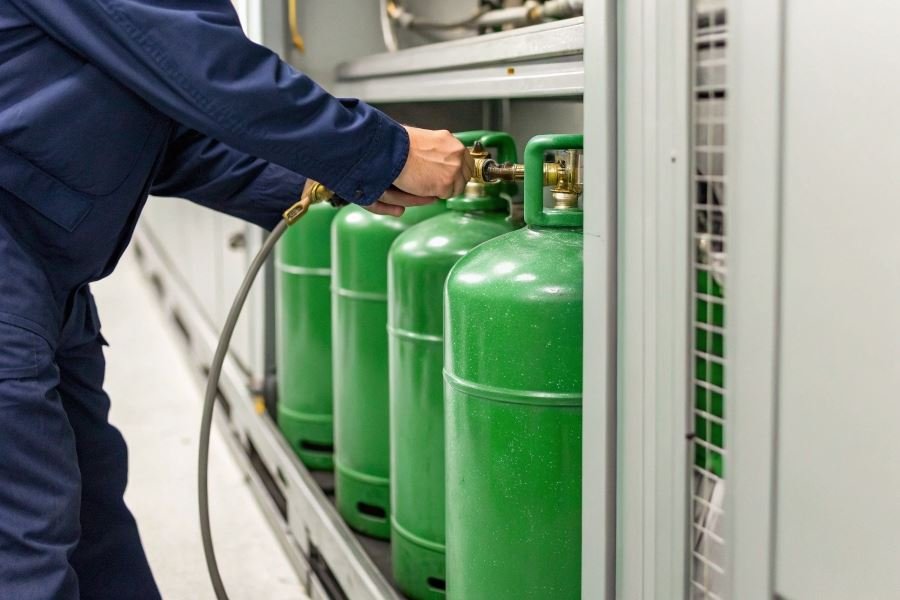
Ever wondered why some HVAC systems fail prematurely while others run smoothly for decades? The secret often lies not in the equipment itself, but in what’s flowing through it. Refrigerant compatibility isn’t just a technical footnote—it’s the lifeblood of your cooling system.
When professionals talk about determining refrigerant compatibility with equipment, they’re discussing a critical relationship that affects everything from your system’s efficiency to its lifespan. Think of it as a marriage between your equipment and its cooling fluid—when they’re compatible, everything runs smoothly; when they’re not, problems multiply.
The efficiency equation
Properly matched refrigerants and equipment operate at peak efficiency, consuming less energy and delivering optimal cooling. Studies show that systems running compatible refrigerants can be up to 30% more efficient than those with mismatched components. This translates directly to lower utility bills and reduced environmental impact.
The refrigerant landscape
Today’s refrigerant options fall into several categories:
- HFCs (Hydrofluorocarbons): Common in newer residential systems
- HCFCs (Hydrochlorofluorocarbons): Being phased out due to environmental concerns
- Natural refrigerants: Including ammonia, CO2, and hydrocarbons like propane
- HFOs (Hydrofluoroolefins): The newest generation with minimal environmental impact
Each type has specific pressure requirements, material compatibility needs, and performance characteristics that must align with your equipment’s design specifications.
When compatibility goes wrong
Using incompatible refrigerants isn’t just inefficient—it’s potentially dangerous. Consequences include:
- Compressor failure (often a $1,500+ repair)
- Accelerated system wear
- Potential safety hazards from pressure mismatches
- Voided manufacturer warranties
- Dramatically shortened equipment lifespan
The difference between compatible and incompatible refrigerants can literally be measured in years of service and thousands of dollars in operating costs.
Decoding Technical Specs for Refrigerant Compatibility
Finding the perfect match between refrigerants and your equipment isn’t just about performance—it’s about safety, efficiency, and equipment longevity. When technicians determine the compatibility of the refrigerant with your equipment, they’re essentially performing a critical matchmaking service that prevents costly failures and dangerous situations.
Let’s dive into the technical documentation that holds the keys to proper refrigerant selection. This knowledge empowers you to make informed decisions rather than relying solely on service providers who might not always have your best interests at heart.
Finding the manufacturer’s blueprint
Your equipment’s technical documentation is the definitive source of truth for refrigerant compatibility. These specifications are typically found in:
- The original equipment manual (often in a dedicated “specifications” section)
- Data plates attached directly to the equipment (usually a metal plate with vital information)
- Manufacturer websites under technical support or product documentation
- Technical bulletins issued by the manufacturer
What to look for: Specifically search for sections labeled “refrigerant specifications,” “operating parameters,” or “acceptable refrigerants.” These sections will explicitly state which refrigerants are approved for use with your system.
Cracking the refrigerant code
Refrigerants speak their own language through a standardized designation system. The most common is the “R-number” system established by ASHRAE (American Society of Heating, Refrigerating and Air-Conditioning Engineers).
Here’s a quick decoder ring for common refrigerant designations:
| Designation | Type | Common Applications | Key Characteristics |
|---|---|---|---|
| R-22 | HCFC | Older AC systems (pre-2010) | Being phased out due to ozone depletion |
| R-410A | HFC | Modern residential AC | Higher pressure, more efficient |
| R-134a | HFC | Automotive AC, refrigerators | Medium pressure, versatile |
| R-32 | HFC | Newer residential systems | Lower GWP than R-410A |
| R-290 (Propane) | HC | Small commercial refrigeration | Highly flammable, excellent efficiency |
The first digit after the “R” typically indicates the refrigerant family, while subsequent numbers provide specific information about chemical composition. For example, R-134a is a hydrofluorocarbon (HFC) with a specific molecular structure.
Matching pressure and temperature parameters
Perhaps the most critical technical specifications for compatibility are pressure ratings and temperature requirements. Using a refrigerant with pressure characteristics that exceed your equipment’s design limits can lead to catastrophic failure.
Key specifications to analyze include:
Maximum allowable working pressure (MAWP): This is the highest pressure your equipment is designed to handle safely. Your refrigerant’s operating pressure at maximum expected ambient temperatures must not exceed this value.
Temperature glide: Some refrigerant blends change temperature as they evaporate or condense. Your equipment must be designed to handle this characteristic.
Discharge temperature: Different refrigerants create different compressor discharge temperatures. Excessive temperatures can break down lubricants and damage compressor components.
Example compatibility check:
If your equipment specifies a MAWP of 450 PSI, R-410A (which can reach pressures of 600+ PSI in hot conditions) would be incompatible without system modifications, while R-134a (typically under 300 PSI) would likely be safe from a pressure perspective.
Remember that refrigerant compatibility isn’t just about whether the system will run—it’s about whether it will run safely and efficiently for its expected lifespan. Taking the time to properly analyze technical specifications before making refrigerant decisions pays dividends in system reliability and performance.
Verifying Refrigerant Compatibility: Practical Steps
Determining whether a refrigerant is compatible with your equipment isn’t just a technical formality—it’s the difference between optimal performance and potential system failure. After identifying your current refrigerant and understanding compatibility factors, it’s time to take concrete action. Let’s dive into the practical steps that ensure you’re making informed decisions about your cooling systems.
Tap into professional expertise
When facing refrigerant compatibility questions, certified HVAC professionals remain your most valuable resource. These technicians bring specialized knowledge that goes beyond what’s available in manuals or online forums.
A qualified technician will:
- Conduct a comprehensive system assessment using specialized diagnostic tools
- Evaluate your equipment’s age, condition, and performance history
- Consider environmental factors specific to your installation location
- Provide documentation of compatibility verification for warranty purposes
Pro tip: Always verify that your technician holds current certifications from organizations like NATE (North American Technician Excellence) or ASHRAE (American Society of Heating, Refrigerating and Air-Conditioning Engineers). These credentials ensure they’re up-to-date on the latest refrigerant regulations and compatibility issues.
Leverage manufacturer resources
Equipment manufacturers have invested millions in testing their systems with various refrigerants—and they’re eager to share this information with you.
Most people underutilize these incredibly valuable resources that are often completely free.
Your manufacturer toolkit should include:
- Technical specification sheets for your specific model
- Compatibility charts showing approved refrigerant alternatives
- Technical bulletins addressing refrigerant transitions
- Direct access to engineering support teams
Many manufacturers like Carrier and Trane maintain comprehensive online databases where you can input your model number and receive immediate compatibility information. Their technical support hotlines can provide clarification on edge cases not covered in documentation.
Master the retrofit process
When replacing refrigerants in existing systems, following industry best practices ensures both safety and performance.
| Retrofit Step | Key Considerations | Common Pitfalls |
|---|---|---|
| System assessment | Document baseline performance metrics | Skipping performance documentation |
| Component evaluation | Check compatibility of seals, valves, and lubricants | Overlooking oil compatibility |
| Refrigerant recovery | Use EPA-compliant recovery equipment | Improper recovery leading to contamination |
| System modifications | Install compatible expansion devices if needed | Mismatched components causing efficiency loss |
| Charging | Follow manufacturer guidelines for charge amounts | Incorrect charge levels affecting performance |
| Performance verification | Test and document new performance metrics | Failing to verify system operation |
Critical insight: When retrofitting, pay particular attention to the lubricant compatibility. Many newer refrigerants require different oils than their predecessors, and mixing incompatible lubricants can cause catastrophic compressor failure.
The most successful retrofits involve meticulous planning and documentation at every stage.
For complex commercial systems, consider creating a detailed transition plan with your HVAC contractor that includes contingency measures and performance verification protocols. This approach minimizes downtime and ensures your cooling needs remain met throughout the transition process.
By following these practical steps—consulting with certified professionals, utilizing manufacturer resources, and adhering to retrofit best practices—you’ll navigate refrigerant compatibility challenges with confidence and precision.
Learn how to match the right refrigerant to your HVAC system for optimal performance and longevity. Our compatibility guide helps you interpret technical specifications, understand R-numbers, and avoid costly system damage from improper refrigerant use.
Learn how to match the right refrigerant to your HVAC system for optimal performance and longevity. Our compatibility guide helps you interpret technical specifications, understand R-numbers, and avoid costly system damage from improper refrigerant use.