Did you know that the same technology protecting hospital operating rooms is now safeguarding your salon experience? UV sterilization has quietly become the beauty industry’s most powerful weapon against cross-contamination—yet most clients never see it in action.
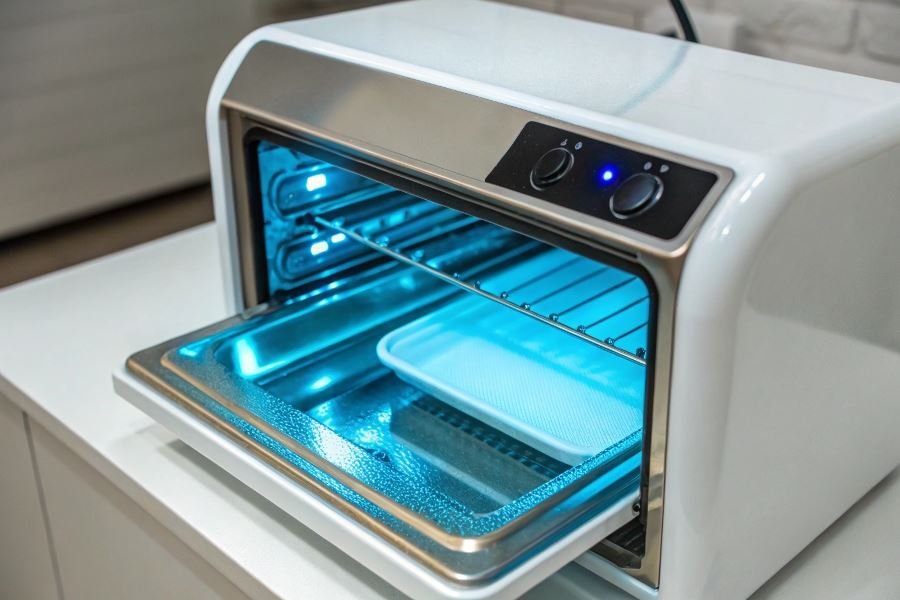
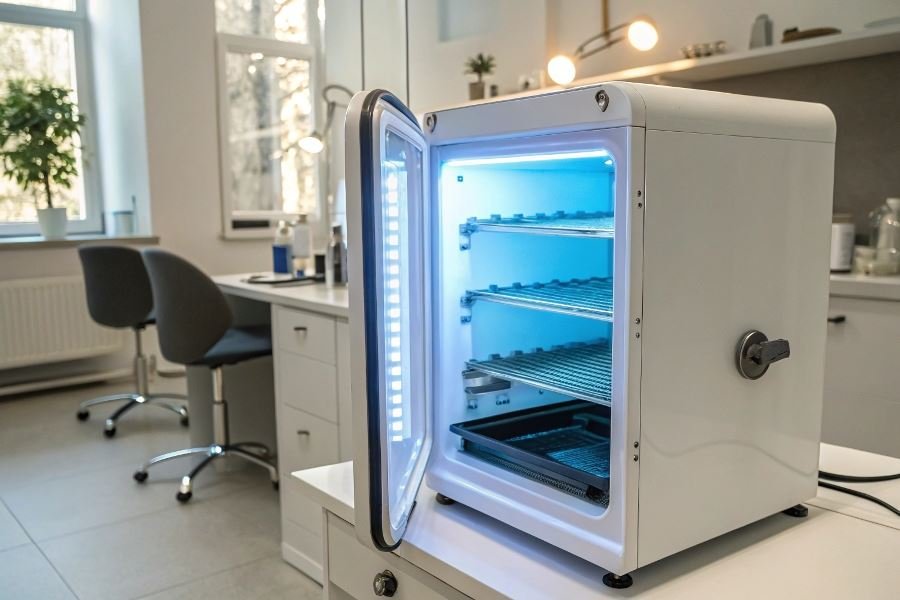
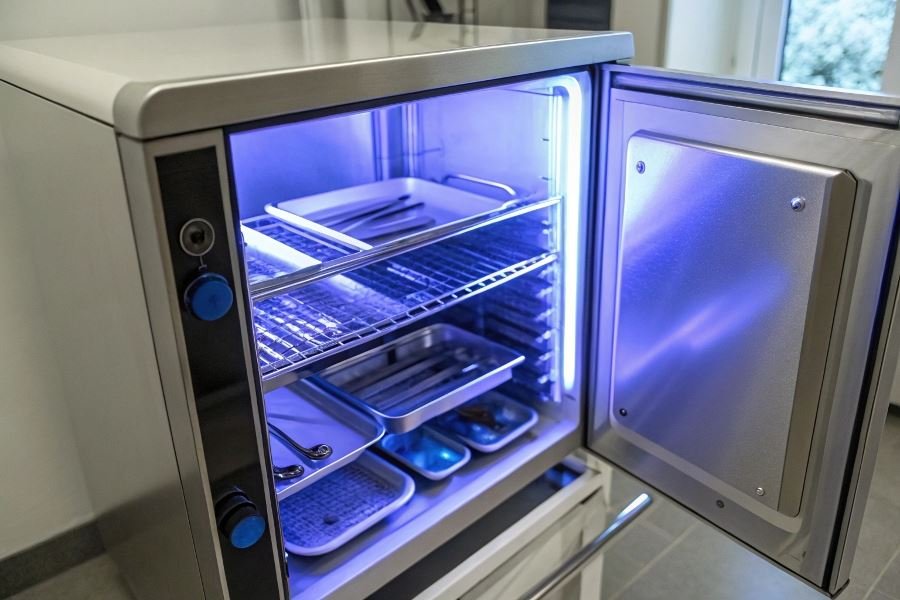
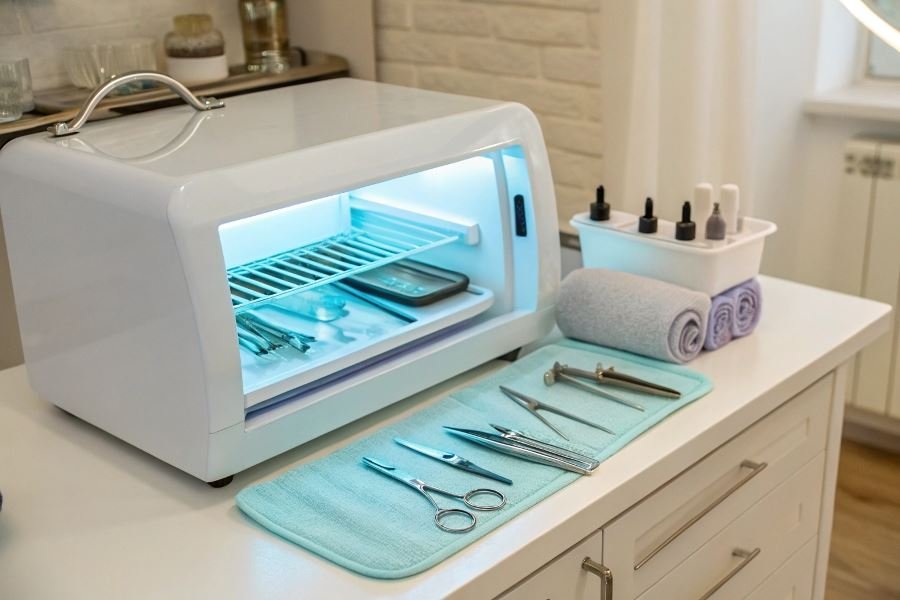
UV sterilization in beauty settings refers to the process of using ultraviolet light to eliminate harmful microorganisms on tools and surfaces. This technology destroys bacteria, viruses, and fungi by damaging their DNA structure, rendering them unable to reproduce or cause infections. For salons and spas, proper sterilization isn’t just good practice—it’s essential for preventing serious skin infections, fungal outbreaks, and even bloodborne pathogen transmission.
The regulatory landscape for UV sterilization spans multiple agencies. The FDA oversees sterilization equipment as medical devices, while OSHA establishes workplace safety standards for UV exposure. Additionally, state cosmetology boards enforce specific requirements that vary by location, creating a complex web of compliance that beauty professionals must navigate.
Since its introduction to the beauty industry in the 1980s, UV sterilization technology has undergone remarkable transformation. Early UV cabinets provided basic disinfection, but today’s systems offer precise wavelength control, validation monitoring, and even smart technology integration. Modern UV-C LED systems consume less energy while delivering more targeted sterilization than their fluorescent predecessors.
The evolution hasn’t just been technological—it’s been philosophical. What was once considered an optional “extra step” has become the cornerstone of professional beauty safety protocols, reflecting our deeper understanding of microbial threats and client protection.
The Regulatory Backbone of UV Sterilization in Beauty
The beauty industry’s relationship with ultraviolet sterilization isn’t just about keeping tools clean—it’s about creating a foundation of trust between professionals and clients. Standards and requirements for ultraviolet sterilization in the beauty industry have evolved significantly as scientific understanding has deepened and regulatory frameworks have matured.
When we examine the regulatory landscape, two federal agencies stand at the forefront: the Food and Drug Administration (FDA) and the Environmental Protection Agency (EPA). The FDA classifies UV sterilization devices as medical devices, specifically under Class II for most beauty applications. This classification requires manufacturers to register their devices and submit a 510(k) premarket notification demonstrating substantial equivalence to legally marketed devices. The EPA, meanwhile, regulates UV devices as pesticide devices when marketed with claims to kill germs or pathogens.
FDA and EPA Guidelines That Matter
The FDA’s guidelines for UV sterilization equipment in beauty settings are particularly stringent. Devices must demonstrate a 99.9% reduction in specified microorganisms under controlled testing conditions. Additionally, manufacturers must provide clear instructions for:
- Proper cleaning of items before UV exposure
- Correct placement within the sterilization chamber
- Appropriate exposure times based on the specific device
- Regular maintenance and bulb replacement schedules
The EPA requires that UV device manufacturers register their establishments and submit annual reports. While they don’t pre-approve these devices, they can take enforcement action against products making false or misleading claims.
Important note: Both agencies prohibit marketing UV sterilizers with claims about COVID-19 prevention without specific authorization, a regulation that caught many beauty establishments off-guard in 2020.
The Science of Effective UV-C Sterilization
For UV sterilization to be effective in beauty settings, specific technical parameters must be met:
| Parameter | Requirement | Why It Matters |
|---|---|---|
| Wavelength | 254-265 nm (UV-C range) | Most effective germicidal range |
| Intensity | Minimum 30,000 μWs/cm² | Ensures microbial DNA damage |
| Exposure Time | 5-10 minutes (tool dependent) | Allows complete surface coverage |
| Chamber Design | 360° light exposure | Eliminates shadow areas |
The 254 nm wavelength has been the gold standard since UV germicidal irradiation was first developed in 1935, as it targets microbial DNA most effectively. However, newer LED-based systems using 265 nm are gaining popularity for their energy efficiency and longer operational life.
Documentation: The Unsung Hero of Compliance
Perhaps the most overlooked aspect of UV sterilization in beauty settings is documentation. The beauty industry’s sterilization protocols require meticulous record-keeping, including:
- Daily sterilization logs documenting each cycle
- Regular efficacy testing using biological indicators
- Maintenance records for UV equipment
- Staff training documentation on proper sterilization procedures
- Verification of exposure times and equipment calibration
“Documentation isn’t just paperwork—it’s your legal shield and client trust builder,” notes the Professional Beauty Association’s sanitation guidelines.
Verification methods have also become more sophisticated, with some high-end salons now using UV-C dosimeters or color-changing indicators that provide visual confirmation of adequate exposure.
For beauty professionals serious about compliance, UltraViolet Devices, Inc. offers systems with built-in verification technology that documents each sterilization cycle automatically.
The standards governing UV sterilization aren’t just regulatory hurdles—they’re the invisible infrastructure supporting client safety and business reputation in an industry where trust is everything.
Mastering UV Sterilization in Beauty Businesses
The beauty industry’s commitment to safety has never been more critical. Ultraviolet sterilization stands as a cornerstone of modern salon hygiene practices, yet implementing these standards effectively requires more than just purchasing equipment. Let’s dive into the practical aspects of making UV sterilization work in real-world beauty environments.
Training staff for sterilization success
Effective UV sterilization begins with properly trained personnel. The most successful beauty establishments approach training as an ongoing process rather than a one-time event.
Comprehensive onboarding should include hands-on demonstrations with actual UV equipment. Staff need to understand not just the “how” but the “why” behind sterilization protocols. When technicians comprehend that UV-C light at 254 nanometers effectively destroys microbial DNA, they’re more likely to follow procedures meticulously.
Training should cover:
- Proper item placement for maximum UV exposure
- Required sterilization duration for different tools
- Recognition of sterilization indicators
- Documentation procedures for regulatory compliance
The difference between adequate and excellent training often comes down to verification methods. Top salons implement competency assessments where staff must demonstrate proper sterilization techniques before working with clients.
Equipment maintenance that ensures reliability
UV sterilization equipment requires systematic maintenance to remain effective. The most common failure point? Diminished bulb intensity that goes undetected.
| Maintenance Task | Frequency | Verification Method |
|---|---|---|
| Bulb inspection | Weekly | Visual check for discoloration |
| Intensity testing | Monthly | UV radiometer measurement |
| Interior cleaning | Bi-weekly | Alcohol wipe-down |
| Full calibration | Quarterly | Professional service |
| Bulb replacement | 6-12 months | Based on manufacturer specs |
Documentation is non-negotiable. Every maintenance check should be logged with date, technician name, and findings. This creates an auditable trail that proves your commitment to standards.
Many salon owners find success with digital maintenance tracking through salon management software like Salon Iris or Vagaro, which can automate reminders and store records securely.
Overcoming common compliance challenges
Even the most dedicated beauty businesses encounter obstacles when implementing UV sterilization protocols. Here’s how industry leaders address the most persistent issues:
- Time constraints during busy periods
Solution: Invest in multiple UV sterilizers to ensure one is always available. The Kupa MANIPro Passport offers rapid sterilization cycles specifically designed for high-volume environments.
- Inconsistent staff adherence
Solution: Create accountability through random compliance checks and positive reinforcement programs that reward perfect sterilization records.
- Equipment reliability issues
Solution: Establish relationships with equipment service providers for priority maintenance. Many salons maintain service contracts with companies like Spa Equipment International for 24-hour response times.
- Documentation gaps
Solution: Implement dual verification systems where two staff members sign off on sterilization logs. This dramatically reduces oversight errors.
The most successful beauty businesses view sterilization not as a regulatory burden but as a competitive advantage. When clients understand your commitment to their safety through proper UV sterilization, they become not just repeat customers but passionate advocates for your business.
By addressing these implementation aspects systematically, beauty establishments can transform UV sterilization from a compliance checkbox into a cornerstone of their brand’s reputation for excellence and safety.
Comprehensive guide to UV sterilization compliance in beauty salons, covering FDA regulations, proper UV-C wavelength protocols, and implementation strategies to meet industry standards and ensure client safety.
Comprehensive guide to UV sterilization compliance in beauty salons, covering FDA regulations, proper UV-C wavelength protocols, and implementation strategies to meet industry standards and ensure client safety.