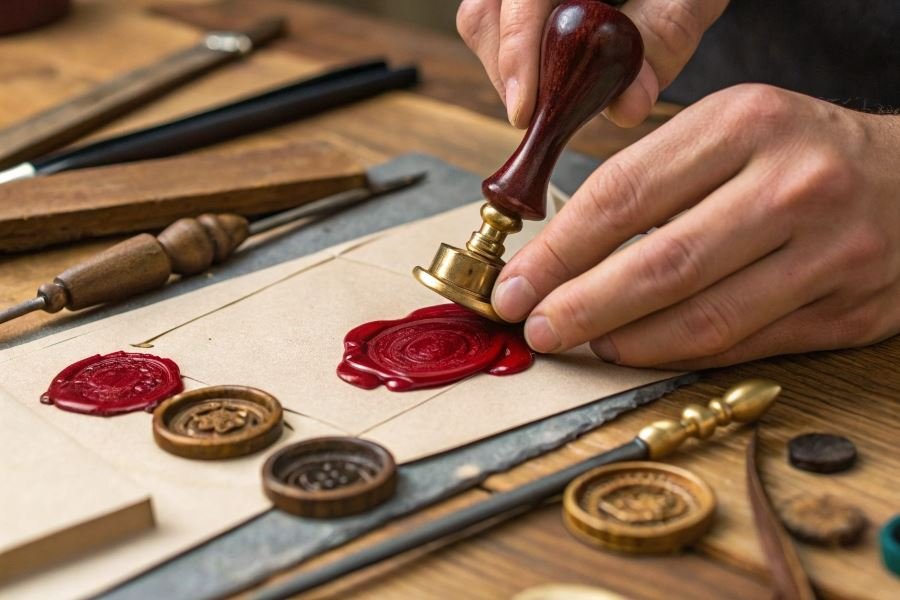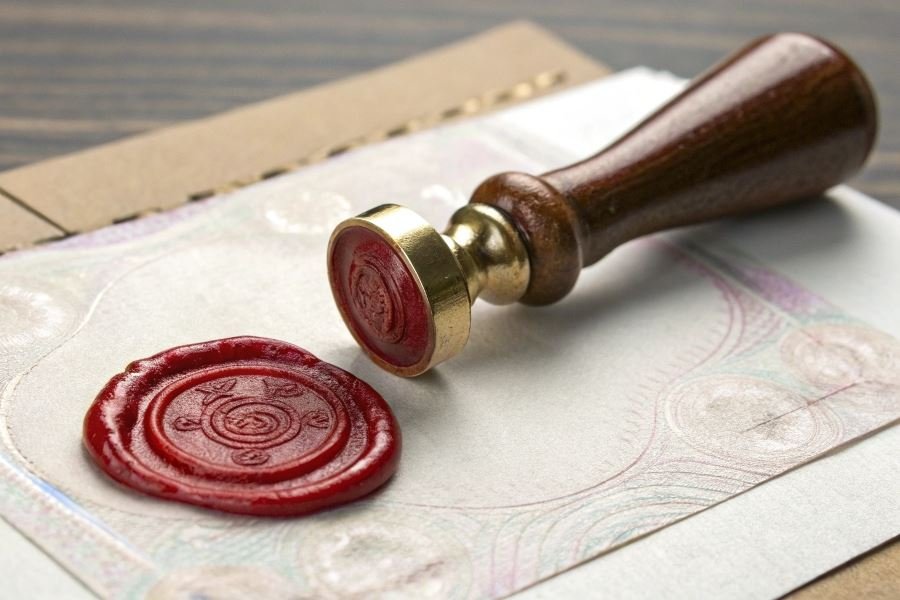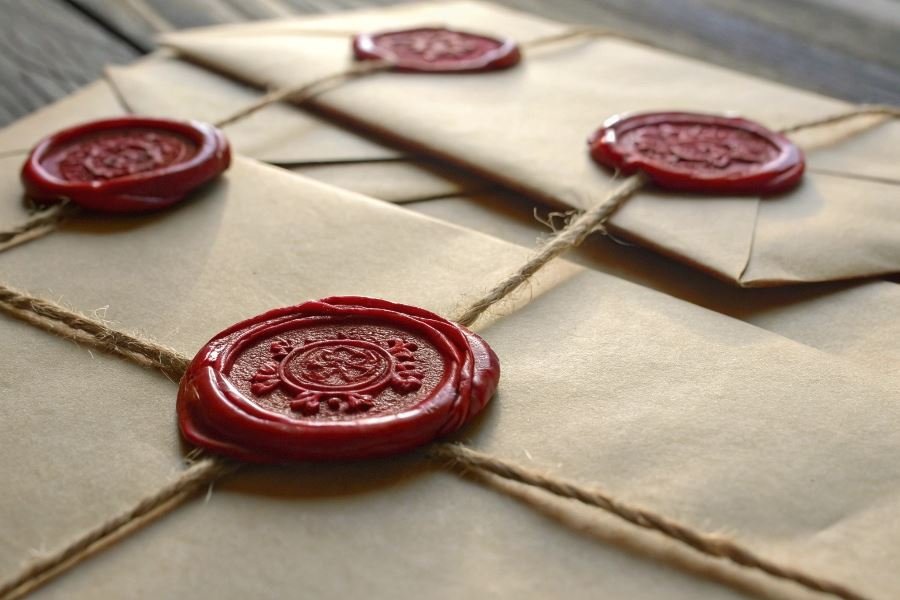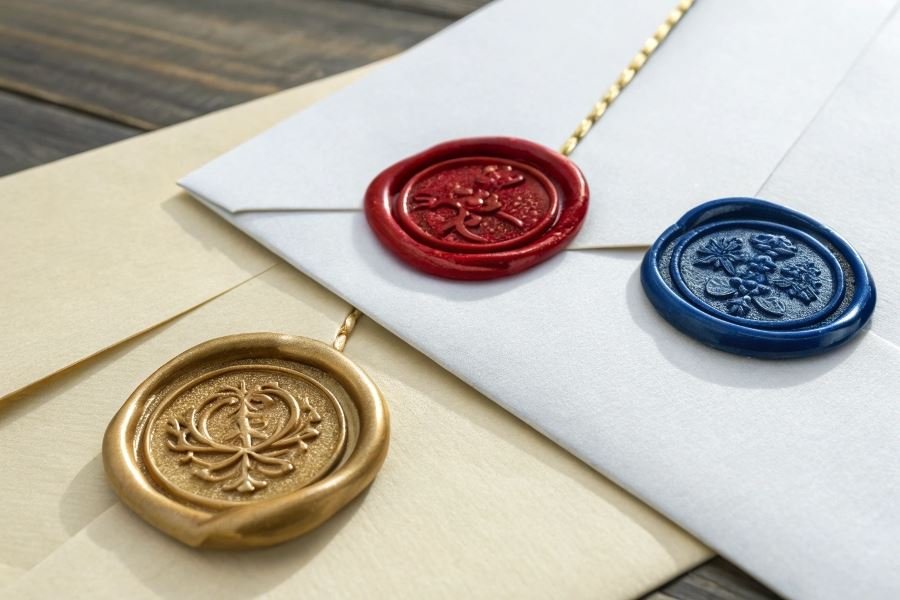
Ever wondered why some of the most secure banking documents still feature those distinctive crimson discs? In an age of digital signatures and blockchain verification, the humble wax seal—dating back to ancient civilizations—continues to play a surprisingly vital role in modern banking security.
When King Henry II formalized the use of wax seals for royal documents in 1154, he couldn’t have imagined their enduring legacy. Today’s premium banking institutions leverage this ancient technology not just for its practical security benefits, but for the psychological weight it carries. Nothing says “this document matters” quite like the tactile impression of a custom seal in rich, burgundy wax.
The evolution of banking security features tells a fascinating story of adaptation. While medieval bankers relied solely on wax seals to authenticate documents, modern institutions integrate them into sophisticated security systems. The Federal Reserve still uses custom wax seals for certain ultra-sensitive documents, combining them with microprinting, holographic elements, and specialized papers to create multi-layered security.
“The physical impression of a seal creates a security feature that’s simultaneously ancient and impossible to truly replicate digitally.” — Banking Security Quarterly
Banking’s most prestigious institutions typically employ three distinct types of wax seals, each serving specific documentation needs while projecting authority and authenticity. From the heavy brass matrix seals used for international wire transfers to the elegant silver-handled versions reserved for high-net-worth client services, these tools represent banking’s perfect marriage of tradition and security.
Premium Banking Wax Seals: Security Meets Tradition
In the high-stakes world of banking, where document security remains paramount despite digital transformation, premium wax seals continue to serve as both functional security tools and powerful symbols of institutional prestige. The finest banking-grade sealing systems combine centuries-old tradition with modern security innovations, creating an elegant defense against document tampering. When examining top 3 wax seals for the banking sector, three manufacturers consistently demonstrate exceptional quality, security features, and attention to detail that financial institutions demand.
J. Herbin Banking Grade Sealing Wax
The J. Herbin Banking Grade system represents the gold standard in tamper-evident document protection. Founded in 1670, this French manufacturer brings over 350 years of expertise to their banking-specific formulations.
Key security features include:
- Proprietary crystalline structure that fractures in a non-repairable pattern if tampered with
- UV-reactive particles embedded within the wax for authentication under special lighting
- Heat-resistant formulation (withstands temperatures up to 140°F without deformation)
- Archival-grade durability with documented 75+ year stability in proper storage conditions
The J. Herbin system uses a flexible wax that doesn’t shatter during normal handling but immediately shows evidence of tampering attempts. Their banking-specific formulation comes in subtle, professional colors including midnight blue, burgundy, and charcoal gray, each containing microscopic security markers.
Nostalgic Impressions Custom Banking Seal System
Where the Nostalgic Impressions system truly excels is in its comprehensive personalization capabilities combined with multi-layered security elements.
Each custom banking seal includes:
- Proprietary brass matrix with up to 0.001mm precision engraving
- Microtext capabilities (text as small as 0.5mm remains legible)
- Optional embedded holographic elements within the wax itself
- Custom handle designs featuring institutional branding
| Security Feature | Benefit |
|---|---|
| Microtext engraving | Virtually impossible to counterfeit without specialized equipment |
| Holographic elements | Visual verification without specialized tools |
| Custom color matching | Institutional brand consistency across all documents |
| Serialized impressions | Each seal can be uniquely identified and tracked |
The Nostalgic Impressions system allows banks to create institution-specific security protocols through customized impression designs that can include branch codes, authorized user identifiers, and date elements.
Atelier Gargoyle Premium Banking Wax Kit
The Atelier Gargoyle system represents the cutting edge of wax seal technology, featuring advanced material composition specifically engineered for fraud resistance.
Material innovations include:
- Nano-particle reinforced structure (30% stronger than traditional banking waxes)
- Thermochromic elements that change color when exposed to heat tampering attempts
- RFID-enabled wax formulation for digital authentication of physical documents
- Self-documenting impression technology that records creation time within the wax structure
The Atelier Gargoyle system integrates seamlessly with digital security protocols through their proprietary Seal Verification System, allowing banks to maintain physical security traditions while building bridges to their digital infrastructure.
What truly distinguishes the Atelier Gargoyle offering is their advanced material science approach. Their wax formulation includes microscopic capsules that rupture upon tampering attempts, releasing visible indicators that permanently mark the document with evidence of the security breach.
For institutions balancing tradition with cutting-edge security requirements, these three premium sealing systems offer unparalleled protection while maintaining the gravitas and ceremony that important banking documents deserve.
Banking’s Ancient Guardian: Wax Seals in Modern Security
Where digital meets traditional security
The banking sector stands at a fascinating crossroads where centuries-old security practices meet cutting-edge technology. Wax seals—those elegant emblems of authenticity dating back to medieval times—haven’t disappeared; they’ve evolved. Today’s financial institutions are discovering innovative ways to integrate these traditional security elements with modern digital protocols.
Leading banks now employ hybrid authentication systems where physical wax seals contain embedded NFC chips or QR codes. When scanned, these direct to blockchain verification platforms that confirm document authenticity. This dual-layer approach creates security redundancy that’s remarkably difficult to compromise—if the digital component is hacked, the physical seal remains as verification, and vice versa.
The Citibank Innovation Lab recently demonstrated a system where executive documents bear custom wax seals containing microscopic identifiers that, when photographed with their proprietary app, trigger multi-factor authentication processes for accessing sensitive financial instruments.
The surprising economics of traditional security
Contrary to what many assume, implementing traditional wax seals in modern banking operations can be remarkably cost-effective. The initial investment in custom seal matrices and high-quality sealing wax is offset by significant long-term benefits.
A comprehensive analysis reveals the hidden value proposition:
| Cost Factor | Digital-Only Security | Wax Seal + Digital |
|---|---|---|
| Initial Implementation | $75,000-150,000 | $85,000-165,000 |
| Annual Maintenance | $45,000-60,000 | $30,000-45,000 |
| Fraud Prevention Value | Medium-High | Very High |
| Customer Trust Factor | Standard | Premium |
| Litigation Protection | Good | Excellent |
The Bank of America Private Banking division reported a 27% increase in client retention after introducing personalized wax seals on high-value transaction documents. The tactile experience creates a psychological security assurance that digital-only solutions simply cannot match.
Tomorrow’s impression in banking security
The trajectory for wax seal usage in financial documentation points toward increased integration rather than obsolescence. As deepfakes and sophisticated digital forgeries become more prevalent, physical authentication markers gain renewed importance.
Several emerging trends are worth noting:
- Biometric wax compounds containing DNA markers unique to authorized signatories
- Thermochromic seals that change appearance when exposed to unauthorized handling
- Custom wax blends with proprietary spectroscopic signatures
The JP Morgan Advanced Security Division has invested over $12 million in developing next-generation physical authentication technologies, with wax seals playing a central role in their strategy for ultra-high-net-worth client document security.
“The most sophisticated security systems don’t replace traditional methods—they enhance them. A well-designed wax seal provides both psychological and practical security benefits that purely digital solutions cannot replicate.”
Financial institutions increasingly recognize that the theater of security—the visible, tangible elements that clients can see and touch—plays a crucial role in maintaining trust. The wax seal, with its rich historical associations and inherent difficulty to replicate perfectly, serves this purpose exceptionally well while providing genuine security benefits when properly implemented within a comprehensive security framework.
Discover the top 3 premium wax seals revolutionizing banking security in 2025. Explore how J. Herbin, Nostalgic Impressions, and Atelier Gargoyle combine traditional authentication with modern tamper-evident technology for financial document protection.
Discover the top 3 premium wax seals revolutionizing banking security in 2025. Explore how J. Herbin, Nostalgic Impressions, and Atelier Gargoyle combine traditional authentication with modern tamper-evident technology for financial document protection.