Ever watched a symphony orchestra perform? The conductor doesn’t play an instrument but controls everything—timing, volume, entry points. In industrial automation, input-output boards play that conductor role, translating the physical world into digital language and back again.
At their core, I/O boards serve as the critical interface between the physical manufacturing environment and the digital control systems. They collect signals from sensors (temperature readings, pressure levels, position data) and send commands to actuators (motors, valves, switches). Without these boards, your sophisticated control algorithms would be like brilliant thoughts with no way to speak or hear.
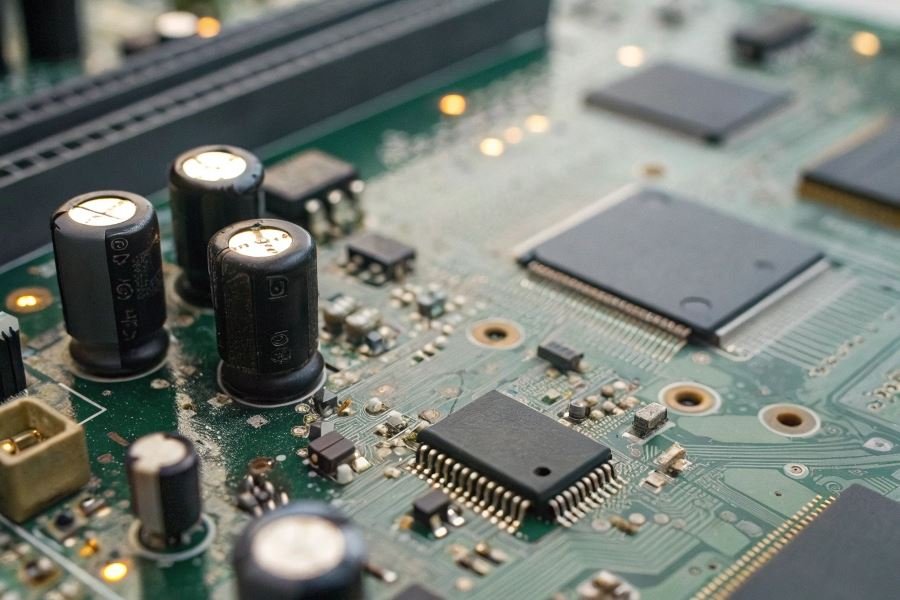
Modern I/O boards have evolved dramatically, featuring multi-channel capabilities, high-speed processors, and robust communication protocols. The essential components typically include:
- Signal conditioning circuits that clean and normalize incoming signals
- Analog-to-digital converters transforming real-world measurements into digital data
- Digital-to-analog converters for output control
- Communication interfaces (Ethernet, Modbus, Profibus) connecting to control systems
Selecting the right I/O board isn’t merely a technical checkbox—it’s a strategic decision that ripples throughout your entire operation. A board with insufficient sampling rates might miss critical process variations. Inadequate isolation protection could leave your system vulnerable to electrical noise. The wrong communication protocol might create bottlenecks in your data flow.
The difference between optimal and adequate I/O selection can mean thousands of dollars in productivity gains or losses. When manufacturing precision, uptime reliability, and system longevity are on the line, your I/O board selection becomes the foundation everything else builds upon.
Decision Factors That Make or Break Your I/O Board Selection
Selecting the right input-output board for your industrial automation system isn’t just a technical decision—it’s a strategic investment that affects productivity, reliability, and your bottom line for years to come. The marketplace offers countless options, each with unique capabilities designed for specific applications. Understanding how to choose an input-output board for industrial automation requires careful consideration of several critical factors that will determine whether your system performs flawlessly or becomes a source of ongoing headaches.
Technical Specifications That Drive Performance
The technical specifications of an I/O board serve as its performance fingerprint. These specifications determine not just what the board can do, but how well it can do it.
Signal types represent perhaps the most fundamental consideration. Modern industrial environments require boards that can handle:
- Analog inputs (4-20mA, 0-10V)
- Digital I/O (24V DC, 120V AC)
- Thermocouple inputs (J, K, T types)
- RTD temperature sensing
- Pulse/frequency counting
The channel count directly impacts the board’s capacity to manage multiple signals simultaneously. While a basic application might function with 8 channels, complex systems often require 32, 64, or more channels. Selecting a board with insufficient channels creates immediate limitations, while excessive channels represent wasted investment.
| Channel Count | Typical Application | Approximate Cost Range |
|---|---|---|
| 4-8 channels | Small machines, limited monitoring | $200-500 |
| 16-32 channels | Mid-size systems, production lines | $500-1,200 |
| 64+ channels | Complex factory automation, process control | $1,200-3,000+ |
Communication protocols determine how your I/O board talks to the rest of your system. Industry standards like Modbus, EtherCAT, PROFINET, and EtherNet/IP each offer different advantages in terms of speed, determinism, and compatibility.
Environmental Considerations for Reliable Operation
Industrial environments rarely resemble laboratory conditions. Your I/O board must withstand whatever your facility throws at it.
Temperature tolerance represents a non-negotiable specification. Standard commercial-grade boards typically operate between 0°C and 60°C, while industrial-grade components might handle -40°C to 85°C. Selecting a board with insufficient temperature range is a recipe for mysterious failures and unplanned downtime.
Humidity and vibration resistance often separate truly industrial-grade boards from pretenders. Look for conformal coating protection against moisture and robust mounting options that minimize vibration impact.
Protection ratings like IP65 or IP67 indicate dust and water resistance—critical factors in harsh environments. The higher the IP rating, the better protected your investment will be against environmental contaminants.
Integration Capabilities That Future-Proof Your Investment
Even the most technically impressive I/O board becomes worthless if it can’t communicate effectively with your existing infrastructure.
Software compatibility with your current SCADA or PLC systems should be verified before purchase. Leading manufacturers like Siemens, Allen-Bradley, and Schneider Electric offer extensive compatibility information.
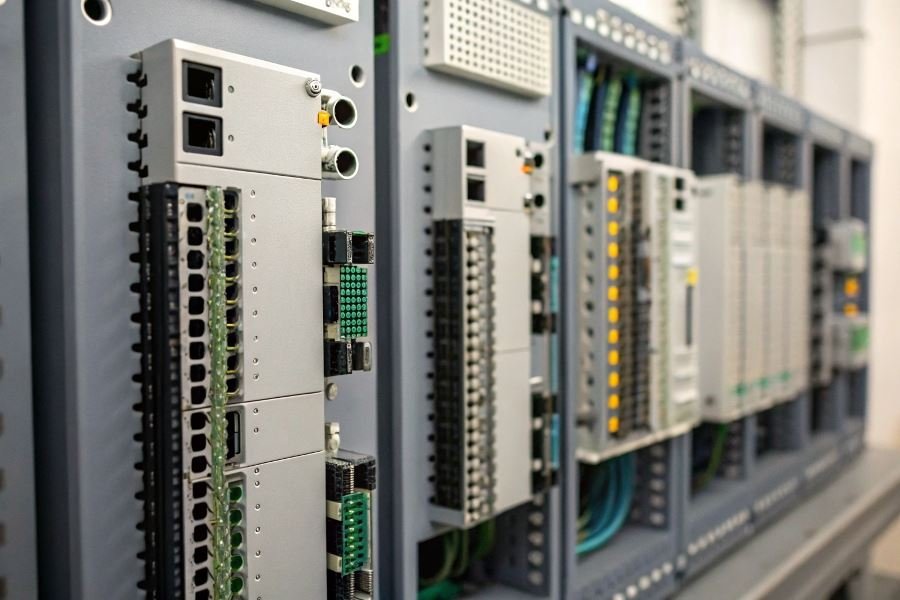
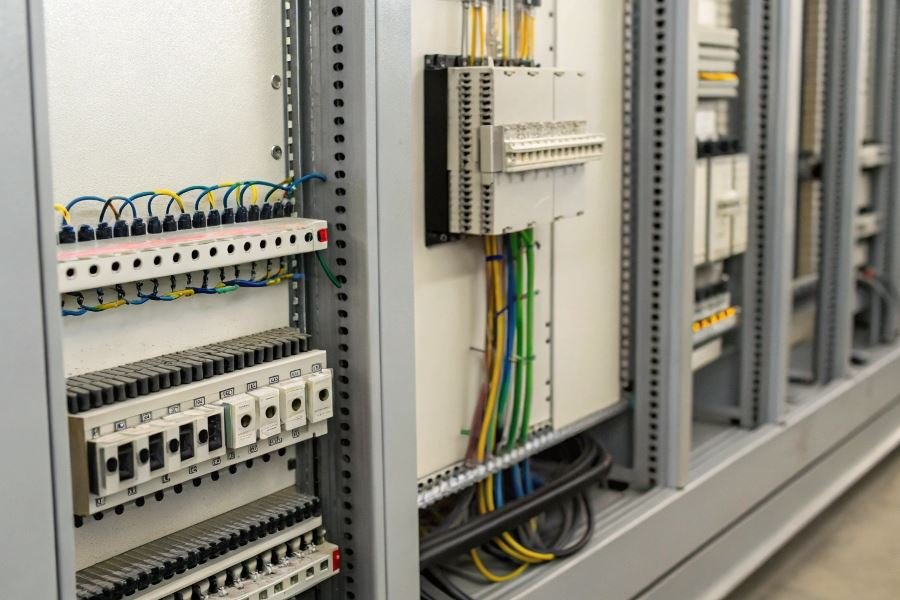
Form factor and mounting options might seem secondary until you’re struggling to fit a board into your control cabinet. DIN rail mounting, rack-based systems, and distributed I/O architectures each offer different advantages depending on your physical constraints.
Expansion capabilities determine whether your I/O solution can grow with your needs. The best systems offer modular designs that allow additional channels without requiring complete replacement of existing hardware.
Selecting the right I/O board requires balancing these technical, environmental, and integration factors against your budget and performance requirements. The ideal board isn’t necessarily the most expensive or feature-rich—it’s the one that precisely matches your specific automation challenges.
Beyond the Specs: Making Your Final I/O Board Decision
The true cost equation
When selecting an input-output board for industrial automation, the sticker price is merely the tip of the financial iceberg. Smart decision-makers look at Total Cost of Ownership (TCO) with eagle-eyed precision. A $2,000 board that requires minimal maintenance and offers 99.9% uptime delivers substantially more value than a $1,200 alternative that demands frequent troubleshooting and causes production delays.
Consider these often-overlooked TCO factors:
- Integration costs: Custom programming, physical installation, and system testing
- Training requirements: Operator and maintenance staff education
- Downtime costs: Both planned maintenance and unexpected failures
- Energy consumption: Some boards draw significantly more power over their lifetime
- Upgrade pathways: Will future expansions require complete replacement?
One manufacturing plant in Michigan discovered their “budget-friendly” I/O solution ultimately cost them $37,000 in additional expenses over just 18 months due to compatibility issues and reliability problems. The lesson? Short-term savings often become long-term expenses in industrial automation.
Support structures that actually support
The manufacturer relationship extends far beyond the purchase transaction. Exceptional documentation, responsive technical support, and a clear product roadmap can transform your automation experience from frustrating to frictionless.
| Support Element | What to Look For | Red Flags |
|---|---|---|
| Documentation | Comprehensive manuals, code examples, troubleshooting guides | Sparse documentation, machine-translated text |
| Technical Support | 24/7 availability, multiple contact channels, engineer-level assistance | Email-only support, long response times |
| Community | Active user forums, regular webinars, knowledge bases | Dead forums, unanswered questions |
| Longevity | Clear product roadmap, backward compatibility commitments | Frequent EOL announcements, abandoned product lines |
The Allen-Bradley ecosystem exemplifies robust support infrastructure, with detailed documentation and decades of product continuity. Similarly, Siemens offers extensive training resources and migration paths that preserve your investment as technology evolves.
Timeline and scalability: thinking beyond today
Industrial automation isn’t a static implementation—it’s a living system that must adapt to changing production demands. Your I/O board selection should accommodate both your current timeline and future growth.
Implementation timeline considerations:
- How quickly must the system be operational?
- Are phased implementations possible or necessary?
- What dependencies exist in your automation rollout?
Future-proofing questions worth asking:
- Will your production volume increase by 50% within three years?
- Might you need to integrate additional sensor types?
- Could regulatory changes require data collection modifications?
The most expensive automation solution is the one you outgrow too quickly.
Consider modular I/O systems like Beckhoff’s EtherCAT terminals or Wago’s I/O System that allow incremental expansion without wholesale replacement. These platforms let you start with precisely what you need today while maintaining clear expansion paths for tomorrow’s requirements.
The best I/O board decision balances immediate needs against long-term vision, weighing TCO against performance requirements, and evaluating manufacturer relationships beyond the sales pitch. By considering these factors methodically, you’ll select not just components, but trusted partners in your automation journey.
Discover how to select the optimal I/O board for industrial automation systems with our comprehensive guide. Learn key technical specifications, environmental factors, and integration capabilities to maximize performance and reliability in your operations.
Discover how to select the optimal I/O board for industrial automation systems with our comprehensive guide. Learn key technical specifications, environmental factors, and integration capabilities to maximize performance and reliability in your operations.