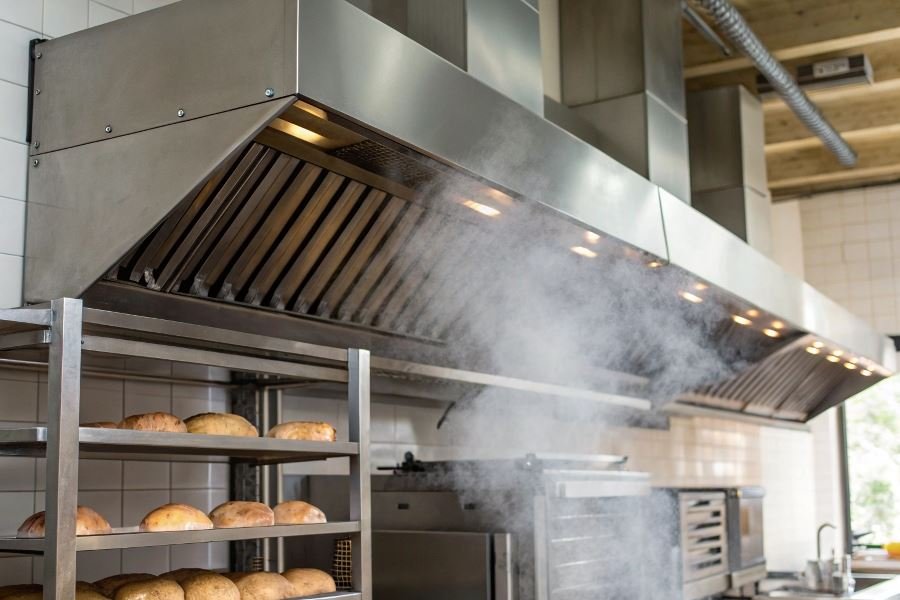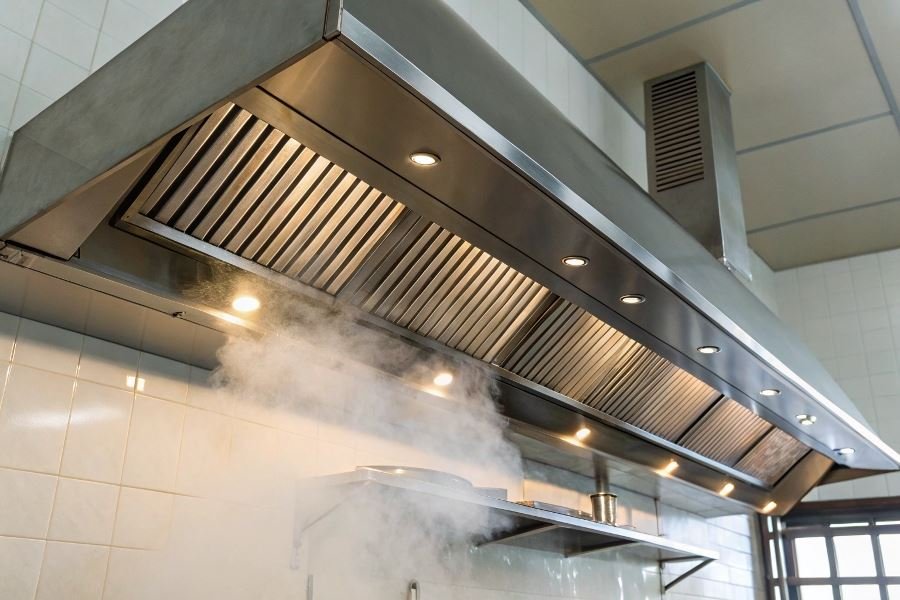
Ever walked into a restaurant kitchen and noticed how surprisingly clean the air feels despite the sizzling grills and flaming woks? That’s not magic—it’s meticulously engineered filtration technology at work.
Behind every successful commercial kitchen operates an unsung hero: the exhaust hood filtration system. These sophisticated networks of filters and extractors don’t just prevent your dining room from smelling like last night’s fish special—they’re critical safeguards protecting your equipment, staff health, and even your insurance premiums. The difference between basic and advanced filtration can mean thousands of dollars in cleaning costs, fire prevention, and regulatory compliance.
The foundation of kitchen air quality
Commercial kitchen ventilation systems face a formidable enemy: grease-laden vapor. This sticky, potentially flammable substance can accumulate at rates of up to 8 pounds per week in high-volume operations. Without proper filtration, this buildup creates perfect conditions for devastating kitchen fires, which cause approximately $165 million in direct property damage annually according to the National Fire Protection Association.
Today’s filtration landscape
Modern exhaust hoods employ several distinct technologies:
| Filter Type | Grease Extraction Efficiency | Maintenance Requirements |
|---|---|---|
| Baffle Filters | 25-40% | Weekly cleaning |
| Centrifugal Filters | 65-85% | Monthly cleaning |
| Water-wash Systems | 85-95% | Self-cleaning with monitoring |
| UV Technology | 90-99% | Quarterly lamp replacement |
Measuring what matters
When evaluating filtration effectiveness, three metrics stand above all others:
- Particle capture efficiency – The percentage of airborne contaminants successfully removed
- Pressure drop – How much resistance the filter creates (affecting energy consumption)
- Total cost of ownership – Initial investment plus ongoing maintenance and energy costs
The most advanced systems now incorporate smart monitoring capabilities, allowing kitchen managers to track performance in real-time and schedule maintenance based on actual usage rather than arbitrary calendars.
The Filtration Battleground: What Really Works in Commercial Kitchens
When it comes to maintaining air quality in commercial kitchens, not all filtration systems are created equal. The difference between a mediocre and exceptional system can mean thousands in maintenance costs, potential fire hazards, and even regulatory compliance issues. Let’s dive into what separates the contenders from the pretenders.
Mechanical Filtration: The First Line of Defense
Mechanical filtration systems represent the workhorses of kitchen exhaust filtration, capturing grease particles through physical barriers. A comprehensive comparison of filtration systems in exhaust hoods reveals that mechanical options offer varying degrees of effectiveness depending on their design and application.
Baffle filters utilize a series of interlocking baffles that force air to change direction multiple times. When grease-laden air navigates these sharp turns, heavier particles can’t maintain their trajectory and collect on the baffles. These filters typically capture 65-85% of grease particles larger than 8 microns and offer excellent fire protection since they’re constructed from non-combustible materials like stainless steel.
Mesh filters, while more affordable upfront, present a different value proposition. Their woven metal design creates a maze-like path that traps grease particles, but they typically only capture 20-40% of airborne grease. Their higher maintenance requirements and increased fire risk make them less common in professional kitchens.
For high-volume operations, centrifugal separators deliver impressive performance:
| Feature | Efficiency | Maintenance Needs | Initial Cost |
|---|---|---|---|
| Centrifugal | 85-95% | Monthly | |
| Baffle | 65-85% | Weekly | $$ |
| Mesh | 20-40% | Daily | $ |
Centrifugal systems use spinning forces to separate grease particles from air, achieving efficiency rates up to 95% for particles larger than 8 microns. The Halton KSA cyclonic filter exemplifies this technology with its innovative spiral design.
Electrostatic Precipitation: The Invisible Barrier
Electrostatic precipitation filtration takes grease capture to microscopic levels. These systems use electrical charges to attract and collect particles as small as 0.01 microns—far smaller than mechanical systems can manage.
The process involves three key stages:
- Ionization – particles receive a positive charge
- Collection – charged particles are attracted to negatively charged plates
- Disposal – collected grease drains into containers
These systems boast impressive 95-98% efficiency rates for submicron particles, though they require more complex maintenance and higher initial investment. The Smoki ESP system has become particularly popular for its self-cleaning capabilities and reduced maintenance requirements.
The true value of electrostatic systems emerges in kitchens with high-temperature cooking methods or those preparing foods with substantial smoke production.
Advanced Carbon and UV Technologies: The Odor Eliminators
Beyond particle capture, modern kitchens increasingly deploy advanced carbon and UV filtration technologies to address odors and volatile organic compounds (VOCs).
Activated carbon filters work through adsorption—a process where gas molecules adhere to the carbon’s porous surface. These systems can reduce odors by 90-95% but require regular media replacement every 3-6 months depending on kitchen volume.
UV filtration represents the cutting edge in exhaust hood technology:
- UV-C light (185-254nm wavelength) breaks down grease molecules
- Photocatalytic oxidation converts VOCs into harmless compounds
- Ozone production helps neutralize persistent odors
The Captive-Aire UV System combines these technologies to reduce duct cleaning frequency by up to 80% while significantly improving exhaust air quality.
When selecting a filtration system, consider not just initial costs but long-term operational expenses, maintenance requirements, and the specific cooking operations in your kitchen. The most effective systems often combine multiple filtration technologies in sequence, creating a comprehensive approach to kitchen air quality management.
Maximizing Your Investment: Smart Filtration Choices for Commercial Kitchens
The real cost of clean air
Let’s talk dollars and sense. When comparing filtration technologies, the initial price tag tells only part of the story. Baffle filters represent the entry point at $50-150 per unit, while electrostatic precipitators command $800-2,500 for a complete system. At the premium end, UV systems with activated carbon can exceed $3,000 for comprehensive installation.
But here’s where it gets interesting: operating costs flip this equation entirely. Baffle filters consume minimal electricity but require frequent cleaning or replacement. Meanwhile, electrostatic systems draw 100-300 watts continuously but can operate for months between deep cleanings.
A restaurant processing 200 meals daily using baffle filters might spend $1,200 annually on replacements and labor. The same kitchen with an ESP system might spend just $400 on maintenance plus $250 in electricity—creating substantial savings over a 5-year period.
The most expensive filtration system is the one that doesn’t match your kitchen’s actual needs.
The ROI calculation must also factor in fire prevention. NFPA data shows commercial kitchen fires cause an average of $165 million in direct property damage annually. A properly matched filtration system dramatically reduces this risk, potentially saving thousands in insurance premiums.
Maintenance realities that impact performance
Filtration effectiveness doesn’t exist in a laboratory—it lives in the real world of busy kitchens and maintenance schedules.
Baffle filters require weekly cleaning in high-volume operations, while mesh filters need attention every 2-3 days. Contrast this with UV systems that might need lamp replacement annually but otherwise require minimal intervention.
Consider these maintenance requirements across systems:
| System Type | Cleaning Frequency | Professional Service | Annual Maintenance Cost |
|---|---|---|---|
| Baffle | Weekly | Rarely needed | $300-600 |
| Mesh | 2-3 days | Rarely needed | $400-800 |
| Electrostatic | Monthly | Bi-annually | $600-1,200 |
| UV/Carbon | Quarterly | Annually | $800-1,500 |
The hidden factor? Staff compliance. The most sophisticated system becomes worthless if maintenance protocols aren’t followed. Systems requiring less frequent but more specialized maintenance often maintain peak performance longer than those needing constant attention.
Matching systems to kitchen realities
The perfect filtration system doesn’t exist—but the perfect system for your kitchen does. Here’s how to find it:
For high-volume frying operations, multi-stage systems combining baffles with electrostatic precipitators provide optimal grease capture while managing maintenance requirements. The Captiveaire Core Protection systems excel in these environments.
Char-broiling and solid fuel cooking produces both grease and particulate matter, making HEPA filtration with activated carbon essential. These kitchens benefit from Smoki’s integrated systems that address both concerns.
Limited-menu operations with predictable cooking loads can often achieve excellent results with well-designed baffle systems plus regular maintenance—saving significantly on upfront costs.
The decision matrix should weigh:
- Volume of meals served
- Types of cooking (frying, grilling, baking)
- Available maintenance resources
- Local air quality regulations
- Building HVAC integration requirements
Smart operators look beyond compliance to consider how filtration affects overall kitchen air quality, staff comfort, and even customer experience. The right system doesn’t just prevent fires—it creates a better working environment that can reduce staff turnover and improve operational efficiency.
The most successful installations combine appropriate technology with clear maintenance protocols and staff training, ensuring your investment continues performing at peak efficiency throughout its service life.
Discover which commercial kitchen hood filtration systems deliver superior performance. Compare baffle, mesh, electrostatic, and UV technologies based on efficiency, maintenance needs, and cost-effectiveness for your specific kitchen operation.
Discover which commercial kitchen hood filtration systems deliver superior performance. Compare baffle, mesh, electrostatic, and UV technologies based on efficiency, maintenance needs, and cost-effectiveness for your specific kitchen operation.