Ever watched a Michelin-starred chef move through their kitchen with balletic precision? That seamless dance isn’t just talent—it’s intelligent design at work.
Behind every efficient professional kitchen lies a carefully orchestrated storage system that transforms chaos into culinary magic. The right cabinets don’t just store dishes and equipment—they become the invisible foundation that elevates a good kitchen to greatness. When selecting professional kitchen cabinets, you’re not just buying storage; you’re investing in workflow efficiency, food safety compliance, and operational longevity.
The cornerstone of kitchen efficiency
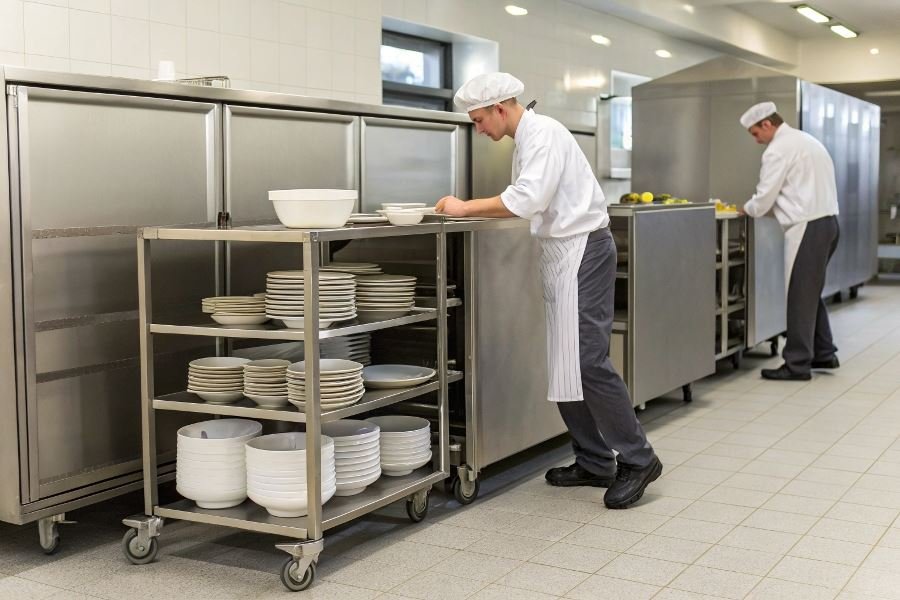
Professional kitchens operate on razor-thin margins where seconds matter. Properly designed storage solutions can reduce movement by up to 30%, dramatically increasing productivity during service hours. The relationship between cabinet placement and workflow is symbiotic—each reinforces the other when thoughtfully aligned.
“The difference between a struggling kitchen and a profitable one often comes down to how efficiently staff can access what they need, when they need it.” – James Beard Award-winning restaurant consultant
Before you purchase: Critical considerations
When evaluating cabinet options, prioritize these essential factors:
- Material durability – Stainless steel offers superior sanitation and longevity
- Accessibility features – Consider pull-out shelves and organizational systems
- Spatial efficiency – Maximize vertical storage in tight spaces
- Compliance standards – Ensure materials meet health department requirements
- Workflow integration – Map cabinet locations to specific kitchen stations
Remember that the most beautiful cabinets fail if they create bottlenecks during service. Your storage solutions should disappear into the background, silently supporting the culinary performance center stage.
Essential Factors for Professional Kitchen Storage Solutions
When setting up a commercial kitchen, the storage systems you select can make or break your operation’s efficiency. The cabinets that house your dishes and equipment aren’t merely storage units—they’re critical workflow components that impact everything from food safety to staff productivity.
Selecting appropriate cabinets for dishes and equipment for a professional kitchen requires balancing durability, functionality, and compliance with industry standards. Unlike residential kitchens, commercial environments demand storage solutions that can withstand constant use, frequent cleaning, and the rigors of a fast-paced culinary operation. The right cabinet system creates a foundation for operational excellence, while poor choices can lead to costly replacements and potential health code violations.
Commercial-Grade Materials That Last
Professional kitchen cabinets must be constructed from materials that can handle the unique challenges of food service environments:
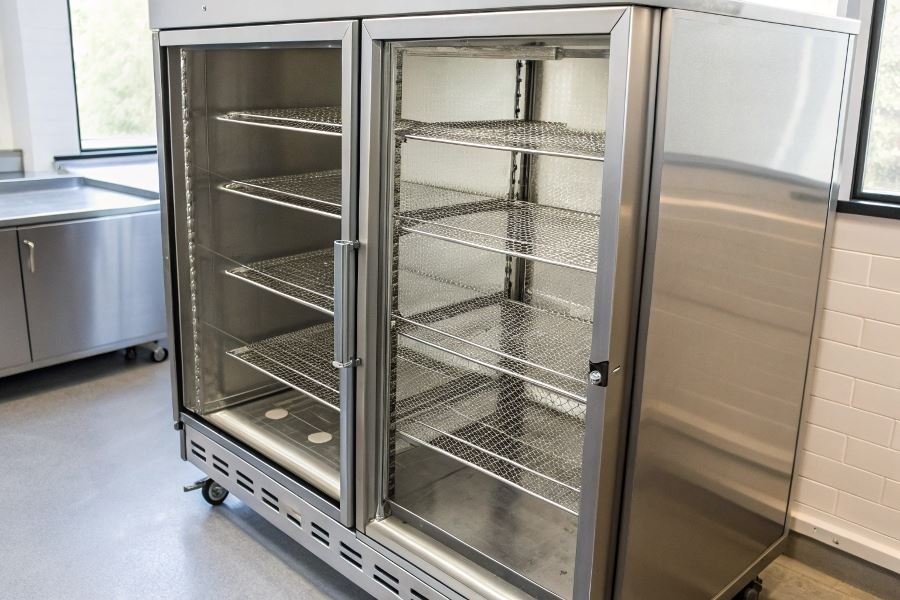
Stainless steel remains the gold standard for professional kitchens, offering unparalleled benefits:
- Corrosion resistance against moisture and cleaning chemicals
- Non-porous surface that prevents bacterial growth
- Ability to withstand temperature fluctuations
- Easy sanitization for health code compliance
High-density polyethylene (HDPE) provides a cost-effective alternative with excellent moisture resistance and durability, though it lacks the premium appearance of metal options.
For budget-conscious operations, commercial-grade laminate cabinets with moisture-resistant particleboard cores offer reasonable durability at lower price points, though they typically have shorter lifespans than metal alternatives.
The material you select should align with your specific usage patterns—areas with high moisture exposure demand waterproof solutions, while dry storage can utilize more economical options.
Sizing and Configuration for Operational Flow
The dimensions and arrangement of your storage solutions directly impact kitchen efficiency:
| Cabinet Type | Ideal Depth | Common Heights | Best For |
|---|---|---|---|
| Wall-mounted | 12-16″ | 30-42″ | Glassware, plates, frequently used items |
| Base cabinets | 24-36″ | 34-36″ | Heavy equipment, bulk storage |
| Tall cabinets | 24″ | 84-96″ | Brooms, mops, rarely used equipment |
When determining cabinet configurations, consider:
Traffic flow analysis – Ensure cabinets don’t create bottlenecks during peak service periods
Workflow optimization – Position storage near the stations where items will be used
Adjustable components – Shelving that can be reconfigured as your menu and equipment needs evolve
Health and Safety Compliance Requirements
Commercial kitchen storage must meet stringent regulatory standards:
NSF International certification ensures cabinets meet food safety standards and are constructed from materials safe for food environments. Look for the NSF mark on commercial cabinets.
Cleanability features are non-negotiable:
- Rounded corners that prevent food particle accumulation
- Seamless construction that eliminates hiding places for bacteria
- Removable shelving for thorough sanitization
ADA compliance may be required depending on your facility, with specific height and accessibility requirements for staff with disabilities.
Health inspectors scrutinize storage solutions for proper elevation—all food storage must maintain a minimum 6-inch clearance from the floor to prevent contamination and facilitate cleaning underneath.
By prioritizing material quality, thoughtful configuration, and regulatory compliance, your kitchen storage system will support rather than hinder your culinary operation’s success.
The Kitchen Cabinet Revolution: Engineering Efficiency Behind the Scenes
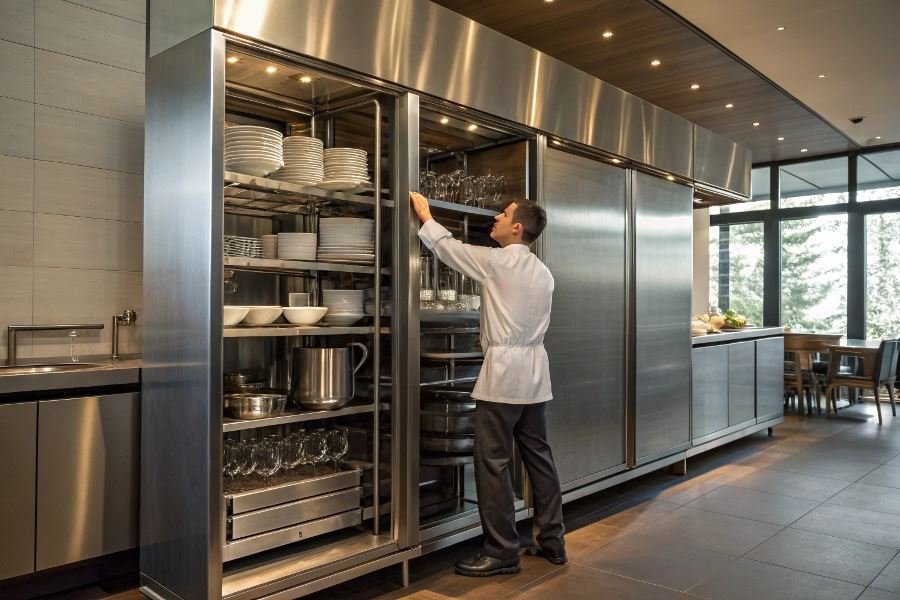
Professional kitchens thrive on precision and flow. At the heart of this orchestrated chaos stands an unsung hero: the professional cabinet system. These aren’t just storage boxes—they’re workflow accelerators, staff-fatigue reducers, and operational game-changers.
Specialized Storage That Speaks Your Kitchen’s Language
Professional kitchen cabinets have evolved far beyond simple shelving. Today’s specialized storage solutions transform disorganized clutter into operational poetry:
- Vertical dividers transform chaotic stacks of sheet pans and cutting boards into accessible, damage-free inventory
- Adjustable rod systems allow for customized hanging of ladles, whisks, and specialized tools within arm’s reach
- Graduated drawer systems with antimicrobial liners protect everything from delicate pastry tips to heavy meat cleavers
The difference between consumer and professional cabinetry isn’t just durability—it’s purpose-built intelligence.
One standout example comes from True Manufacturing with their modular drawer systems that can be reconfigured as menu needs change. Their insulated compartments maintain temperature zones for specialized equipment storage, extending the life of temperature-sensitive tools.
| Storage Feature | Operational Benefit | ROI Impact |
|---|---|---|
| Vertical dividers | 40% reduction in retrieval time | Lower labor costs |
| Custom inserts | 65% decrease in breakage | Reduced replacement expenses |
| Modular systems | Adapts to changing needs | Future-proofs investment |
Accessibility That Transforms Movement Into Momentum
The best professional cabinets don’t just store—they serve. Thoughtful accessibility features create dramatic improvements in workflow efficiency:
Full-extension drawers eliminate the frustrating “dig and search” ritual that wastes precious minutes during service. Blum drawer systems with soft-close mechanisms prevent slamming while supporting loads up to 150 pounds.
Ergonomic handle placement reduces repetitive strain injuries—a critical consideration when a single service might require accessing cabinets hundreds of times. Studies show properly designed handles can reduce wrist strain by up to 30%.
Strategic height placement of frequently accessed items between waist and shoulder level minimizes bending and reaching, reducing staff fatigue during long shifts.
The most efficient kitchens aren’t just about cooking techniques—they’re about eliminating unnecessary movement.
Maintenance Mathematics: Calculating True Value
Professional cabinet value extends far beyond the initial price tag. Smart buyers evaluate:
Material longevity through commercial-grade stainless steel that resists corrosion from cleaning chemicals and food acids. Elkay stainless cabinets feature seamless construction that eliminates bacterial growth points while withstanding decades of heavy use.
Serviceability factors like replaceable parts and modular construction. When a hinge fails, can it be replaced without scrapping the entire cabinet? The best systems offer component-level repair options.
Adaptability quotient—how easily can the system evolve as your kitchen needs change? Cambro storage systems feature interchangeable components that grow with your operation.
The true cost calculation must factor in not just purchase price, but operational efficiency gains, replacement frequency, and staff productivity improvements. A cabinet system that reduces motion waste by even 10% can pay for its premium in labor savings within months.
Professional kitchen cabinets aren’t just furniture—they’re operational infrastructure that directly impacts your bottom line through improved efficiency, reduced breakage, and enhanced staff performance. The right system doesn’t just store your equipment—it amplifies your kitchen’s capabilities.
Discover expert tips for selecting professional kitchen cabinets that maximize storage, enhance workflow, and meet commercial standards. Learn how to choose durable, regulation-compliant cabinetry that organizes dishes and equipment efficiently in busy food service environments.
Discover expert tips for selecting professional kitchen cabinets that maximize storage, enhance workflow, and meet commercial standards. Learn how to choose durable, regulation-compliant cabinetry that organizes dishes and equipment efficiently in busy food service environments.