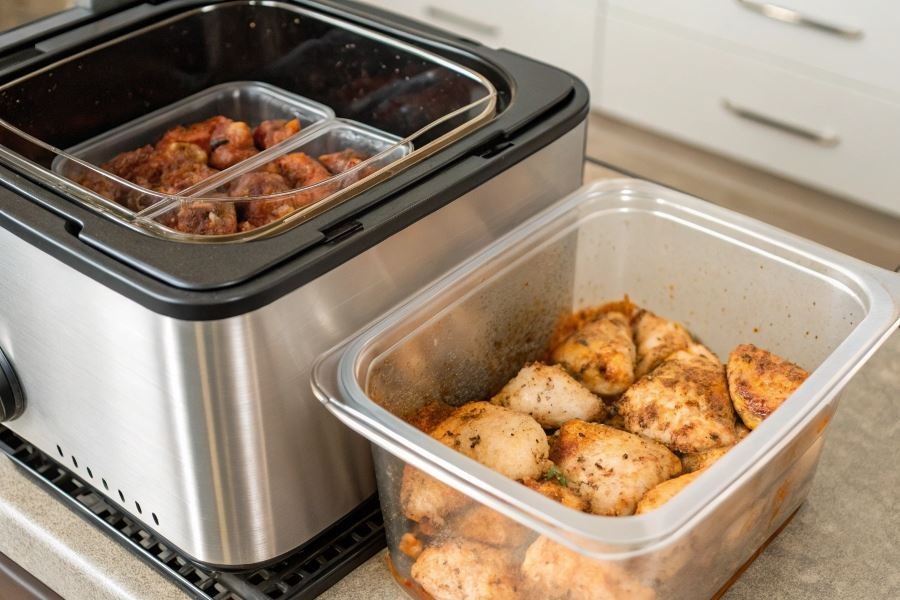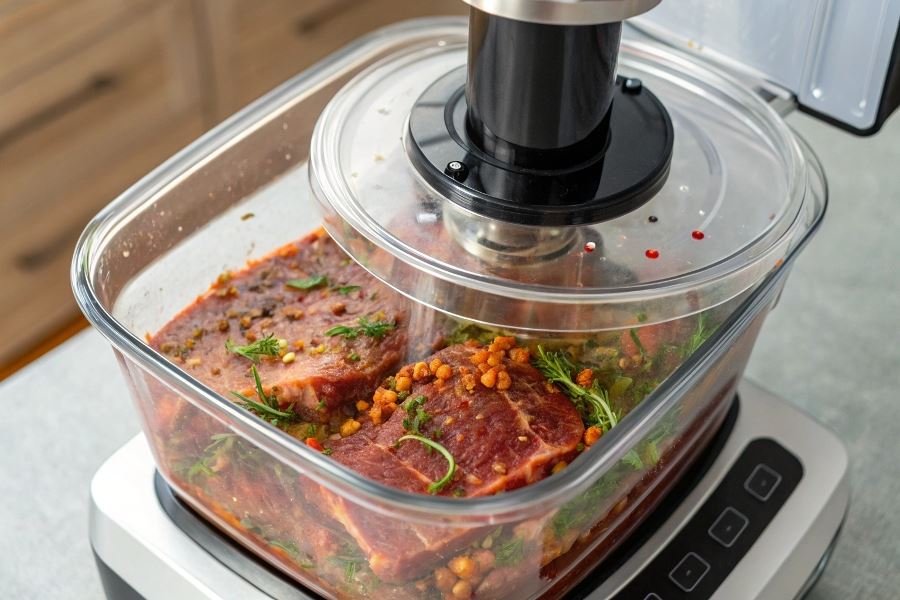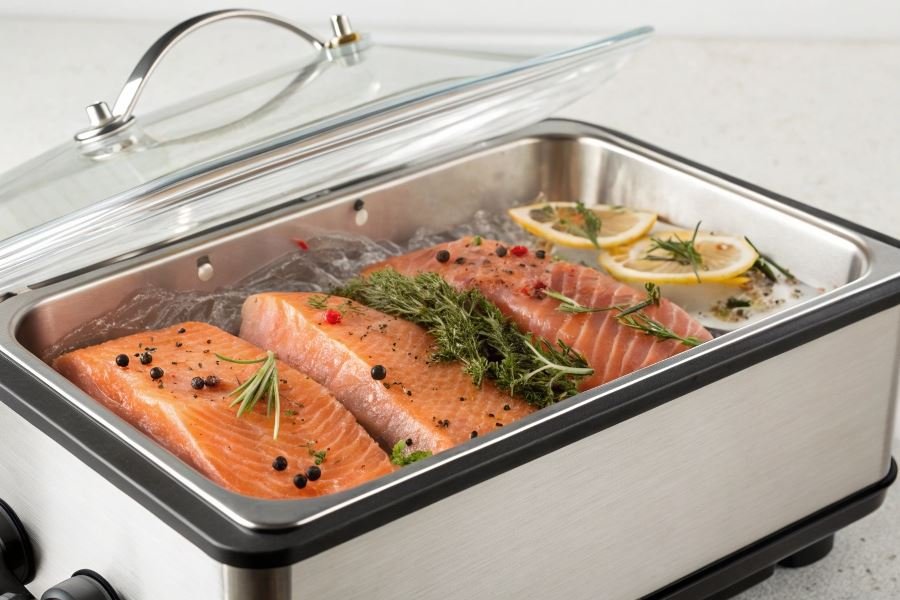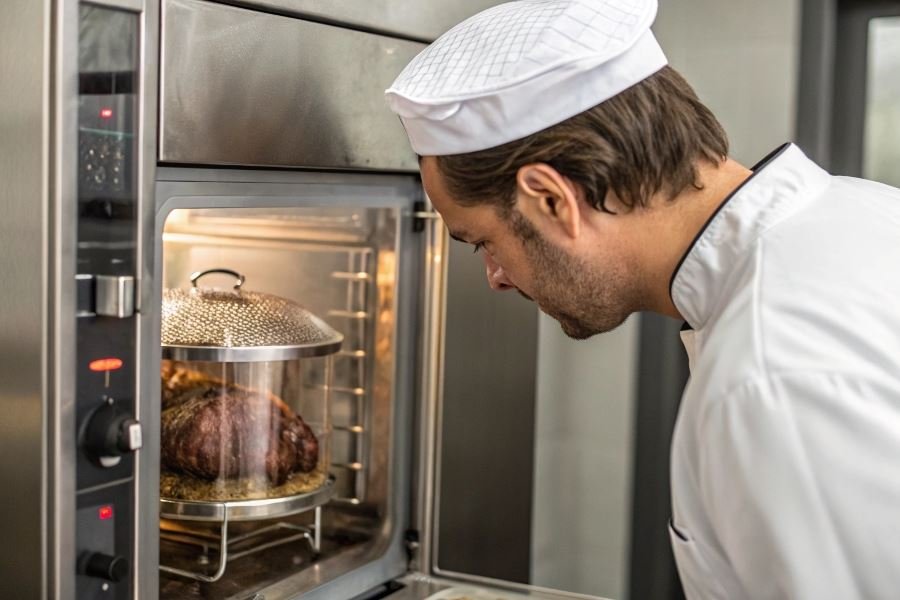
Ever watched a chef transform a tough cut of meat into a melt-in-your-mouth masterpiece? That’s not just skill—it’s science and technology working together. Behind many restaurant kitchens’ most celebrated dishes stands an unsung hero: the commercial marinator.
The right marinator doesn’t just enhance flavor—it fundamentally transforms your restaurant’s operational capabilities. When selecting this critical piece of equipment, restaurant owners are making decisions that ripple through every aspect of their business, from food quality to labor costs.
The flavor foundation
Marination isn’t merely about taste—it’s about texture, tenderness, and transformation. Professional chefs understand that proper marination techniques can elevate ordinary ingredients into signature dishes that keep customers coming back. A commercial-grade marinator ensures consistent results across hundreds of servings, something impossible to achieve with manual methods.
Efficiency that pays for itself
Consider this: A high-quality vacuum marinator can reduce marination time by up to 70% compared to traditional methods. This translates directly to faster table turnover and increased revenue potential. The right equipment choice here isn’t an expense—it’s an investment with measurable returns.
Decision factors that matter
When evaluating marinators, restaurant owners should consider:
- Capacity needs: Will it handle your peak volume requirements?
- Versatility: Can it accommodate different proteins and vegetables?
- Cleaning and maintenance: How much labor will it require between uses?
- Durability: Will it withstand the demands of a busy commercial kitchen?
The difference between an adequate marinator and the ideal one for your operation can mean thousands of dollars in productivity and product quality over its lifetime.
Technical Essentials for Restaurant Marinators
When evaluating marinators for your restaurant kitchen, the technical specifications can make or break your operation’s efficiency. The right equipment transforms ordinary ingredients into signature dishes while the wrong choice leads to inconsistent results and wasted resources.
Selecting appropriate marinators requires careful consideration of several critical factors. The criteria for choosing a marinator for a restaurant extend beyond basic functionality to include capacity requirements, construction quality, power specifications, and automation capabilities—all of which directly impact your kitchen’s productivity and your menu’s consistency.
Sizing Up Your Capacity Needs
Restaurant volume dictates marinator capacity requirements. A neighborhood bistro serving 50-75 covers nightly might function well with a 15-20 pound capacity unit, while high-volume operations need substantially more.
Consider your menu rotation when determining size requirements:
| Menu Type | Recommended Capacity | Batch Frequency |
|---|---|---|
| Limited menu (1-2 marinated items) | 15-25 lbs | 1-2 times daily |
| Medium variety (3-5 items) | 30-50 lbs | 2-3 times daily |
| Extensive offerings | 50+ lbs | Multiple batches |
Peak season demands should influence your decision—purchasing a marinator with 20-30% additional capacity beyond your typical needs provides flexibility during high-volume periods.
Material Matters: Construction Quality
Commercial marinators face punishing daily use, making construction materials a critical consideration.
Food-grade stainless steel (304 grade minimum) represents the industry standard for several reasons:
- Corrosion resistance against acidic marinades
- Non-reactive surface that won’t alter food flavors
- Durability through thousands of operational cycles
- Ease of sanitization to maintain food safety standards
The drum rotation mechanism deserves particular scrutiny—look for sealed bearings and reinforced drive components that won’t fail during peak service periods. Vollrath and Hobart have established reputations for using commercial-grade components that withstand years of heavy use.
Power Profiles and Energy Efficiency
Modern commercial marinators balance performance with operational costs through improved energy efficiency.
Most commercial units operate on standard 120V circuits, drawing 5-10 amps during operation. However, larger capacity models may require 208-240V connections. Before purchase, verify:
- Available electrical capacity in your kitchen
- Circuit load limitations
- Startup power requirements (often higher than running wattage)
Energy efficiency ratings have improved dramatically in recent models. Units with variable speed motors and programmable cycle times can reduce energy consumption by 15-30% compared to older continuous-run designs.
Smart Features and Automation
The latest generation of restaurant marinators offers programmable features that deliver consistency while freeing staff for other tasks.
The most valuable automation isn’t about replacing skill—it’s about ensuring your chef’s perfect marinade recipe is executed identically every single time.
Look for these advanced capabilities:
- Programmable cycle times with automatic shutoff
- Variable tumbling speeds for delicate versus robust ingredients
- Temperature monitoring for cold-marinating applications
- Recipe storage for quick recall of established programs
- Self-diagnostic systems that alert to potential mechanical issues
Alto-Shaam offers models with touchscreen interfaces that can store dozens of preset marination programs, while Biro Manufacturing provides units with precision timing controls accurate to the second.
The investment in automation pays dividends through consistent product quality and reduced labor costs—critical factors in maintaining profitability in today’s competitive restaurant landscape.
The Smart Money Behind Your Marinade Magic
Balancing investment against operational returns
The financial calculus of a restaurant marinator extends far beyond the initial price tag. High-capacity commercial marinators from brands like Vacuum Tumbler Pro might command 3, 000−8,000 upfront, but their ability to process 50+ pounds of protein simultaneously transforms your kitchen’s efficiency. Compare this with budget models (800−1,500) that process smaller batches but require more labor hours.
The real ROI emerges in daily operations. Premium marinators typically reduce marination time by 60-80%, allowing chefs to prepare proteins in 20 minutes versus traditional overnight methods. This acceleration directly impacts menu flexibility and inventory turnover.
Energy consumption creates another financial dimension. Modern vacuum marinators average 1.5-2.5 kWh during operation, while traditional rotary models might consume 30-40% more power. When calculating total cost of ownership, factor in these operational expenses against your production volume.
Kitchen real estate and workflow integration
Square footage in commercial kitchens commands premium value. Counter-mounted marinators require approximately 2-3 square feet of surface area, while floor models need 4-6 square feet of dedicated space. The Alto-Shaam Combitherm offers combination functionality that might justify its footprint by replacing multiple pieces of equipment.
Strategic placement within your kitchen workflow can dramatically impact efficiency. Positioning your marinator between prep stations and cooking areas minimizes unnecessary movement and cross-contamination risks.
Consider ceiling height clearance for vacuum lid models and ventilation requirements for units that generate heat. Some marinators require dedicated electrical circuits (typically 20-30 amp), potentially necessitating electrical upgrades if your kitchen infrastructure is dated.
Maintenance requirements and sanitation protocols
The hidden costs of equipment ownership often materialize in maintenance demands. Vacuum-seal marinators require gasket replacement every 6-12 months (50−150 per replacement), while mechanical tumbler models need bearing lubrication and belt inspections quarterly.
Cleaning procedures vary dramatically between models:
| Marinator Type | Daily Cleaning Time | Components Requiring Disassembly | Sanitizing Method |
|---|---|---|---|
| Vacuum Tumbler | 15-20 minutes | Drum, seals, vacuum components | Chemical sanitizer |
| Injection System | 25-35 minutes | Needles, tubes, pumps | Heat sanitizing required |
| Immersion System | 10-15 minutes | Baskets, agitator | Standard dishwashing |
The Hobart FT900 features tool-free disassembly that reduces cleaning time by approximately 40% compared to competitors requiring specialized tools for maintenance access.
Protection plans and technical lifelines
Warranty coverage represents your insurance against operational disruption. Standard industry warranties range from 1-3 years on parts with 90 days on labor. Premium manufacturers like Bizerba offer extended coverage options that protect critical components for up to 5 years.
Technical support accessibility directly impacts downtime costs. Evaluate manufacturers based on:
- Response time guarantees (industry average: 24-48 hours)
- Availability of certified technicians in your region
- Parts warehousing locations and shipping timeframes
- Remote diagnostic capabilities
Manufacturers offering preventative maintenance programs typically deliver 30% longer equipment lifespan and 45% fewer emergency service calls. These programs average 600−1,200 annually but often pay for themselves through reduced emergency service fees (250−400 per visit plus parts).
When selecting your marinator, remember that the purchase price represents merely the entry ticket to operational benefits or challenges that will impact your kitchen for years to come.
Discover the top 10 criteria professional chefs use when selecting restaurant marinators. Learn how capacity, materials, automation features, and cost considerations impact food quality and kitchen efficiency in commercial settings.
Discover the top 10 criteria professional chefs use when selecting restaurant marinators. Learn how capacity, materials, automation features, and cost considerations impact food quality and kitchen efficiency in commercial settings.