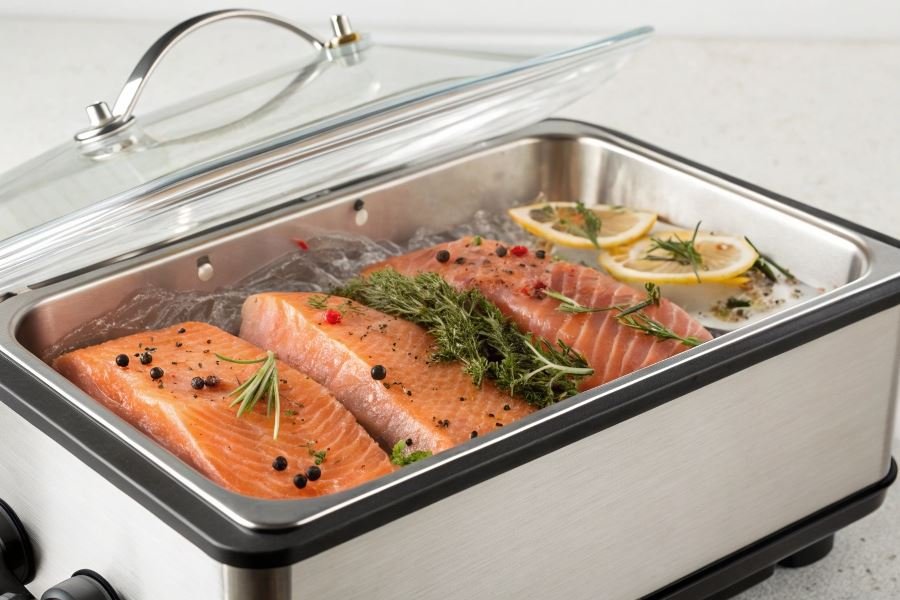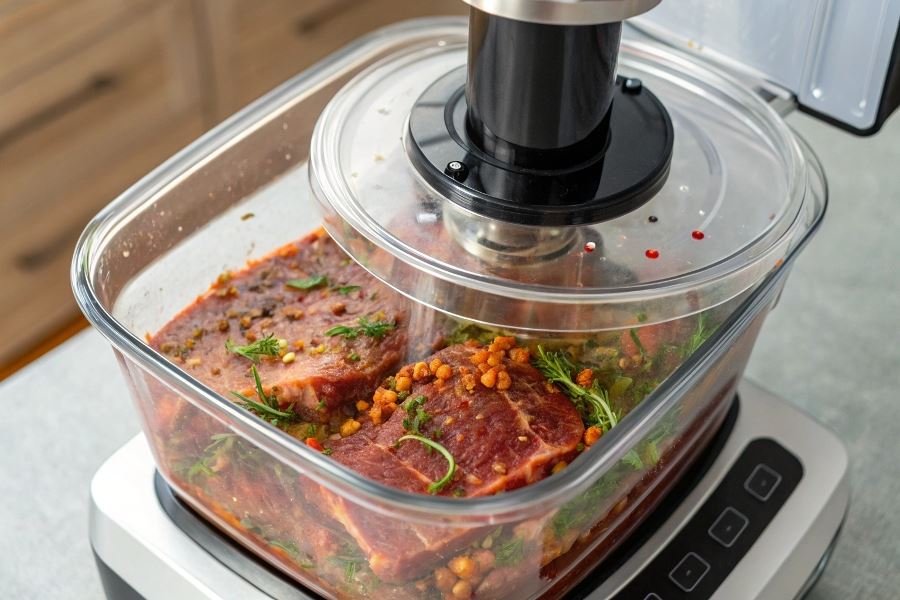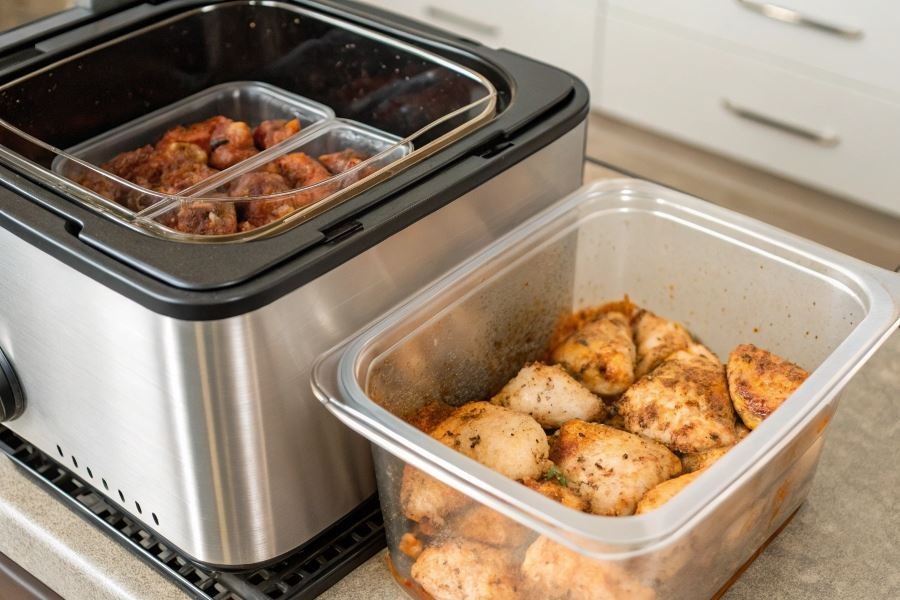
Ever wondered why restaurant meats taste so perfectly seasoned throughout? The secret often lies not just in the marinade recipe, but in the technology that applies it. Marination—that ancient culinary technique of soaking foods in flavored liquids—has undergone a technological revolution that few home cooks fully appreciate.
At its core, a marinator is a device designed to accelerate and enhance the absorption of flavors into food. While traditional marinating might take hours or even overnight, modern marinators can reduce this time to minutes while improving flavor penetration. The comparison between industrial and household marinators reveals a fascinating evolution in food preparation technology.
The journey from commercial kitchens to home countertops began in earnest during the 1970s, when vacuum tumbling systems first gained popularity in meat processing facilities. These industrial behemoths could process hundreds of pounds of protein at once, using mechanical action and pressure differentials to force marinades deep into muscle fibers. Meanwhile, home cooks were still using plastic bags and patience.
Today’s landscape shows remarkable divergence:
| Feature | Industrial Marinators | Household Marinators |
|---|---|---|
| Capacity | 50-500+ lbs | 1-5 lbs |
| Technology | Vacuum tumbling, needle injection | Vacuum sealing, ultrasonic |
| Price range | 5, 000−50,000+ | 30−300 |
| Time efficiency | 15-30 minutes for full penetration | 30-60 minutes for similar results |
The technology gap has narrowed significantly, with home units now incorporating features once exclusive to commercial settings. Both categories now leverage the science of cellular disruption—creating pathways for flavors to penetrate deeper than traditional soaking methods could ever achieve.
The Ultimate Marinator Showdown: Industrial vs Household Systems
When businesses scale up their marination operations, the gap between household and commercial equipment becomes a canyon rather than a crack. The comparison of industrial and household marinators reveals dramatic differences in capability, construction, and cost that directly impact production efficiency and product quality.
Capacity that matches your ambition
Industrial marinators dominate the volume game with capacities ranging from 50 to 5,000+ pounds per cycle. The Biro VTS-42 vacuum tumbler, for instance, processes 300 pounds in a single batch while maintaining consistent flavor penetration. Household units, by contrast, typically handle 2-15 pounds—perfect for family meals but woefully inadequate for commercial production.
Throughput capabilities tell an even more dramatic story:
| Marinator Type | Batch Capacity | Cycles Per Hour | Daily Throughput |
|---|---|---|---|
| Premium Household | 5-15 lbs | 2-3 | 40-135 lbs |
| Entry Industrial | 50-100 lbs | 4-6 | 800-2,400 lbs |
| Mid-Range Industrial | 200-500 lbs | 5-8 | 8,000-20,000 lbs |
| High-Volume Industrial | 1,000+ lbs | 6-10 | 48,000+ lbs |
Built to survive or built to serve
The construction materials in commercial marinators reflect their battlefield conditions. Food-grade 304 stainless steel dominates industrial models, with some premium units featuring 316 stainless for enhanced corrosion resistance against acidic marinades. The Henneken Marinator employs seamless welding and pharmaceutical-grade finishes that withstand aggressive cleaning chemicals and thousands of operational hours.
Household units typically use lighter stainless steel, plastic components, or even glass—materials that prioritize cost and aesthetics over decades of punishing use. While perfectly functional for occasional use, these materials simply cannot withstand daily commercial operation.
Smart technology or simple mechanics
The technology gap between industrial and household marinators has widened dramatically. Modern industrial systems from manufacturers like Maja feature:
- Programmable massage cycles with variable speed and direction
- Vacuum systems that remove air pockets for deeper penetration
- Temperature control systems for food safety compliance
- Data logging for HACCP documentation
- Remote monitoring and control capabilities
Household units remain largely mechanical, with basic timers and simple rotation patterns. While innovations like sous vide circulators have enhanced home marination, they lack the precision control and automation that commercial kitchens require.
Investment analysis beyond the price tag
The price differential is substantial but tells only part of the story:
- Entry-level household marinators: 50−300
- Professional-grade household units: 300−1,200
- Small industrial systems: 8, 000−25,000
- Mid-range industrial equipment: 25, 000−75,000
- High-volume industrial solutions: 75, 000−250,000+
Return on investment calculations favor industrial equipment for businesses processing more than 200 pounds daily. A $20,000 industrial marinator processing 1,000 pounds daily can pay for itself in under six months through labor savings, reduced marinade waste, and improved product consistency.
Finding space for efficiency
Space requirements present another critical distinction. Household marinators occupy minimal counter space—typically 1-2 square feet. Industrial units demand significantly more:
- Small industrial units: 15-25 square feet
- Mid-range systems: 30-50 square feet
- Large industrial installations: 100+ square feet plus clearance
Installation considerations extend beyond floor space to include:
- Electrical requirements (208-480V three-phase power)
- Water and drainage connections
- Ventilation systems
- Floor load capacity (larger units can weigh 2,000+ pounds)
- Doorway and hallway clearances for equipment delivery
For growing operations, the Vemag Vacuum Marinator offers modular designs that can expand with your business—starting with smaller footprints and scaling up without complete replacement.
Making the Right Choice: Industrial vs Household Marinators
Selecting the perfect marinator for your business isn’t just about buying equipment—it’s about investing in consistency, efficiency, and flavor that keeps customers coming back. As someone who’s spent countless hours watching marinators transform ordinary cuts into culinary masterpieces, I can tell you that choosing between industrial and household models might be the most important decision you’ll make for your meat processing operation.
Sizing Up Your Volume Requirements
Volume requirements vary dramatically across business scales:
Small operations (catering businesses, food trucks, small restaurants) typically process 5-20 pounds of meat daily. A household marinator like the Weston Pro-2300 with its 2-3 gallon capacity might be sufficient.
Mid-sized businesses (busy restaurants, small butcher shops) handling 20-100 pounds daily need more substantial equipment. The sweet spot often lies in compact industrial models like the ProMarinator 50 with 15-gallon capacity.
Large-scale operations (meat processing facilities, large catering companies) processing hundreds of pounds daily require true industrial solutions. The Vortron VT-200 with its 50+ gallon capacity becomes essential.
Purchasing undersized equipment is the costliest mistake I see businesses make—you’ll either overwork the machine or create production bottlenecks.
Quality and Consistency Considerations
| Feature | Household Marinators | Industrial Marinators |
|---|---|---|
| Vacuum Pressure | 22-25 inHg | 27-29+ inHg |
| Rotation Speed | Fixed or 2-3 settings | Variable (5-30 RPM) |
| Temperature Control | Rare | Precise (±1°F) |
| Cycle Programming | Basic timers | Multiple programmable cycles |
The difference between household and industrial marinators isn’t just size—it’s precision. Industrial models offer vacuum pressure regulation that opens meat fibers more effectively, allowing deeper penetration of marinades. They also provide programmable tumbling cycles that can be customized for different cuts and recipes.
For businesses where consistency is non-negotiable, industrial marinators deliver the same result whether you’re processing chicken breasts on Monday or beef tips on Friday.
Maintenance Reality Check
Maintenance requirements represent the hidden cost many operators overlook:
Household marinators typically feature:
- Removable drums (often dishwasher safe)
- Fewer moving parts
- Limited serviceable components
- 1-2 year warranties
Industrial marinators require:
- Daily cleaning protocols
- Weekly maintenance checks
- Quarterly professional servicing
- Replacement parts inventory
- 3-5+ year warranties
The true cost of ownership extends far beyond the purchase price. Factor in cleaning time, replacement parts, and potential downtime when calculating your ROI.
Industrial models are built with food safety compliance in mind, featuring food-grade stainless steel construction and tool-free disassembly for thorough cleaning. Many newer models include clean-in-place systems that significantly reduce daily maintenance time.
Top Recommended Models Worth Your Investment
Household Category Champions:
- Weston Pro-2300 – Best for small restaurants with its 3-gallon capacity and 25 inHg vacuum
- VacMaster VP215 – Ideal for specialty items with its oil pump and consistent performance
- LEM Products 1088B – Perfect entry-level option with excellent reliability and value
Industrial Category Leaders:
- Vortron VT-100 – The gold standard for mid-sized operations with 25-gallon capacity
- ProMarinator Elite Series – Exceptional temperature control and programmable cycles
- Biro VTS-42 – Unmatched durability with the lowest 5-year maintenance costs in its class
The right marinator becomes your silent partner in quality control—choose wisely and your customers will taste the difference.
Discover the key differences between industrial and household marinators to make an informed purchase decision. Compare capacity, technology, durability, and ROI to find the perfect marinator for your food preparation needs.
Discover the key differences between industrial and household marinators to make an informed purchase decision. Compare capacity, technology, durability, and ROI to find the perfect marinator for your food preparation needs.